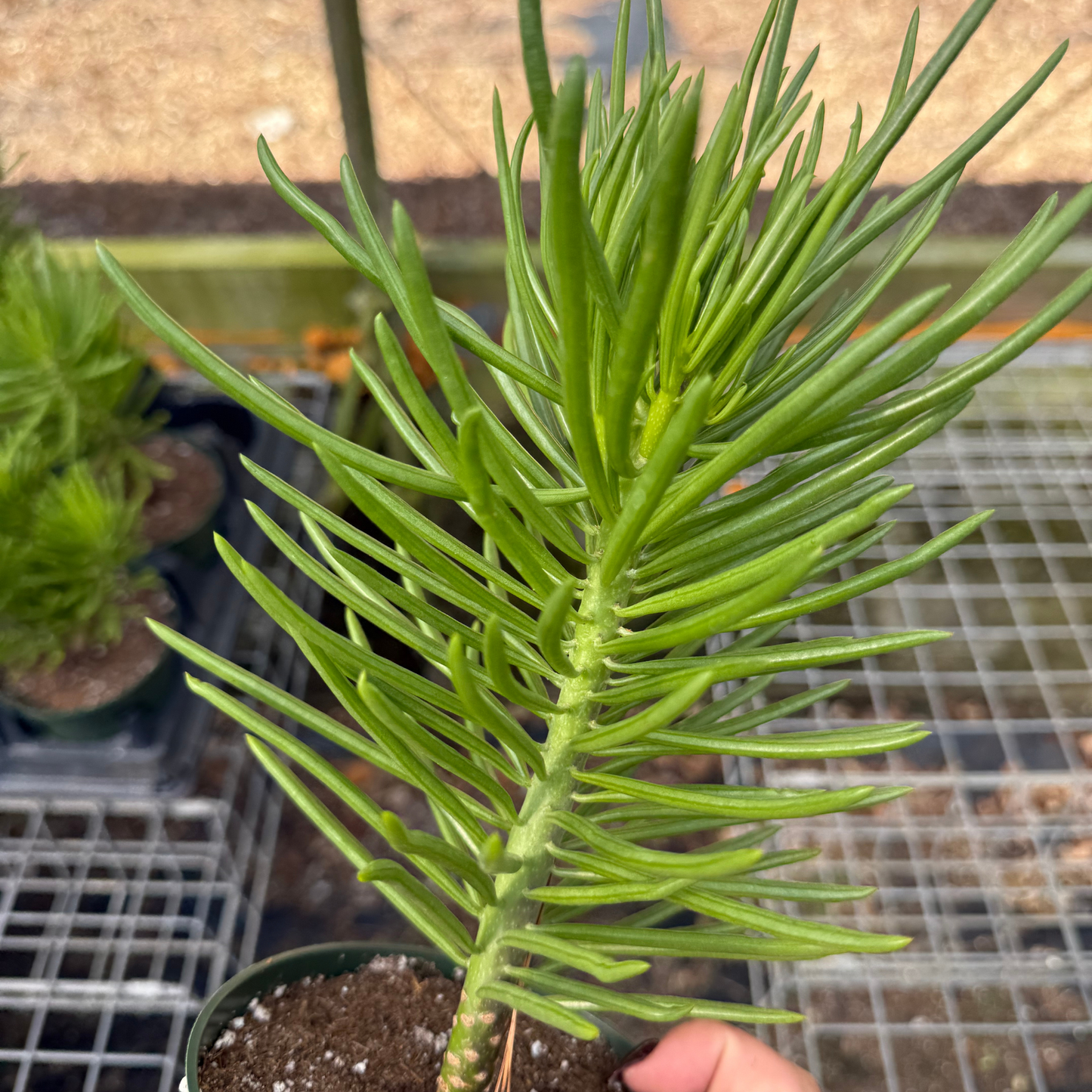


RedCrocus Himalaya Groundsel Senecio barbertonicus- Drought-Tolerant Evergreen Shrub, Silver-Gray Foliage, Perfect for Rock Gardens & Containers 10" Pot
RedCrocus Himalaya Groundsel Senecio barbertonicus- Drought-Tolerant Evergreen Shrub, Silver-Gray Foliage, Perfect for Rock Gardens & Containers 10" Pot
Regular price
$106.00 USD
Regular price
$137.80 USD
Sale price
$106.00 USD
Unit price
per
Shipping calculated at checkout.
SKU:trsc649-redcrocus
Couldn't load pickup availability
Himalaya' Groundsel Senecio barbertonicus 'Himalaya'
Description
A perennial shrub characterized by its attractive silver-gray foliage and compact growth habit. It thrives in warm, sunny environments and is appreciated for its drought tolerance and ornamental appeal.
Suggested Uses
Ideal for rock gardens, xeriscapes, container planting, and borders. It adds texture and color to drought-tolerant and low-maintenance landscapes.
Plant Details
-
 Botanical Name: Himalaya' Groundsel Senecio barbertonicus 'Himalaya'
 -
 Common Name: Himalaya' Groundsel
 -
 Size & Growth: Typically reaches 2-3 feet in height with a dense, bushy form
 -
 Hardiness Zones: 9-11
 -
 Foliage Type: Evergreen, Silver-gray leaves
 -
 Bloom Time: Late summer to fall
 -
 Growth Rate: Moderate to fast
 -
 Light Requirements: Full sun
 -
 Attracts Pollinators: Yes
 -
 Indoor Friendly: No
 -
 Container Friendly: Yes
 -
 Deer Resistant: Yes
 -
 Pet Warning: Non-toxic
 -
 Fragrant: No
 -
 Cut Flower: No
 -
 Grows Well With: Succulents, Cacti, Drought-tolerant plants
Care Tips
-
 Planting Instructions: Plant in well-drained soil in full sun. Water sparingly, allowing soil to dry between watering.
 -
 Soil Moisture: Dry to Medium
 -
 Soil Type: Sandy, Well-Drained
 -
 Humidity: Average
 -
 Pruning Instructions: Light pruning after flowering to maintain shape.
 -
 Winter Care: Protect from frost; suitable for container overwintering indoors.
 -
 Planting Depth: Plant at same depth as in nursery
 -
 Fertilization: Feed with cactus or succulent fertilizer during growing season
 -
 Special Care: Minimal watering; avoid overwatering to prevent root rot.