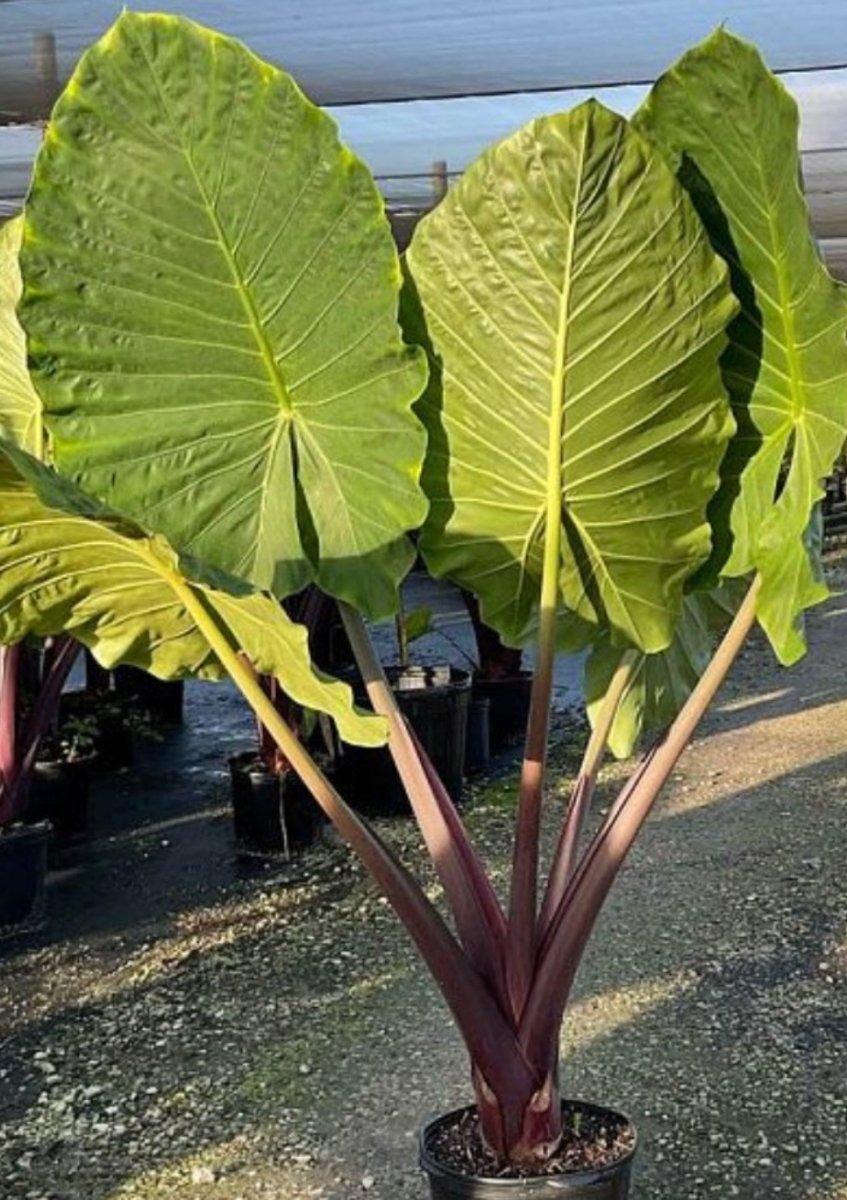


RedCrocus Imperial Red Elephant Ear Alocasia- Tropical Plant with Large Reddish-Green Leaves, Shade-Loving Foliage for Garden & Indoor Use 6" Pot
RedCrocus Imperial Red Elephant Ear Alocasia- Tropical Plant with Large Reddish-Green Leaves, Shade-Loving Foliage for Garden & Indoor Use 6" Pot
Regular price
$51.60 USD
Regular price
$67.08 USD
Sale price
$51.60 USD
Unit price
per
Shipping calculated at checkout.
SKU:trfl2535-redcrocus
Couldn't load pickup availability
Imperial Red' Elephant Ear Alocasia 'Imperial Red'
Description
This striking tropical plant features large, glossy, deep reddish-green leaves with bold, dramatic veining, adding vibrant color and lush texture to any garden or indoor space.
Suggested Uses
Ideal for specimen plantings in gardens, shaded borders, large containers, and indoor foliage arrangements to create a focal point with tropical flair.
Plant Details
-
 Botanical Name: Alocasia 'Imperial Red'
 -
 Common Name: Imperial Red' Elephant Ear
 -
 Size & Growth: Up to 6 feet tall with leaves 18-24 inches wide
 -
 Hardiness Zones: 10-12
 -
 Foliage Type: Large, ornamental, and tropical
 -
 Bloom Time: Summer to early fall
 -
 Growth Rate: Moderate to fast
 -
 Light Requirements: Partial shade to full shade
 -
 Attracts Pollinators: Yes
 -
 Indoor Friendly: Yes, with bright indirect light
 -
 Container Friendly: Yes
 -
 Deer Resistant: Yes
 -
 Pet Warning: Toxic to pets if ingested
 -
 Fragrant: No
 -
 Cut Flower: No
 -
 Grows Well With: Ferns,Caladiums,Tropical Plants
Care Tips
-
 Planting Instructions: Plant bulbs 2-3 inches deep in well-draining soil during spring
 -
 Soil Moisture: Keep consistently moist but not waterlogged
 -
 Soil Type: Rich, organic, well-draining soil
 -
 Humidity: Prefers high humidity environments
 -
 Pruning Instructions: Remove dead or damaged leaves as needed
 -
 Winter Care: Bring indoors in colder zones; protect from frost
 -
 Planting Depth: 2-3 inches deep for bulbs
 -
 Fertilization: Feed with balanced liquid fertilizer monthly during growing season
 -
 Special Care: Keep away from pets and children due to toxicity