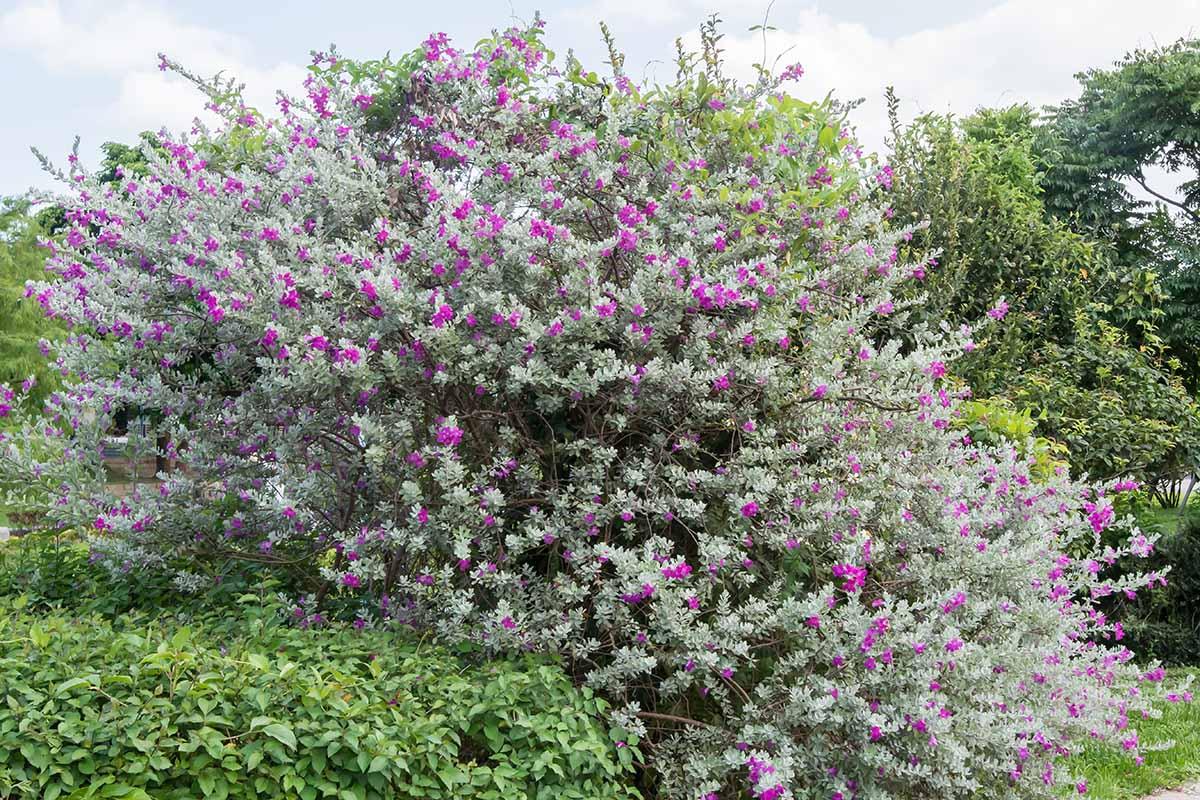


RedCrocus Texas Sage- Drought-Tolerant Evergreen Bush, Fragrant Purple Blooms, Attracts Pollinators, Perfect for Desert Landscapes & Borders 10" Pot
RedCrocus Texas Sage- Drought-Tolerant Evergreen Bush, Fragrant Purple Blooms, Attracts Pollinators, Perfect for Desert Landscapes & Borders 10" Pot
Regular price
$75.99 USD
Regular price
$98.79 USD
Sale price
$75.99 USD
Unit price
per
Shipping calculated at checkout.
SKU:trbl998-redcrocus
Couldn't load pickup availability
Texas Sage Leucophyllum frutescens, Bush
Description
A compact, evergreen shrub featuring silvery-gray foliage and vibrant purple flowers that bloom in late summer and fall. Highly drought-tolerant and low-maintenance, ideal for xeriscaping and border accents.
Suggested Uses
Perfect for desert landscapes, rock gardens, and as a colorful border plant. It also works well for hedges and erosion control on slopes.
Plant Details
-
 Botanical Name: Texas Sage Leucophyllum frutescens, Bush
 -
 Common Name: Texas Sage
 -
 Size & Growth: Up to 5-6 feet tall and wide
 -
 Hardiness Zones: 8-11
 -
 Foliage Type: Evergeen, Silvery-gray leaves
 -
 Bloom Time: Late Summer to Fall
 -
 Light Requirements: Full Sun
 -
 Attracts Pollinators: Yes, butterflies and bees
 -
 Indoor Friendly: Not typically recommended
 -
 Container Friendly: Yes, suitable
 -
 Deer Resistant: Yes
 -
 Pet Warning: Toxic to cats and dogs if ingested
 -
 Fragrant: Yes, mild aromatic scent
 -
 Cut Flower: Yes, used in dried arrangements
 -
 Grows Well With: Cacti, succulents, and desert grasses
 Growth Rate: Moderate
Care Tips
-
 Planting Instructions: Choose well-draining soil and plant in full sun for best growth.
 -
 Soil Moisture: Very drought-tolerant, water sparingly once established
 -
 Soil Type: Sandy or well-draining loam
 -
 Humidity: Prefers dry conditions, avoid overwatering
 -
 Pruning Instructions: Prune lightly after flowering to shape
 -
 Winter Care: Frost-sensitive, protect in colder zones
 -
 Planting Depth: Ensure root ball is level with soil surface
 -
 Fertilization: Minimal feeding required; use balanced fertilizer in spring
 -
 Special Care: Avoid overwatering and excessive fertilization