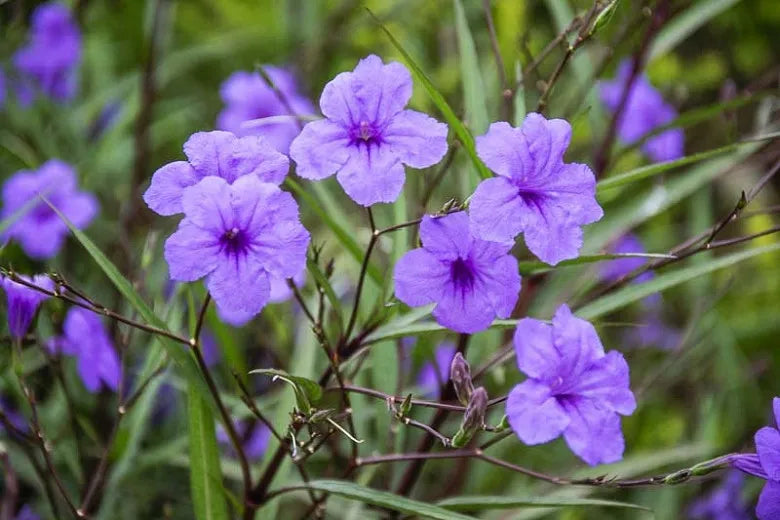


RedCrocus Mexican Petunia Ruellia Assorted- Bright Blooming Perennial for Gardens, Borders & Containers- Pollinator Attractant 6" Pot (Pack of 2)
RedCrocus Mexican Petunia Ruellia Assorted- Bright Blooming Perennial for Gardens, Borders & Containers- Pollinator Attractant 6" Pot (Pack of 2)
Regular price
$52.00 USD
Regular price
$67.60 USD
Sale price
$52.00 USD
Unit price
per
Shipping calculated at checkout.
SKU:trbl1113-redcrocus
Couldn't load pickup availability
Mexican Petunia Ruellia, Assorted
Description
A vibrant perennial flowering plant known for its colorful tubular blooms and lush green foliage, ideal for adding bright accents to gardens and landscapes.
Suggested Uses
Perfect for border planting, containers, hanging baskets, and attracting pollinators such as butterflies and hummingbirds.
Plant Details
-
 Botanical Name: Mexican Petunia Ruellia, Assorted
 -
 Common Name: Mexican Petunia
 -
 Size & Growth: Typically reaches 2-3 feet in height with a spread of 2 feet, moderate growth rate.
 -
 Hardiness Zones: 8-11
 -
 Foliage Type: Evergreen in warm climates, deciduous in cooler areas
 -
 Bloom Time: Summer through Fall
 - Growth Rate: Moderate
- Light Requirements: Full sun to part shade
- Attracts Pollinators: Yes (butterflies, hummingbirds)
- Indoor Friendly: No
- Container Friendly: Yes
- Deer Resistant: Yes
- Pet Warning: Toxic to pets if ingested
- Fragrant: Slightly aromatic
- Cut Flower: Yes
- Grows Well With: Coreopsis, Lantana, Salvia


Care Tips
-
 Planting Instructions: Plant in well-draining soil in a location with full sun. Water regularly during dry periods.
 -
 Soil Moisture: Keep consistently moist, but not soggy.
 -
 Soil Type: Fertile, well-draining loam
 - Humidity: Tolerant of average humidity, prefers moderate moisture
- Pruning Instructions: Remove dead or damaged stems in early spring to encourage bushiness.
- Winter Care: Mulch around roots in colder zones; bring potted plants indoors if necessary.
- Planting Depth: Bury crown at soil level
- Fertilization: Apply a balanced fertilizer in spring and mid-summer.
- Special Care: Watch for aphids and apply appropriate treatment if needed.