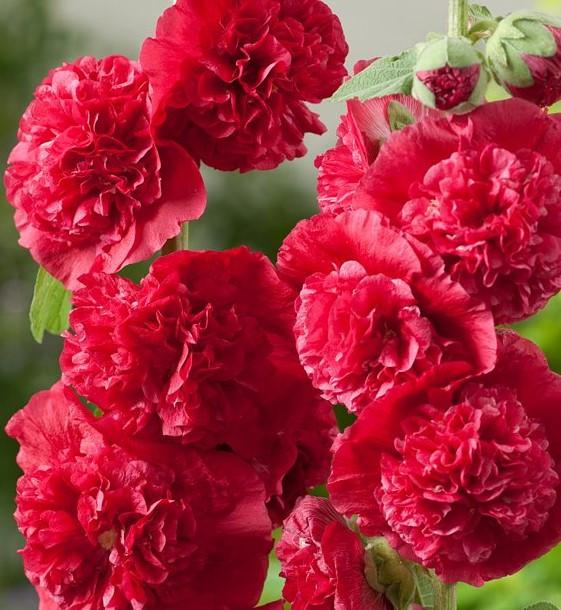


RedCrocus Chater's Double Scarlet Hollyhock- Vibrant Summer Perennial for Borders & Pollinators 1 Quart (Pack of 10)
RedCrocus Chater's Double Scarlet Hollyhock- Vibrant Summer Perennial for Borders & Pollinators 1 Quart (Pack of 10)
Regular price
$77.50 USD
Regular price
$100.75 USD
Sale price
$77.50 USD
Unit price
per
Shipping calculated at checkout.
SKU:pe1q1205-alt3-redcrocus
Couldn't load pickup availability
Chater's Double Scarlet' Hollyhock Alcea rosea 'Chater's Double Scarlet'
Description
A tall, perennial plant featuring double, vibrant scarlet flowers that bloom in mid to late summer. Its sturdy stems and lush foliage make it an ideal focal point in cottage gardens and flower beds.
Suggested Uses
Perfect for borders, cottage gardens, perennial beds, and attracting pollinators such as bees and butterflies.
Plant Details
-
 Botanical Name: Chater's Double Scarlet' Hollyhock Alcea rosea 'Chater's Double Scarlet'
 -
 Common Name: Chater's Double Scarlet' Hollyhock
 -
 Size & Growth: Typically 4-6 feet tall with a bushy, upright habit
 -
 Hardiness Zones: 3-8
 -
 Foliage Type: Deciduous, lobed leaves
 -
 Bloom Time: Mid to late summer
 -
 Growth Rate: Moderate to fast
 -
 Light Requirements: Full sun to partial shade
 -
 Attracts Pollinators: Yes, bees and butterflies
 -
 Indoor Friendly: No
 -
 Container Friendly: Suitable for large containers with staking
 -
 Deer Resistant: Yes
 -
 Pet Warning: Non-toxic
 -
 Fragrant: No
 -
 Cut Flower: Yes
 -
 Grows Well With: Other tall perennials like delphiniums and echinaceas
Care Tips
-
 Planting Instructions: Plant in well-drained soil in full sun or partial shade. Space plants about 3-4 feet apart.
 -
 Soil Moisture: Keep soil consistently moist, especially during dry periods.
 -
 Soil Type: Prefers fertile, loamy soil with good drainage
 -
 Humidity: Tolerant of average garden humidity
 -
 Pruning Instructions: Deadhead spent flowers to promote reblooming and prevent disease.
 -
 Winter Care: Apply mulch in colder zones; cut back stems after first frost.
 -
 Planting Depth: Sow seeds at 1/4 inch deep; transplant seedlings after last frost.
 -
 Fertilization: Feed with a balanced fertilizer in spring and mid-summer.
 -
 Special Care: Provide support for tall flower stalks if needed, to prevent toppling.