

RedCrocus Spotted Bee Balm Monarda punctata- Perennial Herb for Pollinators & Borders, Attractive Foliage, Non-Toxic, Garden and Cut Flower 1 Gallon (Pack of 12)
RedCrocus Spotted Bee Balm Monarda punctata- Perennial Herb for Pollinators & Borders, Attractive Foliage, Non-Toxic, Garden and Cut Flower 1 Gallon (Pack of 12)
Regular price
$285.00 USD
Regular price
$370.50 USD
Sale price
$285.00 USD
Unit price
per
Shipping calculated at checkout.
SKU:pe1g6303-alt5-redcrocus
Couldn't load pickup availability
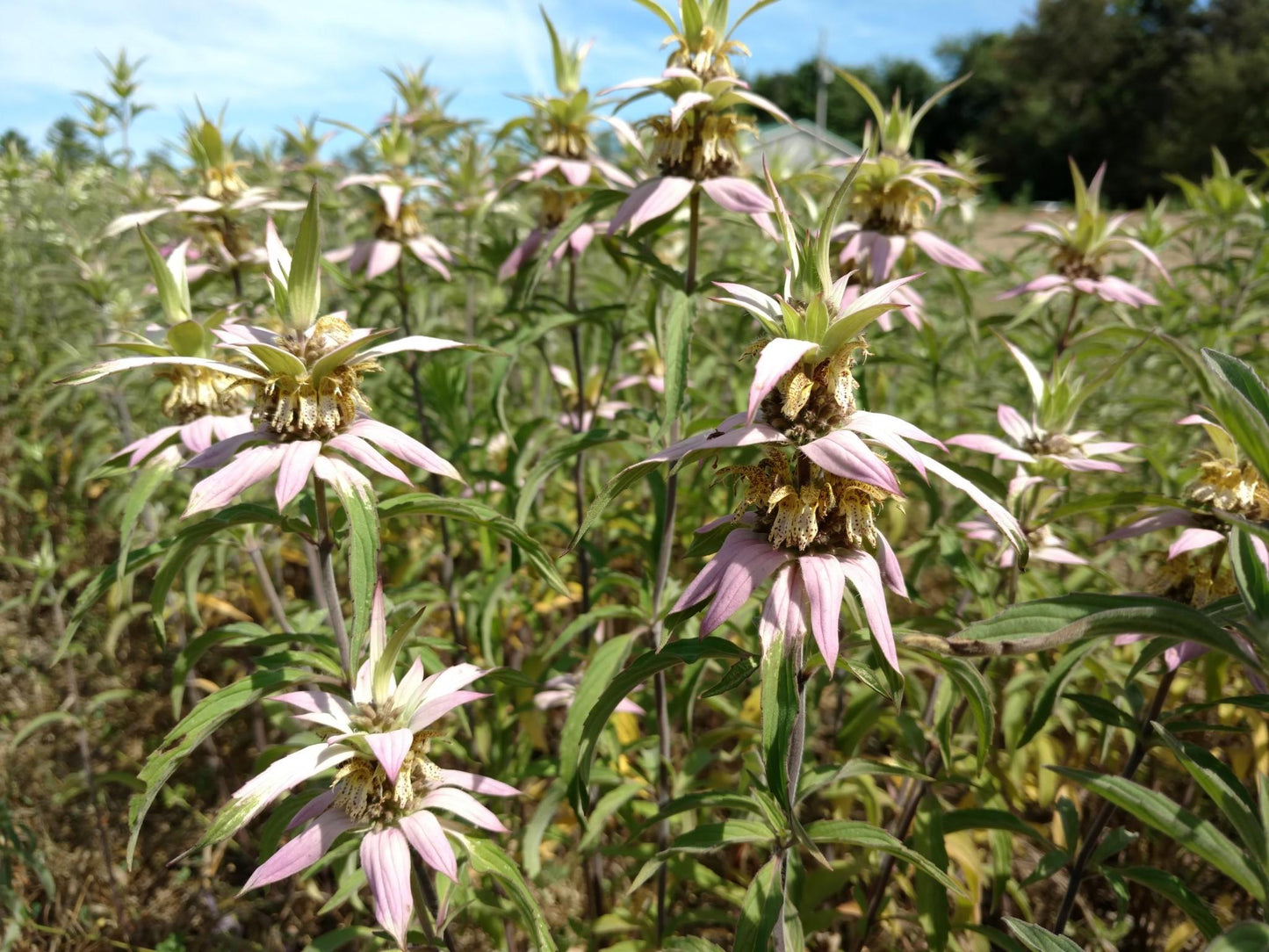
Spotted Bee Balm Monarda punctata
Description
A perennial herb known for its striking spotted flowers and aromatic foliage. It attracts pollinators such as bees and butterflies, making it an excellent addition to wildlife gardens.
Suggested Uses
Ideal for border planting, meadow gardens, or naturalized areas. It also works well in mixed perennial beds and attracts beneficial insects.
Plant Details
-
 Botanical Name: Spotted Bee Balm Monarda punctata
 -
 Common Name: Spotted Bee Balm
 -
 Size & Growth: Typically reaches 2-3 feet in height with a spreading habit
 -
 Hardiness Zones: 4-9
 -
 Foliage Type: Aromatic, ovate leaves with green to grayish foliage
 -
 Bloom Time: Summer through early fall
 -
 Growth Rate: Moderate to fast
 -
 Light Requirements: Full sun to partial shade
 -
 Attracts Pollinators: Bees, butterflies, hummingbirds
 -
 Indoor Friendly: No
 -
 Container Friendly: Yes
 -
 Deer Resistant: Yes
 -
 Pet Warning: Non-toxic to dogs and cats
 -
 Fragrant: Yes, aromatic foliage
 -
 Cut Flower: Yes
 -
 Grows Well With: Other native perennials and ornamental grasses
Care Tips
-
 Planting Instructions: Plant in well-drained soil in full sun for optimal growth
 -
 Soil Moisture: Keep moist but not soggy
 -
 Soil Type: Sand, loam, or garden soil with good drainage
 -
 Humidity: Tolerant of average garden humidity
 -
 Pruning Instructions: Deadhead to prolong flowering and shape after blooming
 -
 Winter Care: Mulch in colder zones to protect roots
 -
 Planting Depth: Plant with the crown at soil level
 -
 Fertilization: Apply balanced fertilizer in spring
 -
 Special Care: Minimal watering during dormancy, avoid overly shaded locations