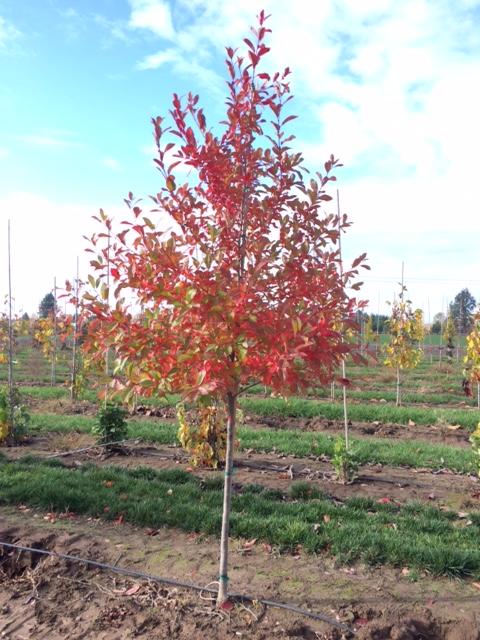


Wild Fire' Black Tupelo Tree- Vibrant Fall Foliage, Pollinator Attractant, Container Friendly, Hardy in Zones 3-9 5-6" cal B&B
Wild Fire' Black Tupelo Tree- Vibrant Fall Foliage, Pollinator Attractant, Container Friendly, Hardy in Zones 3-9 5-6" cal B&B
Regular price
$5,656.00 USD
Regular price
$7,352.80 USD
Sale price
$5,656.00 USD
Unit price
per
Shipping calculated at checkout.
SKU:nto9887-redcrocus
Couldn't load pickup availability
Wild Fire' Black Tupelo Nyssa sylvatica 'Wild Fire'
Description
A striking deciduous tree known for its vibrant, fiery-red autumn foliage. Native to eastern North America, it features dense, dark green summer leaves that turn a brilliant red-orange in the fall. This adaptable tree adds visual interest and seasonal color to any landscape.
Suggested Uses
Ideal for residential gardens, urban landscapes, and large parks. Suitable as a focal point, shade tree, or for creating natural privacy screens. Its colorful fall display makes it a popular choice for enhancing curb appeal.
Plant Details
-
 Botanical Name: Wild Fire' Black Tupelo Nyssa sylvatica 'Wild Fire'
 -
 Common Name: Wild Fire' Black Tupelo
 -
 Size & Growth: Typically grows 20-30 ft tall with a spread of 15-25 ft, developing into a beautiful multi-branched canopy.
 -
 Hardiness Zones: 3-9
 -
 Foliage Type: Deciduous
 -
 Growth Rate: Moderate
 -
 Light Requirements: Full sun to partial shade
 -
 Attracts Pollinators: Yes
 -
 Indoor Friendly: No
 -
 Container Friendly: Yes, with plenty of space and well-draining soil
 -
 Deer Resistant: Moderate
 -
 Pet Warning: Non-toxic
 -
 Fragrant: No
 -
 Cut Flower: Yes, small edible berries in fall
 -
 Grows Well With: Oak, Maple, and other deciduous trees
 Bloom Time: Late spring to early summer
Care Tips
-
 Planting Instructions: Choose a sunny location with well-draining soil. Dig a hole twice as wide as the root ball, place the plant, and water thoroughly.
 -
 Soil Moisture: Keep consistently moist, especially during dry periods.
 -
 Soil Type: Prefers loamy, acidic to neutral soils.
 -
 Humidity: Tolerant of average to high humidity.
 -
 Pruning Instructions: Prune in late winter or early spring to shape and remove dead or crossing branches.
 -
 Winter Care: Mulch around the base to protect roots; hardy in zones 3-9.
 -
 Planting Depth: Set the root ball level with the soil surface.
 -
 Fertilization: Apply a balanced fertilizer in early spring.
 -
 Special Care: Prune selectively to maintain shape; monitor for insect pests.