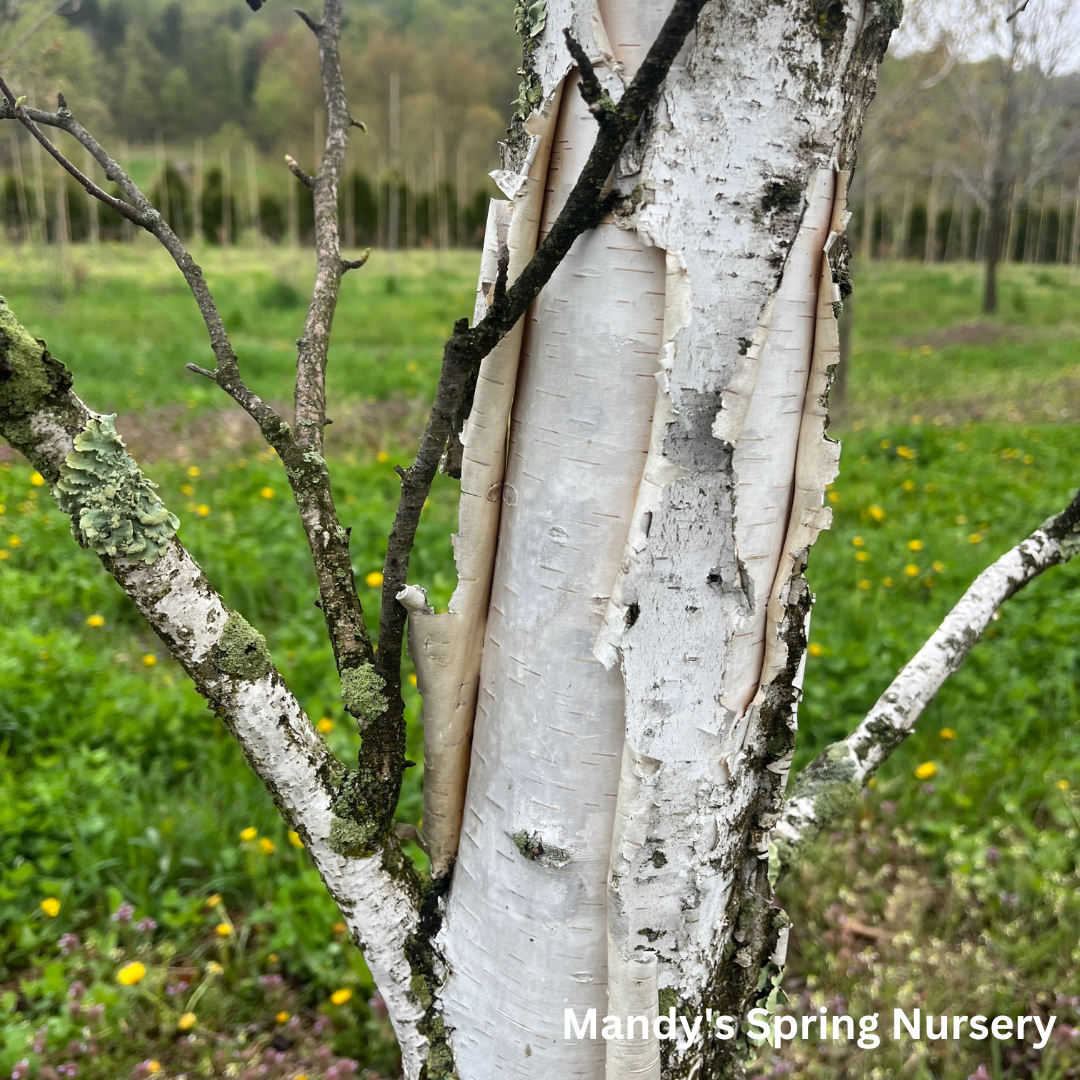


RedCrocus Paper Birch White Birch Betula papyrifera- Single Stem for Landscaping, Park, and Naturalized Areas 2.5-3" cal B&B
RedCrocus Paper Birch White Birch Betula papyrifera- Single Stem for Landscaping, Park, and Naturalized Areas 2.5-3" cal B&B
Regular price
$1,184.00 USD
Regular price
$1,539.20 USD
Sale price
$1,184.00 USD
Unit price
per
Shipping calculated at checkout.
SKU:nto2232-redcrocus
Couldn't load pickup availability
Paper Birch, White Birch Betula papyrifera - Single Stem
Description
The Paper Birch is known for its distinctive white bark and graceful, single-stem growth. It features oval-shaped leaves that turn vibrant yellow in autumn, providing seasonal interest. This hardy tree thrives in moist, acidic soils and is a popular choice for decorative landscaping and windbreaks.
Suggested Uses
Ideal for naturalized landscapes, park settings, and as a specimen tree. It also functions well as a privacy screen and provides shelter for wildlife.
Plant Details
-
 Botanical Name: Paper Birch, White Birch Betula papyrifera - Single Stem
 -
 Common Name: Paper Birch, White Birch
 -
 Size & Growth: Typically grows 50-70 ft tall with a spread of 20-40 ft; fast-growing
 -
 Hardiness Zones: 2-6
 -
 Foliage Type: Deciduous
 -
 Growth Rate: Fast
 -
 Light Requirements: Full sun to partial shade
 -
 Attracts Pollinators: Yes
 -
 Indoor Friendly: No
 -
 Container Friendly: No
 -
 Deer Resistant: Moderately resistant
 -
 Pet Warning: Not toxic
 -
 Fragrant: No
 -
 Cut Flower: No
 -
 Grows Well With: Other native trees and shrubs, such as dogwoods and oaks
 Bloom Time: Early spring
Care Tips
-
 Planting Instructions: Plant in full sun in well-drained, moist soil; space adequately for growth
 -
 Soil Moisture: Prefers consistently moist soil
 -
 Soil Type: Acidic, loamy, or sandy soils suitable
 -
 Humidity: Tolerant of various humidity levels but prefers moderate humidity
 -
 Pruning Instructions: Light pruning in late winter or early spring to remove dead or damaged branches
 -
 Winter Care: Protect young trees from harsh winds and extreme cold; mulching recommended
 -
 Planting Depth: Keep the root collar at soil level
 -
 Fertilization: Apply a balanced fertilizer in early spring annually
 -
 Special Care: Water during drought periods; avoid mechanical injury to bark