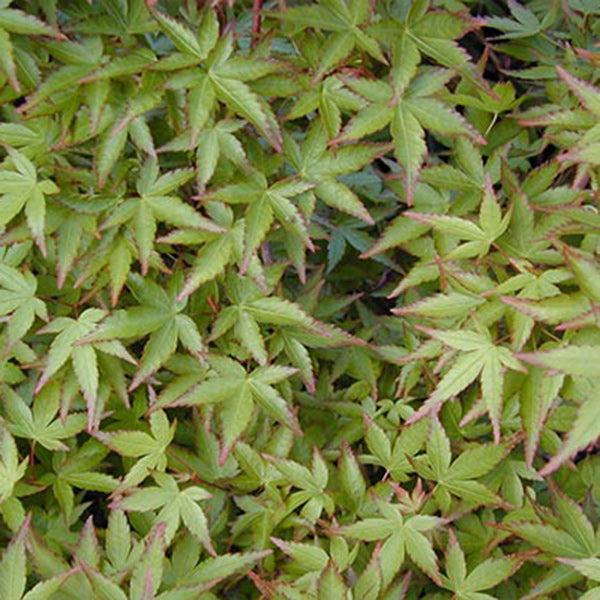


RedCrocus Kiyohime Japanese Maple Acer palmatum | Deciduous, Lobed Leaves, Foliage, Garden Accent, Container Friendly, Hardy Zones 5-8 3/4' w B&B
RedCrocus Kiyohime Japanese Maple Acer palmatum | Deciduous, Lobed Leaves, Foliage, Garden Accent, Container Friendly, Hardy Zones 5-8 3/4' w B&B
Regular price
$2,472.00 USD
Regular price
$3,213.60 USD
Sale price
$2,472.00 USD
Unit price
per
Shipping calculated at checkout.
SKU:nto2191-redcrocus
Couldn't load pickup availability
Kiyohime' Japanese Maple Acer palmatum 'Kiyohime'
Description
This cultivar of Japanese Maple features delicate, lobed leaves with a rich red hue, providing a stunning focal point in any garden. It displays a graceful, compact growth habit, making it suitable for various landscape settings.
Suggested Uses
Perfect for small gardens, container planting, bonsai, and as an accent or focal tree in landscape designs.
Plant Details
-
 Botanical Name: Kiyohime' Japanese Maple Acer palmatum 'Kiyohime'
 -
 Common Name: Kiyohime' Japanese Maple
 -
 Size & Growth: Typically 3-4 ft tall and wide; slow to moderate growth rate
 -
 Hardiness Zones: 5-8
 -
 Foliage Type: Deciduous, lobed leaves
 -
 Bloom Time: Late spring to early summer
 -
 Growth Rate: Slow to moderate
 -
 Light Requirements: Partial sun to full shade
 -
 Attracts Pollinators: Yes
 -
 Indoor Friendly: No
 -
 Container Friendly: Yes
 -
 Deer Resistant: Moderate
 -
 Pet Warning: Non-toxic, safe for pets
 -
 Fragrant: No
 -
 Cut Flower: No
 -
 Grows Well With: Ferns, Hostas, Shade Trees
Care Tips
-
 Planting Instructions: Prefers well-drained, slightly acidic soil. Plant in partial shade for best color vibrancy.
 -
 Soil Moisture: Keep consistently moist; avoid waterlogging.
 -
 Soil Type: Loamy, well-drained
 -
 Humidity: Prefers moderate humidity levels
 -
 Pruning Instructions: Remove dead or damaged branches in late winter or early spring
 -
 Winter Care: Mulch around root zone; protect from harsh winds and frost
 -
 Planting Depth: Set root ball level with soil surface
 -
 Fertilization: Use a balanced, slow-release fertilizer in early spring
 -
 Special Care: Avoid overwatering; maintain consistent moisture levels