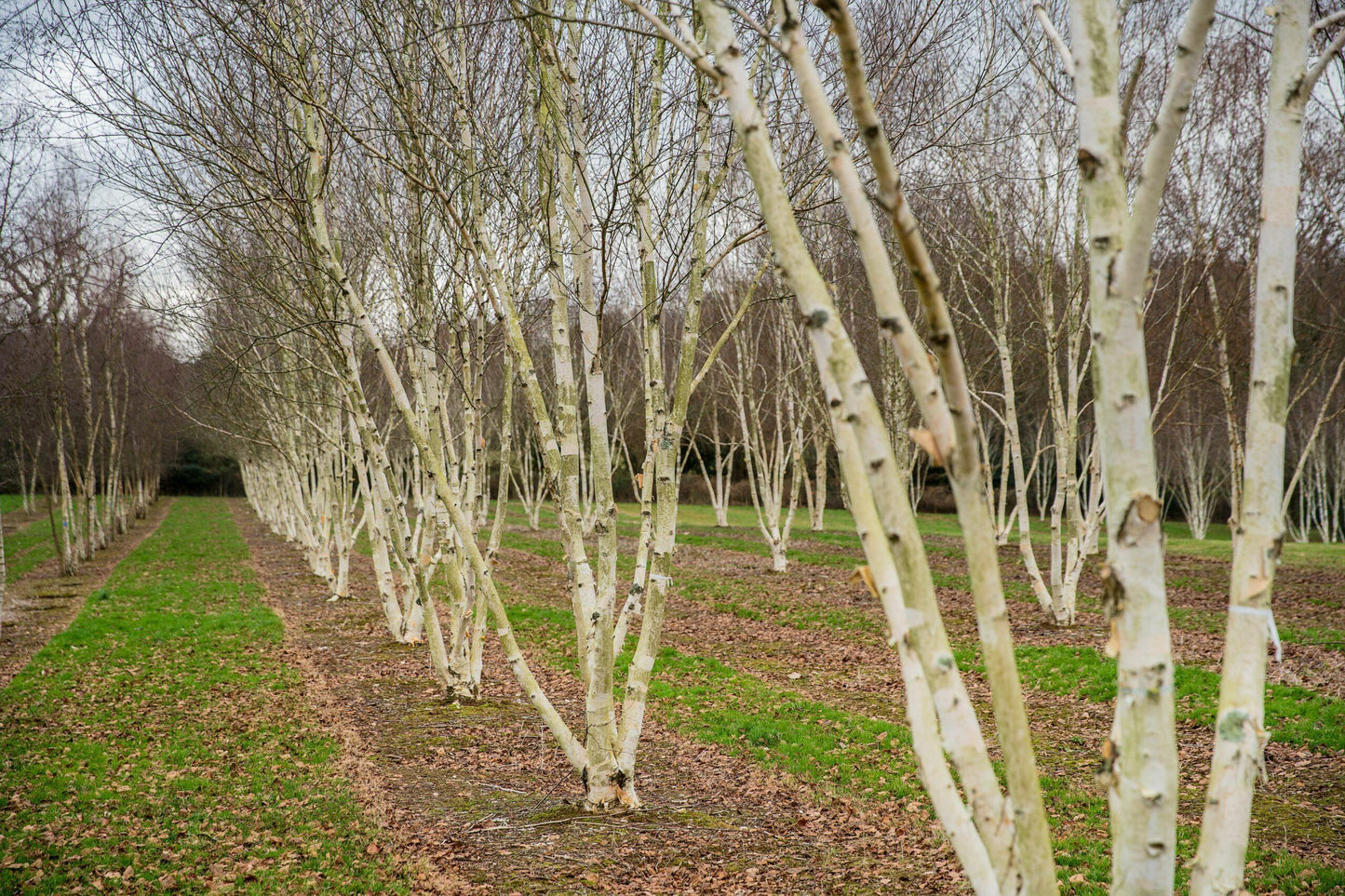


Whitebarked Himalayan Birch Betula jacquemontii- Multi Stem Deciduous Tree for Garden & Landscape | Striking White Bark, Attracts Pollinators, Container Friendly, Deer Resistant 7/8' h B&B
Whitebarked Himalayan Birch Betula jacquemontii- Multi Stem Deciduous Tree for Garden & Landscape | Striking White Bark, Attracts Pollinators, Container Friendly, Deer Resistant 7/8' h B&B
Regular price
$696.00 USD
Regular price
$904.80 USD
Sale price
$696.00 USD
Unit price
per
Shipping calculated at checkout.
SKU:nto0258-redcrocus
Couldn't load pickup availability
Whitebarked Himalayan Birch Betula jacquemontii - Multi Stem
Description
An attractive deciduous tree known for its striking white bark and tiered multi-stem growth habit. It features ovate green leaves that turn yellow in fall and provides elegant winter interest with its distinctive bark.
Suggested Uses
Perfect for focal points in gardens, landscape borders, specimen planting, or as part of a mixed shrubbery. Its multi-stem growth makes it ideal for creating visual interest and texture.
Plant Details
-
 Botanical Name: Whitebarked Himalayan Birch Betula jacquemontii - Multi Stem
 -
 Common Name: Whitebarked Himalayan Birch
 -
 Size & Growth: Generally reaches 30-40 ft in height with a spread of 15-25 ft, with a moderate growth rate.
 -
 Hardiness Zones: 2-7
 -
 Foliage Type: Deciduous
 -
 Bloom Time: Blooming occurs in early spring with small yellow-green flowers
 -
 Growth Rate: Moderate
 -
 Light Requirements: Full sun to partial shade
 -
 Attracts Pollinators: Yes
 -
 Indoor Friendly: No
 -
 Container Friendly: Yes, suitable for large containers
 -
 Deer Resistant: Yes
 -
 Pet Warning: Contains substances that may be mildly toxic to pets if ingested
 -
 Fragrant: No
 -
 Cut Flower: Yes, for decorative purposes
 -
 Grows Well With: Other deciduous trees and shrubs such as maples and dogwoods
Care Tips
-
 Planting Instructions: Plant in well-draining soil in a location with full sun to partial shade, space appropriately for a mature size.
 -
 Soil Moisture: Keep consistently moist but not waterlogged.
 -
 Soil Type: Prefers loamy, slightly acidic to neutral soil.
 -
 Humidity: Tolerant of average humidity levels.
 -
 Pruning Instructions: Light pruning in late winter or early spring to maintain shape and remove dead or damaged branches.
 -
 Winter Care: Protect young trees with mulch; mature trees are hardy but may benefit from burlap wrapping in extremely cold regions.
 -
 Planting Depth: Root ball should be planted at or slightly above ground level.
 -
 Fertilization: Apply a balanced fertilizer in early spring annually to encourage healthy growth.
 -
 Special Care: Ensure adequate watering during drought periods, especially for young trees.