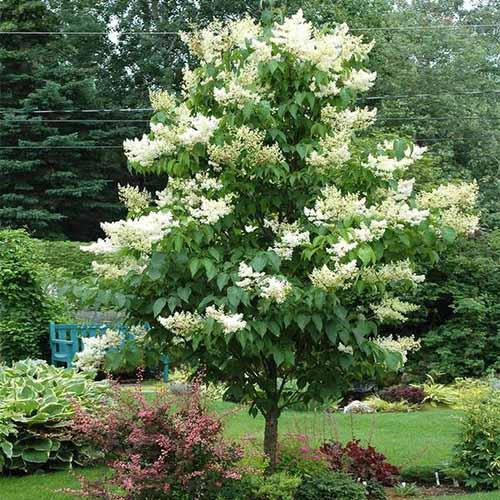


RedCrocus Ivory Pillar Japanese Tree Lilac Syringa reticulata 'Ivory Pillar'- Fragrant, Deciduous Garden Tree for Small Spaces and Urban Landscapes 2.5-3" cal B&B
RedCrocus Ivory Pillar Japanese Tree Lilac Syringa reticulata 'Ivory Pillar'- Fragrant, Deciduous Garden Tree for Small Spaces and Urban Landscapes 2.5-3" cal B&B
Regular price
$2,196.00 USD
Regular price
$2,854.80 USD
Sale price
$2,196.00 USD
Unit price
per
Shipping calculated at checkout.
SKU:ntf9085-redcrocus
Couldn't load pickup availability
Ivory Pillar' Japanese Tree Lilac Syringa reticulata 'Ivory Pillar'
Description
An elegant, upright deciduous tree featuring Showy clusters of fragrant white flowers in late spring, complemented by glossy green foliage that turns color in autumn. This cultivar is known for its narrow, columnar growth habit, making it ideal for small gardens and urban landscapes.
Suggested Uses
Perfect for focal points, privacy screens, or as a vertical accent in landscape beds. Ideal for small gardens, patios, and urban settings where space is limited.
Plant Details
-
 Botanical Name: Syringa reticulata 'Ivory Pillar'
 -
 Common Name: Ivory Pillar Japanese Tree Lilac
 -
 Size & Growth: Up to 15-20 ft tall with a narrow, upright habit
 -
 Hardiness Zones: 3 to 7
 -
 Foliage Type: Deciduous, Glossy Green
 -
 Bloom Time: Late Spring to Early Summer
 -
 Growth Rate: Moderate
 -
 Light Requirements: Full Sun
 -
 Attracts Pollinators: Bees and Butterflies
 -
 Indoor Friendly: No
 -
 Container Friendly: Yes, in a large container
 -
 Deer Resistant: Yes
 -
 Pet Warning: Mild toxicity if ingested
 -
 Fragrant: Yes
 -
 Cut Flower: Yes
 -
 Grows Well With: Maples, Viburnum, Evergreen shrubs
Care Tips
-
 Planting Instructions: Choose well-drained soil and plant in full sun, spacing adequately for future growth.
 -
 Soil Moisture: Keep moist, but well-drained soil. Avoid waterlogged conditions.
 -
 Soil Type: Adaptable to various soils, prefers fertile loam.
 -
 Humidity: Tolerates average humidity levels.
 -
 Pruning Instructions: Remove dead or crossing branches immediately after flowering to maintain shape.
 -
 Winter Care: Apply mulch in colder zones to protect roots during winter.
 -
 Planting Depth: Plant with the root ball slightly above soil level.
 -
 Fertilization: Apply in early spring with a balanced, slow-release fertilizer.
 -
 Special Care: Mulch annually and monitor for pests or diseases as needed.