

Yellow Bird Cucumbertree Magnolia- Fragrant, Pollinator-Attracting, Deciduous Tree for Landscape & Borders, Pet-Friendly Shade Tree 2-2.5" cal B&B
Yellow Bird Cucumbertree Magnolia- Fragrant, Pollinator-Attracting, Deciduous Tree for Landscape & Borders, Pet-Friendly Shade Tree 2-2.5" cal B&B
Regular price
$1,284.00 USD
Regular price
$1,669.20 USD
Sale price
$1,284.00 USD
Unit price
per
Shipping calculated at checkout.
SKU:ntf1338-redcrocus
Couldn't load pickup availability
Yellow Bird' Cucumbertree Magnolia Magnolia acuminata 'Yellow Bird' - Single Stem
Description
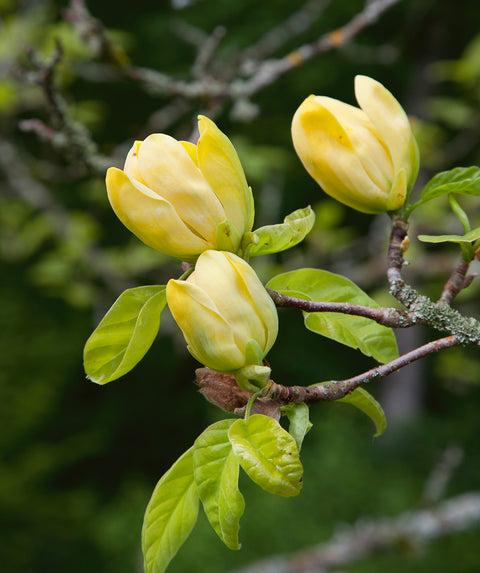
A vibrant, yellow-flowered variety of the classic Cucumbertree Magnolia. It features large, fragrant flowers in spring and lush foliage throughout the season. Ideal for adding striking color and height to large landscape spaces.
Suggested Uses
Perfect for specimen planting, large entryways, and landscape borders. Can be used as a focal point or in groupings to create a dramatic visual impact in gardens and parks.
Plant Details
-
 Botanical Name: Magnolia acuminata 'Yellow Bird'
 -
 Common Name: Yellow Bird' Cucumbertree Magnolia
 -
 Size & Growth: Reaches 20-30 ft tall with a spread of 10-15 ft; slow to moderate growth rate
 -
 Hardiness Zones: 4-9
 -
 Foliage Type: Deciduous
 -
 Growth Rate: Slow to moderate
 -
 Light Requirements: Full Sun to Partial Shade
 -
 Attracts Pollinators: Yes
 -
 Indoor Friendly: No
 -
 Container Friendly: Yes (with space to accommodate growth)
 -
 Deer Resistant: Yes
 -
 Pet Warning: Non-toxic to pets
 -
 Fragrant: Yes
 -
 Cut Flower: Yes
 -
 Grows Well With: Hostas, Ferns, Shade Trees
 Bloom Time: Late Spring to Early Summer
Care Tips
-
 Planting Instructions: Plant in well-drained, slightly acidic soil in full sun or partial shade. Space adequately for growth.
 -
 Soil Moisture: Keep consistently moist, especially during dry periods.
 -
 Soil Type: Loamy, rich soil with good drainage.
 -
 Humidity: Tolerant of average humidity; avoid prolonged drought conditions.
 -
 Pruning Instructions: Prune in late winter or early spring to shape and remove dead branches.
 -
 Winter Care: Mulch heavily for protection in colder zones, especially in zone 4.
 -
 Planting Depth: Plant so that the top of the root ball is level with the soil surface.
 -
 Fertilization: Apply a balanced, slow-release fertilizer in early spring.
 -
 Special Care: Ensure adequate space for canopy development and avoid soil compaction around roots.