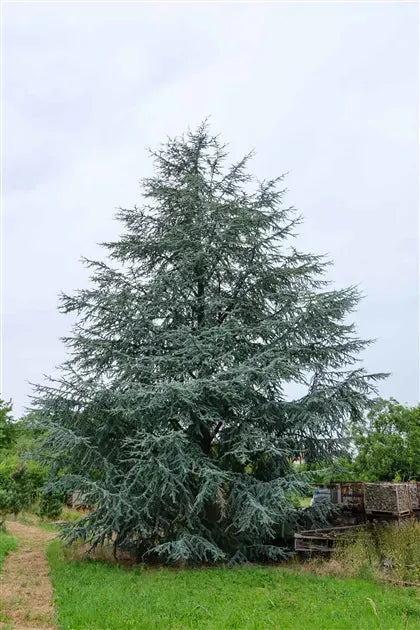


Blue Atlas Cedar Cedrus atlantica 'Glauca' | Evergreen Conifer for Landscape & Containers | Attractive Silvery-Blue Needles | Features Pyramidal Shape | Hardy Zones 6-9 10 Gallon
Blue Atlas Cedar Cedrus atlantica 'Glauca' | Evergreen Conifer for Landscape & Containers | Attractive Silvery-Blue Needles | Features Pyramidal Shape | Hardy Zones 6-9 10 Gallon
Regular price
$752.00 USD
Regular price
$977.60 USD
Sale price
$752.00 USD
Unit price
per
Shipping calculated at checkout.
SKU:nte5569-redcrocus
Couldn't load pickup availability
Blue Atlas Cedar Cedrus atlantica 'Glauca'
Description
This striking conifer features silvery-blue needles and a bold, pyramidal shape, making it an eye-catching addition to any landscape. It prefers sunny locations and well-drained soil, growing steadily into a majestic specimen over time.
Suggested Uses
Ideal for landscape focal points, accented garden beds, or as a specimen tree in large yards. Its elegant foliage also works well in bonsai or container plantings.
Plant Details
-
 Botanical Name: Blue Atlas Cedar Cedrus atlantica 'Glauca'
 -
 Common Name: Blue Atlas Cedar
 -
 Size & Growth: Typically 30-40 ft tall with a 20 ft spread; slow to moderate growth rate
 -
 Hardiness Zones: 6 to 9
 -
 Foliage Type: Evergreen
 -
 Bloom Time: Not typically flowering; cones develop in late summer
 -
 Growth Rate: Slow to moderate
 -
 Light Requirements: Full sun to partial shade
 -
 Attracts Pollinators: Yes, cone-bearing species attract certain insects
 -
 Indoor Friendly: No
 -
 Container Friendly: Yes, suitable for large containers
 -
 Deer Resistant: Yes
 -
 Pet Warning: Toxic to pets if ingested
 -
 Fragrant: No
 -
 Cut Flower: No
 -
 Grows Well With: Japanese maples, ornamental grasses, and evergreens
Care Tips
-
 Planting Instructions: Choose a sunny spot with well-draining soil; space adequately for growth
 -
 Soil Moisture: Keep evenly moist but not waterlogged
 -
 Soil Type: Well-drained sandy or loamy soil
 -
 Humidity: Normal garden humidity; tolerant of dry conditions once established
 -
 Pruning Instructions: Minimal pruning; remove dead or damaged branches in late winter
 -
 Winter Care: Protect from harsh winds and heavy snow; avoid bark injury
 -
 Planting Depth: Plant at same depth as in container; ensure roots are covered
 -
 Fertilization: Apply a balanced slow-release fertilizer in early spring
 -
 Special Care: Mulch to retain moisture and suppress weeds; avoid soil compaction around roots