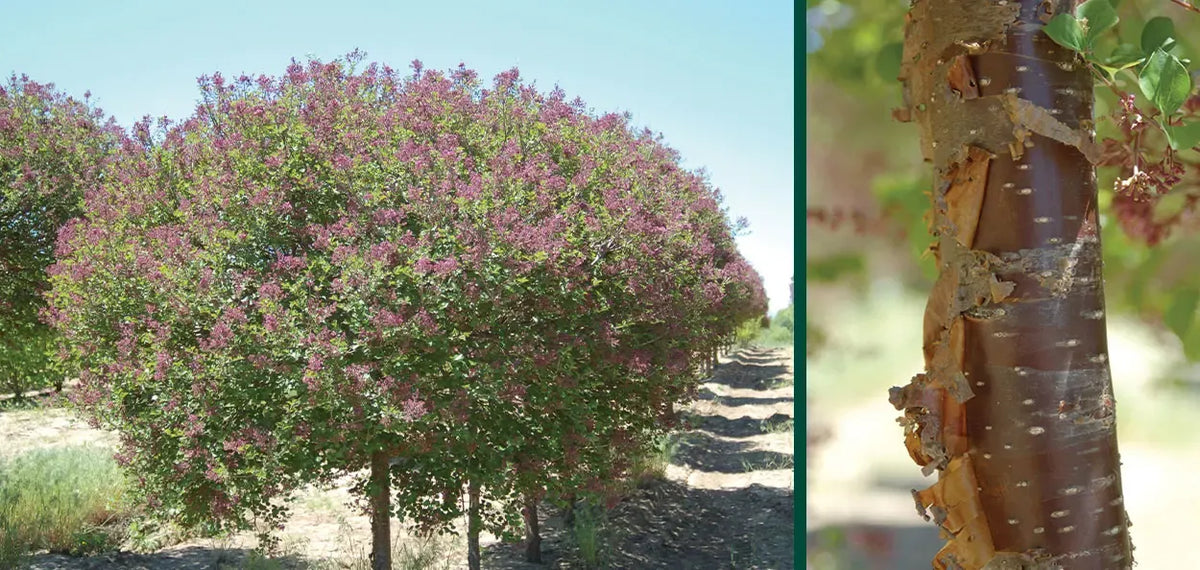


RedCrocus Palibin Dwarf Korean Lilac Tree Syringa meyeri for Small Gardens & Containers 10 Gallon
RedCrocus Palibin Dwarf Korean Lilac Tree Syringa meyeri for Small Gardens & Containers 10 Gallon
Regular price
$776.00 USD
Regular price
$1,008.80 USD
Sale price
$776.00 USD
Unit price
per
Shipping calculated at checkout.
SKU:nsf7163-redcrocus
Couldn't load pickup availability
Palibin' Dwarf Korean Lilac Tree Form Syringa meyeri 'Palibin' Tree Form
Description
A compact, multi-stemmed shrub known for its abundant fragrant white flowers in late spring. Its dense, rounded form makes it ideal for small gardens and landscape borders.
Suggested Uses
Perfect for foundation plantings, low hedges, and ornamental shrub borders. Also suitable for container planting on patios and balconies.
Plant Details
-
 Botanical Name: Syringa meyeri 'Palibin'
 -
 Common Name: Palibin' Dwarf Korean Lilac
 -
 Size & Growth: Typically reaches 3-4 ft in height and width, with a slow to moderate growth rate.
 -
 Hardiness Zones: 3-7
 -
 Foliage Type: Deciduous
 -
 Bloom Time: Late spring to early summer (April to June)
 -
 Growth Rate: Moderate
 -
 Light Requirements: Full sun to partial shade
 -
 Attracts Pollinators: Bees, butterflies, hummingbirds
 -
 Indoor Friendly: No
 -
 Container Friendly: Yes, ideal for containers with good drainage
 -
 Deer Resistant: Yes
 -
 Pet Warning: Non-toxic to pets
 -
 Fragrant: Yes, highly fragrant flowers
 -
 Cut Flower: Suitable for cut flowers; enjoy in floral arrangements
 -
 Grows Well With: Other spring-flowering shrubs and perennials
Care Tips
-
 Plant in well-drained soil in full sun for best flowering.
 -
 Maintain consistent soil moisture, especially during active growth.
 -
 Soil Type: Prefers loamy, slightly acidic soil.
 -
 Humidity: Tolerant of average garden humidity.
 -
 Prune after flowering to maintain shape and remove dead branches.
 -
 Provides winter protection in colder zones; mulch the base to protect roots.
 -
 Plant at same depth as in nursery for optimal growth.
 -
 Fertilize in early spring with a balanced, slow-release fertilizer.
 -
 Minimal special care required; ensure good air circulation to prevent disease.