

RedCrocus Steeds Japanese Holly (Ilex crenata) Live Evergreen Shrub - Narrow Pyramidal Form for Hedges, Borders & Topiary - Outdoor Landscape Plant 1 Gallon Nursery Pot
RedCrocus Steeds Japanese Holly (Ilex crenata) Live Evergreen Shrub - Narrow Pyramidal Form for Hedges, Borders & Topiary - Outdoor Landscape Plant 1 Gallon Nursery Pot
Regular price
$70.00 USD
Regular price
$91.00 USD
Sale price
$70.00 USD
Unit price
per
Shipping calculated at checkout.
SKU:berfd0f-redcrocus
Couldn't load pickup availability
Ilex Crenata 'steeds' Sold Out
Currently Sold Out
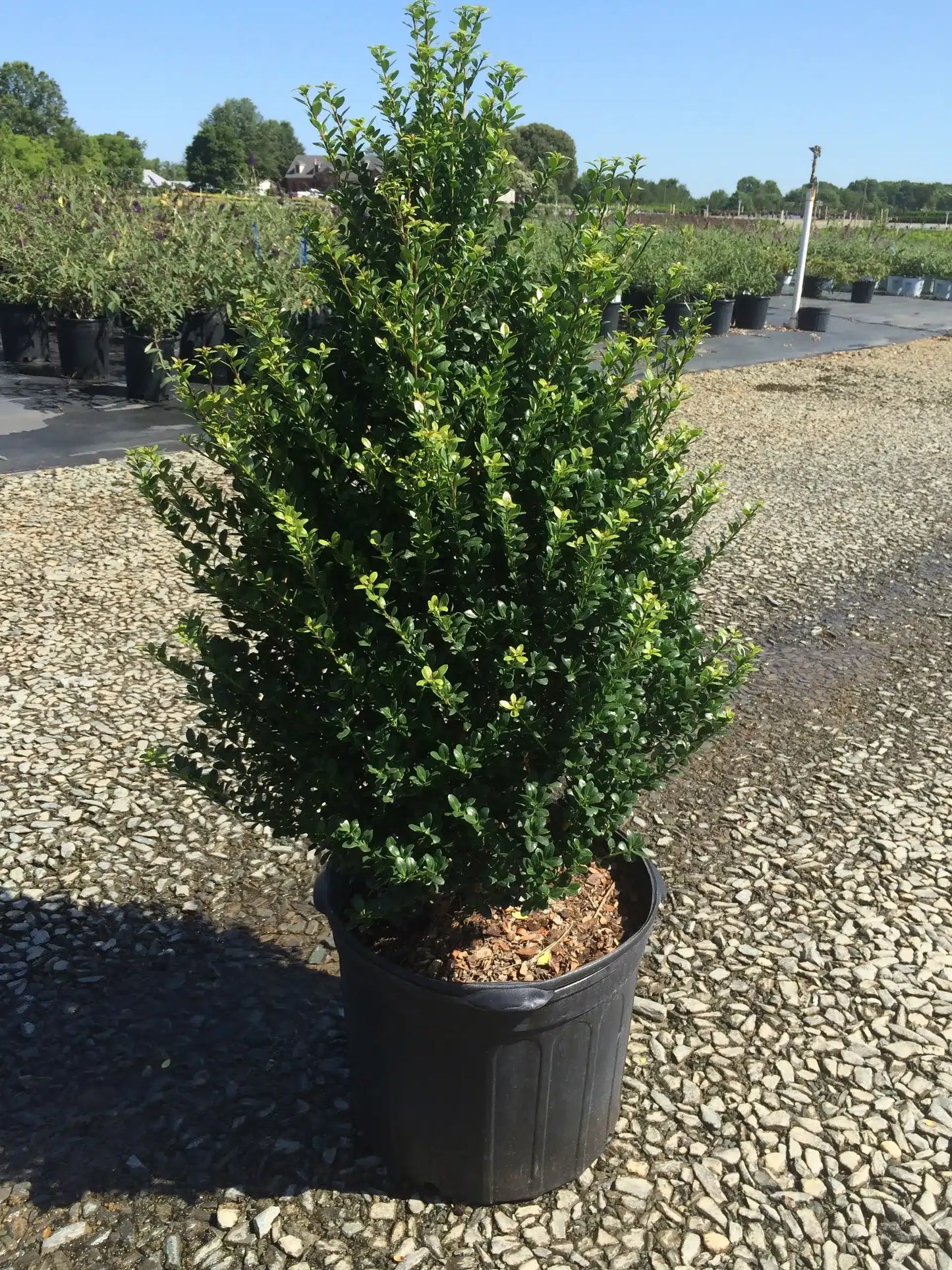
A narrow, upright Japanese holly prized for its dense, glossy, evergreen foliage and formal, architectural habit—an excellent boxwood alternative for hedges, screens, and refined foundation plantings.
Description
Ilex crenata 'Steeds' is a broadleaf evergreen shrub with a naturally narrow, pyramidal form and tight, fine-textured branching. Its small, dark green leaves resemble boxwood but without spines, holding rich color year-round for dependable structure in the landscape. Spring brings tiny, inconspicuous white flowers that may attract occasional pollinators; 'Steeds' is typically a male selection and rarely produces fruit. Reliable, neat, and adaptable to shearing, it excels in formal hedging, topiary, and space-saving screens where height is desired without excessive width.
Tip: For best color and vigor, plant in slightly acidic, well-drained soil and avoid high pH sites that can cause leaf yellowing (chlorosis).
Suggested Uses
- Narrow hedges & privacy screens
- Foundation plantings
- Formal/topiary shapes
- Entryway accents
- Mixed borders (acid-loving)
- Container specimens
- Year-round structure
Plant Details
-
 Botanical NameIlex Crenata 'steeds' Sold Out
-
 Common NameSteeds Japanese Holly
-
 Size & GrowthTypically 6–8 ft tall and 3–4 ft wide (narrow pyramidal); ultimate size 8–10 ft with age; naturally dense habit.
-
 Hardiness ZonesUSDA Zones 5–8 (protect from drying winter winds in colder sites).
-
 Foliage TypeBroadleaf evergreen; small, glossy, dark green leaves year-round; excellent for formal structure.
-
 Bloom TimeLate spring; tiny white flowers are inconspicuous; 'Steeds' is typically male and rarely fruits.
-
 Growth RateSlow to moderate (approximately 6–10 in per year under good conditions).
-
 Light RequirementsFull sun to part shade; densest foliage and form in at least 4–6 hours of sun.
-
 Attracts PollinatorsLow to occasional—small spring flowers may draw bees but are not a major pollinator resource.
-
 Indoor FriendlyNo—best grown outdoors; needs winter chill and full-spectrum light to thrive.
-
 Container FriendlyYes—performs well in large containers with excellent drainage; ideal for entryways and patios.
-
 Deer ResistantGenerally deer resistant, though no plant is completely deer-proof when browsing pressure is high.
-
 Pet WarningIlex foliage/berries can cause mild gastrointestinal upset if ingested; supervise pets and children. ('Steeds' rarely fruits.)
-
 FragrantNo notable fragrance; valued for form and foliage rather than scent.
-
 Cut FlowerNot a cut-flower plant; evergreen sprigs can be clipped for arrangements and holiday greens.
-
 Grows Well WithGrows Well With Azalea, Rhododendron, Pieris, Camellia (mild climates), Hydrangea, Heuchera, Hosta, Ferns, Japanese Forest Grass (Hakonechloa).
Care Tips
-
 Planting InstructionsPlant in spring or early fall. Dig a hole 2× as wide as the root ball and the same depth. Set the crown 1–2 in above grade, backfill with native soil, water thoroughly, and mulch 2–3 in (keep mulch off the stems).
-
 Soil MoistureKeep evenly moist the first growing season. Once established, maintain moderate moisture; avoid waterlogging and prolonged drought.
-
 Soil TypeWell-drained, slightly acidic soil (pH ~5.0–6.5). Loam or sandy loam is ideal. Poor drainage can lead to root issues; avoid alkaline soils that cause chlorosis.
-
 HumidityAdaptable to average outdoor humidity. In winter, protect from desiccating winds in exposed sites to prevent leaf burn.
-
 Pruning InstructionsShape lightly in late winter to early spring. Optional touch-up shearing after new growth hardens (mid-summer). Avoid heavy pruning in late fall.
-
 Winter CareWater deeply before ground freeze; apply 2–3 in mulch. In Zones 5–6, provide wind protection (burlap screen) on exposed sites; anti-desiccant spray optional.
-
 Planting DepthSet the top of the root ball level with or slightly above the surrounding soil; never bury the trunk flare. Do not mound soil over the crown.
-
 FertilizationFeed in early spring with a slow-release, acid-forming fertilizer for evergreens (e.g., holly/azalea blends). Follow label rates; avoid over-fertilizing late in the season.
-
 Special CareMonitor for iron chlorosis in high-pH soils; amend with sulfur or chelated iron as needed. Ensure good drainage to prevent root rot. Possible pests include scale and spider mites—inspect periodically and maintain airflow.
Note: Cultural details reflect typical performance of Ilex crenata 'Steeds' across its hardiness range. Local conditions may affect growth and care needs.