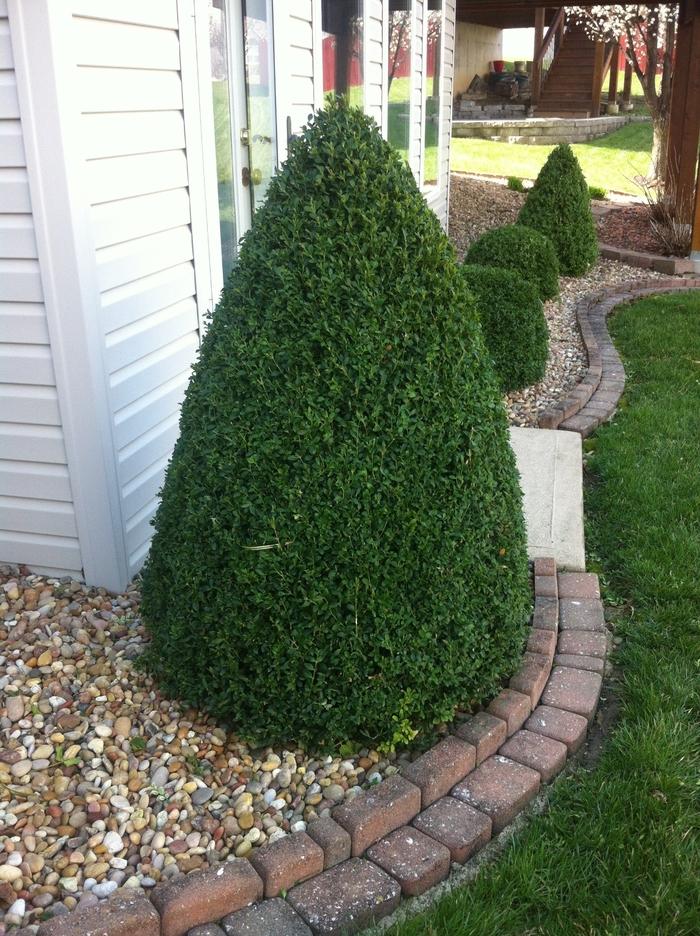


RedCrocus Green Mountain Boxwood Cone Topiary, Live Evergreen Shrub for Planters, Hedges & Entry Accents, Buxus 'Green Mountain' 5 Gallon Nursery Pot
RedCrocus Green Mountain Boxwood Cone Topiary, Live Evergreen Shrub for Planters, Hedges & Entry Accents, Buxus 'Green Mountain' 5 Gallon Nursery Pot
Regular price
$380.00 USD
Regular price
$494.00 USD
Sale price
$380.00 USD
Unit price
per
Shipping calculated at checkout.
SKU:bered0c-redcrocus
Couldn't load pickup availability
Buxus Green Mountain Cone Cone Shape
A hardy, formal evergreen topiary with dense, bright-green foliage and a naturally pyramidal habit perfect for year-round structure.
USDA Zones 4–9 • Evergreen • Deer Resistant Prefers full sun to partial shade
 Well‑drained loam, slightly alkaline
 Shear to maintain crisp cone form
Description
Buxus Green Mountain Cone Cone Shape is a premium boxwood selected and trained into a formal cone. The ‘Green Mountain’ lineage provides a naturally upright, pyramidal habit with dense branching and small, glossy leaves that hold rich color through winter. It’s exceptionally versatile—equally at home framing entryways, anchoring parterres, or adding evergreen structure to mixed borders.
Cold hardy and tolerant of regular pruning, this cone topiary delivers a refined, architectural look year‑round. Its inconspicuous spring blooms can offer early nectar to small pollinators, while the foliage remains reliably deer resistant.
Note: Sizes and performance may vary with climate and maintenance. Details below reflect typical characteristics for this plant type and trained form.
Suggested Uses
Design with confidence—this evergreen workhorse is a natural for formal and modern landscapes alike.
-
 Containers & Entry Accents Ideal as a matched pair flanking doors, gates, or pathways; thrives in large, well‑drained planters.
 -
 Formal Hedges & Parterres Use as punctuation in knot gardens, parterres, or as sculptural focal points in courtyard beds.
 -
 Four-Season Structure Evergreen mass and crisp geometry provide year‑round interest, especially valuable in winter.
 -
 Companion Planting Pairs beautifully with hydrangeas, hellebores, heucheras, roses, alliums, salvia, and ornamental grasses.
Plant Details
-
 Botanical NameBuxus Green Mountain Cone Cone Shape
-
 Common NameBuxus Green Mountain Cone
-
Size & GrowthTypically 5–7 ft tall and 2–3 ft wide at maturity when maintained; slow to moderate growth (about 3–6 in per year) with dense, upright branching.
-
 Hardiness ZonesUSDA 4–9; provides excellent winter color retention with proper siting and care.
-
 Foliage TypeEvergreen; small, glossy, rich-green leaves that hold color well through cold seasons.
-
 Bloom TimeSpring; blooms are inconspicuous but lightly fragrant and visited by small pollinators.
-
 Growth RateSlow to moderate; responds well to regular, light shearing for a sharp cone outline.
-
Light RequirementsFull sun to partial shade; in hotter climates, provide afternoon shade to reduce winter bronzing and stress.
-
 Attracts PollinatorsModestly; small spring flowers can provide early nectar for bees and beneficial insects.
-
 Indoor FriendlyNot recommended long‑term indoors; may be staged indoors briefly in bright, cool conditions.
-
Container FriendlyYes; excellent in large containers with sharp drainage. Protect roots in winter (Zones 4–6) with insulation or sheltered placement.
-
 Deer ResistantYes; typically avoided by deer. Rabbits may nibble young growth in spring.
-
 Pet WarningMildly toxic if ingested by pets or people; may cause gastrointestinal upset. Discourage chewing and ingestion.
-
 FragrantSubtle; small spring flowers have a light scent. Foliage is aromatic when crushed.
-
 Cut FlowerNot a showy cut flower, but evergreen stems are excellent as long‑lasting greenery in arrangements.
-
Grows Well WithGrows Well With Hydrangea paniculata, Helleborus, Heuchera, Roses, Salvia, Alliums, Liriope, Hakonechloa, Lavender (in sunny, well‑drained sites).
Tip: Site to avoid harsh winter winds and late-day winter sun to minimize bronzing and desiccation.
Care Tips
-
 Planting InstructionsPlant spring or early fall. Loosen and tease apart circling roots. Set in a hole 2–3× the width of the root ball with the root flare slightly above grade. Backfill with native soil; water deeply to settle.
-
 Soil MoistureKeep evenly moist but never waterlogged. Water deeply, then allow the top inch of soil to dry. Mulch 2–3 in to conserve moisture (keep mulch off the trunk).
-
Soil TypeWell‑drained loam or sandy loam; tolerates clay if drainage is improved. Prefers pH near neutral to slightly alkaline (≈6.8–7.5). Avoid compacted, soggy sites.
-
 HumidityAverage outdoor humidity is fine. Ensure good air circulation; avoid prolonged leaf wetness to reduce disease pressure (e.g., boxwood blight).
-
Pruning InstructionsShear lightly 1–3× per season to refine the cone after new growth hardens (late spring through midsummer). Avoid heavy cuts in late fall. Always sanitize tools between plants.
-
Winter CareWater well before ground freeze, apply anti‑desiccant if desired, and use burlap windbreaks in exposed sites. In containers, insulate pots or overwinter in a sheltered, unheated space with light.
-
 Planting DepthSet the crown at or up to 1–2 in above the surrounding soil. Do not bury the stem; keep the root flare visible for best health and drainage.
-
 FertilizationLight feeder. Apply a balanced, slow‑release fertilizer (e.g., 10‑6‑4 or boxwood‑specific) in early spring. Do not fertilize late in the season. Maintain pH with lime where soils are acidic.
-
 Special CareMonitor for boxwood leafminer, psyllid, and blight. Favor drip irrigation over overhead watering. Clean up fallen leaves, keep mulch and soil off foliage, and space plants for airflow.
General guidance for the Green Mountain boxwood type and cone topiary form; adjust care to your local climate and site.