

RedCrocus Kalanchoe marnieriana (Marnier's Kalanchoe) Live Succulent, Easy-Care, Drought-Tolerant Houseplant, Indoor or Outdoor 4" Pot
RedCrocus Kalanchoe marnieriana (Marnier's Kalanchoe) Live Succulent, Easy-Care, Drought-Tolerant Houseplant, Indoor or Outdoor 4" Pot
Regular price
$31.60 USD
Regular price
$41.08 USD
Sale price
$31.60 USD
Unit price
per
Shipping calculated at checkout.
SKU:berdf87-redcrocus
Couldn't load pickup availability
Succulent- Kalanchoe Mariners Kalanchoe
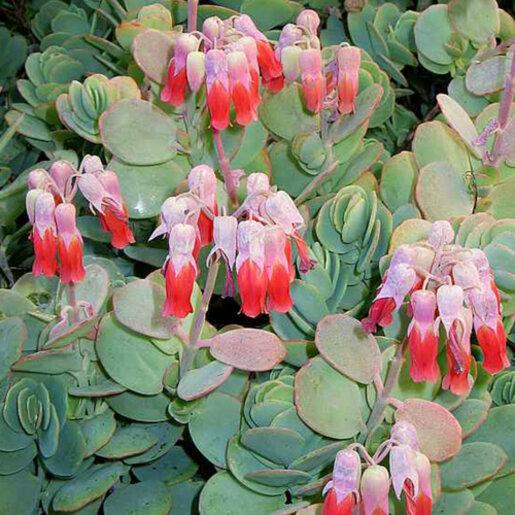
A sculptural, blue‑green kalanchoe with stacked, paddle-like leaves edged in rosy red under bright sun; reliable winter–spring bloomer for containers and xeric plantings.
Description
Kalanchoe “Mariner’s” (commonly aligned with Kalanchoe marnieriana) is an evergreen succulent valued for its architectural, coin‑ or paddle‑shaped leaves arranged along arching stems. The foliage is powdery blue‑green and often blushes pink to red along the margins when grown in strong light or with cool nights. Clumps slowly expand, and mature plants send up airy clusters of tubular coral to orange‑red flowers from late winter into spring—favorites of hummingbirds and early pollinators. Excellent in modern containers, rock gardens, and bright interiors.
Suggested Uses
- Modern containers and patio pots
- Xeriscape and rock gardens
- Coastal and Mediterranean-style plantings
- Bright indoor windowsills / sunrooms
- Succulent arrangements and dish gardens
- Pollinator-friendly winter color
Plant Details

Botanical Name
Succulent- Kalanchoe Mariners Kalanchoe

Common Name
Succulent- Kalanchoe (often sold as Mariner’s Kalanchoe)

Size & Growth
12–18 in tall x 18–24 in wide; stems may arch or trail. Moderate clumping habit.

Hardiness Zones
USDA 10–12 outdoors; grow as a container or houseplant in cooler zones—protect from frost (below ~40–45°F / 4–7°C).

Foliage Type
Evergreen succulent; glaucous blue‑green, pancake leaves with red margins in bright light.

Bloom Time
Late winter through spring; tubular coral to orange‑red flowers on branched stems.

Growth Rate
Moderate (faster in warm seasons with ample light).

Light Requirements
Full sun to bright light; indoors, 4–6+ hours of strong sun or bright indirect near a south/west window.

Attracts Pollinators
Yes—hummingbirds and bees visit tubular blooms in late winter–spring.

Indoor Friendly
Yes—thrives as a houseplant with high light and excellent drainage.

Container Friendly
Excellent—ideal for modern pots, bowls, and mixed succulent planters.

Deer Resistant
Generally deer‑resistant; fleshy, bitter sap is often avoided.

Pet Warning
Toxic to pets if ingested (cardiac glycosides). Keep out of reach of cats and dogs.

Fragrant
Not notably fragrant; grown for foliage form and flower color.

Cut Flower
Occasionally used; flower stems can be cut for arrangements (seal ends and let callus).

Grows Well With
Echeveria, Aloe, Sedum, Crassula, Curio (Senecio) serpens, dwarf Agave.
Care Tips

Planting Instructions
Set at the same depth as in the nursery pot. Use a container with drainage; for gardens, mound or raise bed to keep crowns dry. Space 12–18 in apart.

Soil Moisture
Water deeply, then allow 2/3 of the mix to dry before watering again. Reduce in winter; avoid standing water in saucers.

Soil Type
Fast‑draining cactus/succulent mix. Amend with 25–40% pumice/perlite or coarse sand; pH neutral to slightly acidic.

Humidity
Low to average household humidity; provide airflow and keep foliage dry to prevent rot.

Pruning Instructions
After bloom, remove spent flower stalks. Pinch or trim leggy stems in late spring to encourage branching; re‑root cuttings easily.

Winter Care
Protect from frost; overwinter indoors if temps drop below 50°F (10°C). Provide maximum light and water sparingly.

Planting Depth
Plant so the top of the root ball is level with the soil surface. Do not bury stems; keep the crown slightly elevated.

Fertilization
Feed lightly during spring–summer with a half‑strength balanced or succulent fertilizer every 4–6 weeks. Do not fertilize in winter.

Special Care
Rotate monthly for even form; give more sun for red margins. Watch for mealybugs/scale; isolate and treat promptly. Repot every 2–3 years into fresh, gritty mix.
Note: If exact traits vary by cultivar, the above reflects typical care and performance for Mariner’s-type Kalanchoe.
Quick Highlights
Low Water Needs
Architectural Foliage
Winter Blooms
Easy to Propagate
Placement Tips
Indoors, choose a south or west window with several hours of sun. Outdoors, morning sun with light afternoon shade in very hot summers prevents leaf scorch while maintaining color. Always ensure rapid drainage—especially in cool seasons.