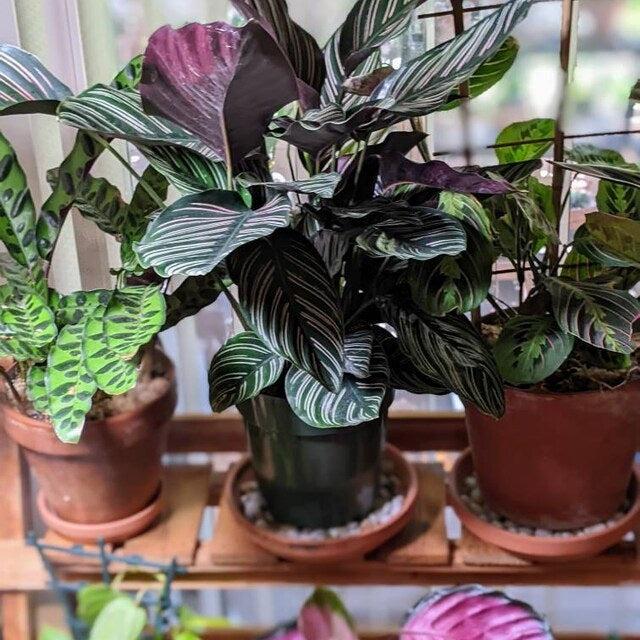


RedCrocus Calathea Ornata (Pinstripe Calathea) Live Indoor Prayer Plant - Pink Pinstripes, Burgundy Undersides, Pet-Safe, Thrives in Indirect Light 6"
RedCrocus Calathea Ornata (Pinstripe Calathea) Live Indoor Prayer Plant - Pink Pinstripes, Burgundy Undersides, Pet-Safe, Thrives in Indirect Light 6"
SKU:berd7af-redcrocus
Couldn't load pickup availability
Calathea Ornata
Pinstripe Calathea — lush, velvety foliage painted with elegant pink stripes and a burgundy underside.
Description
Calathea ornata is a tropical, evergreen member of the Marantaceae known for its glossy, deep green leaves hand‑painted with fine pink pinstripes that mature to soft cream. The leaf undersides glow burgundy, and like other “prayer plants,” the foliage gently lifts and lowers from day to night. As a houseplant it thrives in warm temperatures, high humidity, and gentle, indirect light. With proper care, its architectural leaves bring a refined, modern look to desks, shelves, and living spaces year‑round.
Plant Details

Botanical Name
Calathea ornata

Common Name
Calathea (Pinstripe Calathea)

Size & Growth
Typically 12–24 in (30–60 cm) tall and wide indoors; compact clumping habit.

Hardiness Zones
USDA 10–12 outdoors (frost‑free). Commonly grown indoors in all zones.

Foliage Type
Evergreen, broadleaf; glossy dark green leaves with pink/cream pinstripes and burgundy undersides.

Bloom Time
Rare indoors; occasional small, inconspicuous blooms in warm seasons under ideal conditions.

Growth Rate
Moderate; speeds up in warm, humid environments with steady moisture.

Light Requirements
Medium to bright, indirect light. Avoid direct sun; tolerates lower light with slower growth.

Attracts Pollinators
Not typically; grown for foliage and rarely flowers indoors.

Indoor Friendly
Excellent houseplant; thrives in warm rooms with steady humidity and filtered light.

Container Friendly
Yes—best in pots with drainage; self‑watering planters can help stabilize moisture.

Deer Resistant
Not considered deer‑resistant; typically kept indoors where deer are not a concern.

Pet Warning
Non‑toxic to cats and dogs (pet‑safe). Avoid ingestion of soil or fertilizers.

Fragrant
No noticeable fragrance; valued primarily for ornamental foliage.

Cut Flower
Rarely used as a cut flower; individual leaves can be used briefly in foliage arrangements.

Grows Well With
Maranta (Prayer Plant), Stromanthe, Ctenanthe, ferns (e.g., Boston fern), Philodendron, Peperomia.
Care Tips

Planting Instructions
Choose a pot with drainage 2–5 cm wider than the rootball. Gently loosen roots, set at original soil line, and backfill with airy mix. Place in bright, indirect light; avoid drafts and direct sun.

Soil Moisture
Keep evenly moist but never soggy. Water when the top 1–2 cm (½–¾ in) feels dry. Use room‑temperature rain, distilled, or filtered water to prevent leaf edges browning.

Soil Type
Loose, peat‑free aroid mix: roughly 40% coco coir, 30% fine bark, 20% perlite/pumice, 10% compost. Slightly acidic pH 6.0–6.5 with excellent drainage and aeration.

Humidity
Targets 50–70%+. Use a humidifier or pebble tray, group with other plants, and avoid heat vents. Crisp tips indicate air is too dry.

Pruning Instructions
Remove yellow or tattered leaves at the base with sterilized shears. Wipe dust from leaves with damp cloth; no heavy pruning needed.

Winter Care
Reduce watering frequency, keep above 60°F (16°C), and away from cold windows or drafts. Maintain humidity; pause fertilizing if growth slows.

Planting Depth
Set at the same depth as in the nursery pot. Keep the crown level with the soil surface; do not bury stems or petioles.

Fertilization
Feed every 4–6 weeks in spring–summer with a balanced, dilute (¼–½ strength) liquid fertilizer. Flush soil quarterly to prevent salt buildup; no feed in winter if growth is slow.

Special Care
Rotate plant monthly for even growth. Repot every 1–2 years in spring. Monitor for spider mites and thrips; increase humidity and treat promptly if detected.
Note: Conditions vary by home and cultivar. Adjust watering and light gradually; consistent humidity and gentle, filtered light are key to crisp, vibrant pinstripes.