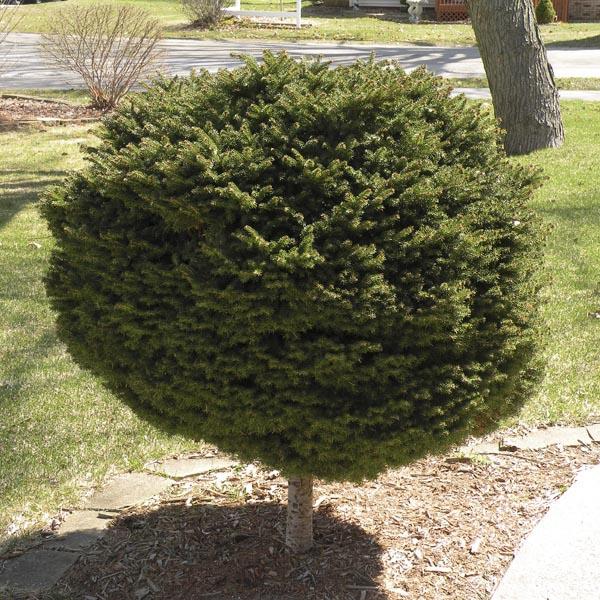


RedCrocus Picea 'Nana' Dwarf Spruce Standard Topiary, Live Evergreen Plant for Containers, Doorway Accents & Formal Gardens, Cold-Hardy Zones 4-7, Low-Maintenance, Full Sun 7 Gallon Nursery Pot
RedCrocus Picea 'Nana' Dwarf Spruce Standard Topiary, Live Evergreen Plant for Containers, Doorway Accents & Formal Gardens, Cold-Hardy Zones 4-7, Low-Maintenance, Full Sun 7 Gallon Nursery Pot
SKU:berd54f-redcrocus
Couldn't load pickup availability
Picea O. Nana Topiary Standard Topiary
A compact Serbian spruce standard with refined, year‑round structure and shimmering bicolor needles.
Description
This topiary standard is crafted from the dwarf Serbian spruce selection often sold as ‘Nana’, grafted onto a clear stem to form a tidy “lollipop” or layered pom‑pom head. Short, glossy, dark‑green needles reveal striking silvery undersides, giving the plant a subtle two‑tone shimmer in the breeze. Naturally dense and slow to grow, it keeps its formal outline with minimal trimming and provides four‑season structure in beds or containers.
Expect steady, compact growth of the head—typically 5–10 cm (2–4 in) per year—making it ideal for entrances, courtyards, terraces, and small gardens where neat form and low maintenance are priorities.
Suggested Uses
-
 Statement containersFlank front doors, gateways, and patio seating areas; pairs or alleés for symmetry.
 -
 Formal and modern designsAccent for knot gardens, parterres, and contemporary minimal plantings.
 -
 Rock and alpine gardensCompact scale and slow growth suit small spaces and raised beds.
 -
 Four‑season interestEvergreen texture and winter form anchor planting compositions year‑round.
Highlights
-
 Light: Full sun to light shade (6+ hours sun best for density).
 -
 Hardiness: USDA Zones 4–7; excellent cold tolerance once established.
 -
 Water: Even moisture; avoid soggy or bone‑dry extremes, especially in containers.
 -
 Maintenance: Light seasonal trim maintains the topiary silhouette.
Care Tips
-
 Planting InstructionsPlant at the same depth as in the nursery pot with the graft union and trunk flare above the soil line. For in‑ground, dig a hole 2× the root ball width, backfill with native soil, and stake the standard for the first season to prevent wind‑rock. For containers, use a pot with large drainage holes and anchor the stem with a discreet stake if windy.
-
Soil MoistureKeep evenly moist, especially the first 1–2 years. Water deeply, then allow the top 2–4 cm (1–1.5 in) of soil to dry. Avoid persistent sogginess or prolonged drought; containers dry faster in summer.
-
 Soil TypeWell‑drained loam or sandy loam. pH slightly acidic to neutral (≈5.5–7.0). In heavy clay, plant on a gentle mound or use raised beds; incorporate grit or coarse bark to improve drainage (do not bury root flare).
-
 HumidityHandles typical outdoor humidity; avoid hot, reflected heat sites that desiccate containers. Mulch 5–7 cm (2–3 in) helps moderate moisture—keep mulch off the trunk.
-
Pruning InstructionsMinimal shearing needed. Lightly trim after the spring flush (late spring/early summer) to refine the outline. Avoid cutting back into leafless, older wood. Remove any shoots emerging from below the graft. Keep the clear stem clean of side growth.
-
 Winter CareIn ground: water well before soil freezes and mulch the root zone. In exposed sites, a wind screen helps the first winter. In containers: insulate the pot (wrap or group), place in a sheltered spot out of prevailing winds, and water lightly during thaw periods to prevent root desiccation.
-
 Planting DepthSet the root flare level with the surrounding soil; never bury the trunk or graft. In containers, leave 2–3 cm (≈1 in) from soil surface to rim to allow for watering. Maintain a mulch‑free collar around the stem.
-
 FertilizationA light feeder. Apply a slow‑release, balanced evergreen fertilizer in early spring (e.g., 5‑3‑2 to 8‑8‑8) following label rates. Avoid late‑summer feeding. If needles yellow on higher‑pH soils, consider chelated iron or sulfur to nudge pH toward mildly acidic.
-
 Special CareRotate container plants quarterly for even sun exposure. Check and adjust stake ties annually to prevent girdling. Monitor for spider mites or aphids in hot, dry spells; rinse foliage or use horticultural soap if needed. Ensure excellent drainage—root rot is the main enemy.