Skip to product information
1 of 16

RedCrocus Picea abies 'Little Gem' Standard Topiary - Dwarf Norway Spruce, Evergreen, Slow-Growing, Hardy, Ideal for Containers, Entries & Patios 7 Gallon Nursery Pot

RedCrocus Picea abies 'Little Gem' Standard Topiary - Dwarf Norway Spruce, Evergreen, Slow-Growing, Hardy, Ideal for Containers, Entries & Patios 7 Gallon Nursery Pot

Regular price $900.00 USD
Regular price $1,170.00 USD Sale price $900.00 USD
Sale Sold out
Shipping calculated at checkout.

SKU:berd198-redcrocus

Pot Size

Picea Little Gem Topiary Standard Topiary

Evergreen icon Evergreen Dwarf Conifer • Standard Topiary
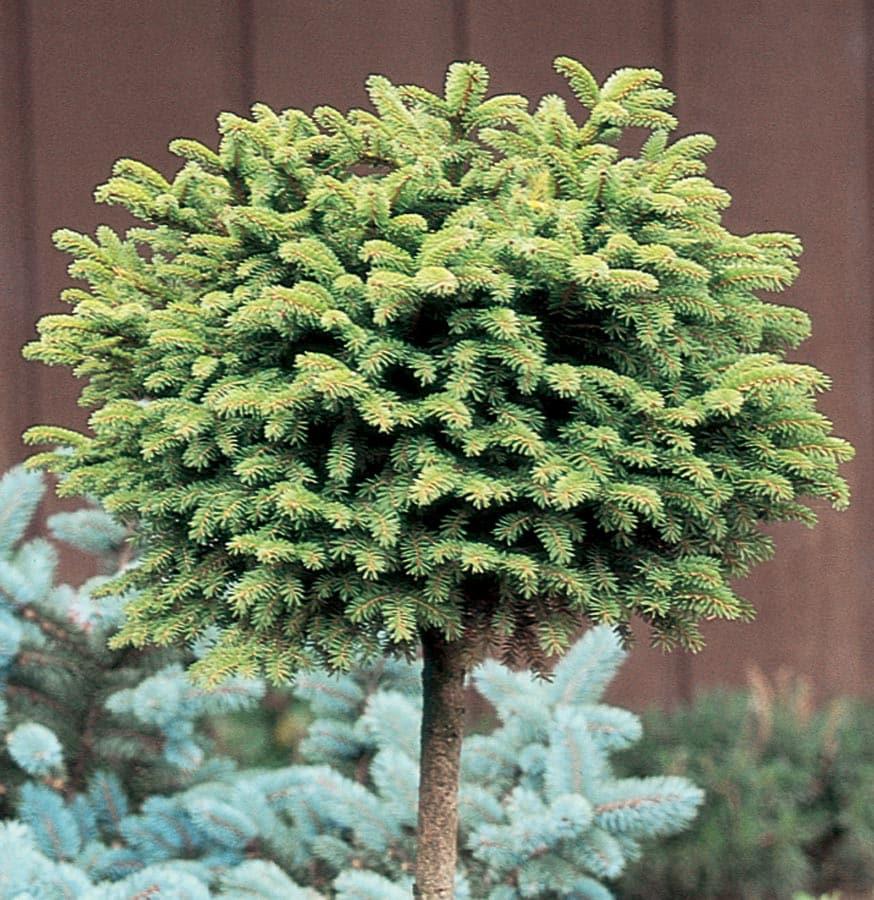
A sculpted, ultra‑compact Norway spruce with a dense, globed crown atop a clean stem — four‑season structure with minimal maintenance.

Description

Picea Little Gem Topiary Standard Topiary is a grafted standard of the famed dwarf Norway spruce selection ‘Little Gem’. Its tight, cushion‑to‑globose head forms an impeccably neat silhouette on a straight stem, lending instant architecture to entries, patios, and modern gardens. Expect extremely slow growth (about 1–2 inches per year) with short, dark‑green needles that hold year‑round. Hardy, wind‑tolerant, and naturally tidy, it’s a superb choice for containers and small spaces where dependable evergreen structure is desired.

Note: Often listed botanically as Picea abies ‘Little Gem’ (grafted as a standard). Form and stem height vary by grower.

Suggested Uses

  • Containers & Courtyards
  • Front Door Accents
  • Formal & Contemporary Gardens
  • Rock & Alpine Gardens
  • Year‑Round Structure
  • Cold‑Climate Landscaping
  • Low‑Maintenance Borders

Plant Details

Botanical name
Botanical Name
Picea Little Gem Topiary Standard Topiary (also sold as Picea abies ‘Little Gem’, grafted standard)
Common name
Common Name
Picea Little Gem Topiary; Dwarf Norway Spruce (Standard)
Size and growth
Size & Growth
Head typically 12–24 in (30–60 cm) tall and wide in 10 years; ultimate head 24–36 in (60–90 cm) over 15–20+ years. Stem height varies by grower (often 18–36 in / 45–90 cm). Very slow growth (1–2 in/yr).
Hardiness zones
Hardiness Zones
USDA 3–7
Foliage type
Foliage Type
Evergreen, short dense needles; deep green year‑round
Bloom time
Bloom Time
Spring pollen/seed cones (inconspicuous; primarily ornamental for foliage and form)
Growth rate
Growth Rate
Very slow; approximately 1–2 inches per year
Light requirements
Light Requirements
Full sun (6+ hours); light afternoon shade in hot climates
Attracts pollinators
Attracts Pollinators
No — wind‑pollinated conifer; not a pollinator plant
Indoor friendly
Indoor Friendly
Not suitable as a long‑term houseplant; best outdoors year‑round
Container friendly
Container Friendly
Excellent for containers; use a large pot with drainage and protect roots in winter
Deer resistant
Deer Resistant
Generally deer‑resistant (not deer‑proof)
Pet warning
Pet Warning
Non‑toxic, but sharp needles/resin can irritate if chewed; avoid ingestion and keep away from pet play areas
Fragrance
Fragrant
Mild resinous scent when foliage is rubbed; not notably fragrant in the garden
Cut flower
Cut Flower
Not used as a cut flower; small sprigs suitable for winter arrangements
Companions
Grows Well With
Dwarf conifers (Pinus mugo ‘Mops’, Thuja ‘Mr. Bowling Ball’), heaths/heathers, Heuchera, Sedum, dwarf Japanese maples, fine‑textured grasses

Care Tips

Planting instructions
Planting Instructions
Plant in spring or early fall. Dig a hole 2–3× wider than the root ball. Set the root flare level with soil and keep the graft above grade. Backfill with native soil + compost, water thoroughly, mulch 2–3 in (keep off trunk), and stake the standard to prevent wind rock.
Soil moisture
Soil Moisture
Keep evenly moist the first season; thereafter allow the top inch of soil to dry between waterings. Avoid waterlogging—roots dislike soggy conditions.
Soil type
Soil Type
Well‑drained loam or sandy loam; slightly acidic to neutral (pH 5.5–7.0). Amend heavy clay with grit/compost to improve drainage.
Humidity
Humidity
Average outdoor humidity is ideal. Ensure good air flow, especially in warm, humid summers to discourage mites.
Pruning instructions
Pruning Instructions
Minimal pruning. In late spring, lightly pinch new “candles” to maintain a tight globe. Do not cut back into old wood. Remove any shoots appearing on the trunk below the graft. Sanitation pruning (dead/diseased) anytime.
Winter care
Winter Care
In‑ground plants are very hardy. For container plants, insulate the pot or move to a sheltered, unheated spot. Shield from harsh wind/sun with burlap if exposed. Water lightly during winter thaws if soil is dry.
Planting depth
Planting Depth
Set the crown/root flare just above surrounding grade; top of root ball level with soil surface. Never bury the trunk or graft union.
Fertilization
Fertilization
Feed lightly in early spring with a slow‑release, balanced or acid‑forming conifer fertilizer at label rates. Avoid high nitrogen in late summer.
Special care
Special Care
Stake the standard for the first season. Monitor for spider mites and spruce gall adelgids; rinse foliage periodically in summer. Mulch to moderate soil temps; keep mulch a few inches from the trunk.
Watering rule of thumb: in the first year, provide approximately 1 inch of water per week (rainfall + irrigation), adjusting for heat and soil drainage.
View full details