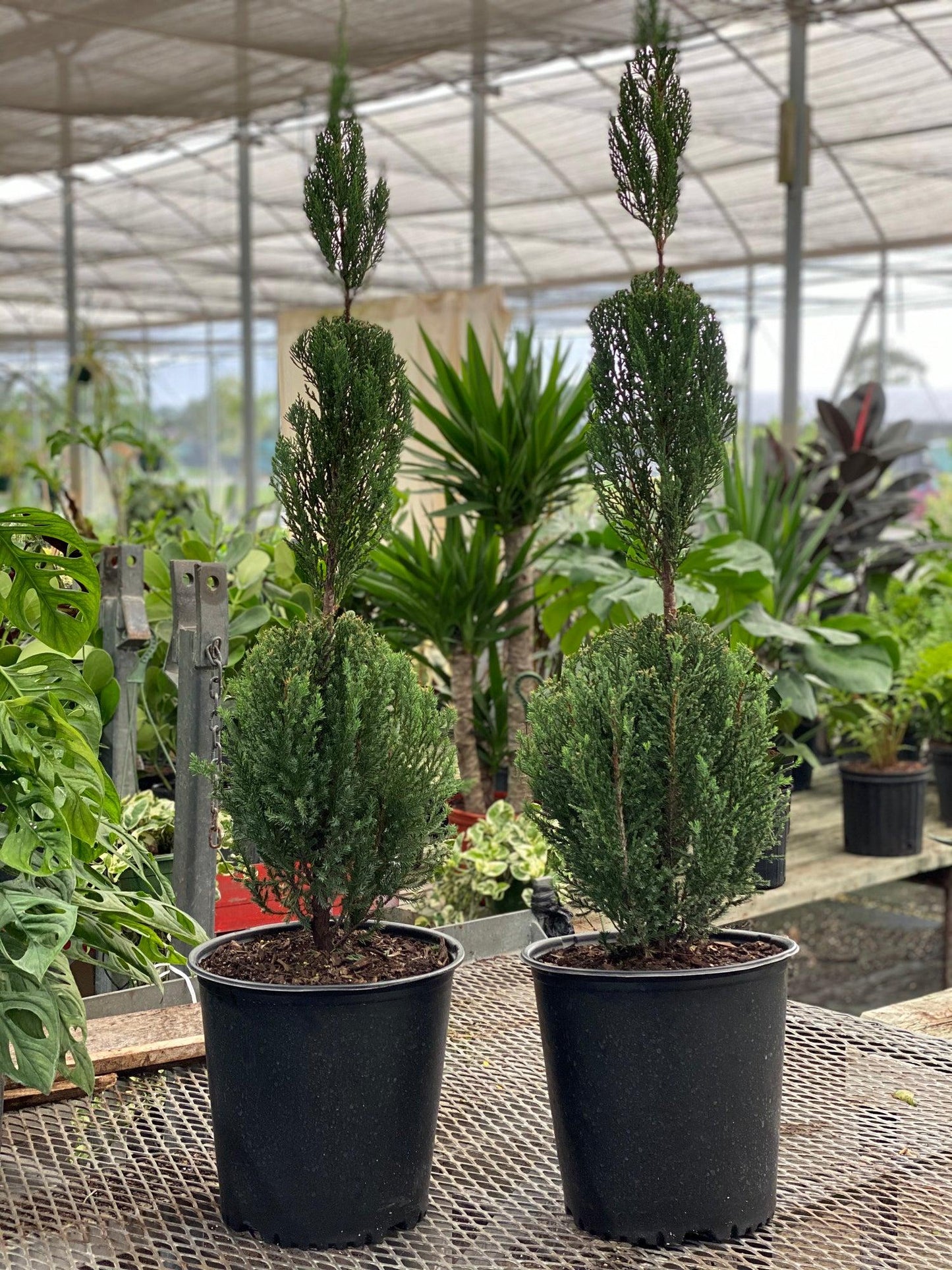


RedCrocus Blue Point Juniper Topiary Ball, Live Evergreen Shrub for Landscape or Container, Juniperus chinensis 'Blue Point' 10 Gallon Nursery Pot
RedCrocus Blue Point Juniper Topiary Ball, Live Evergreen Shrub for Landscape or Container, Juniperus chinensis 'Blue Point' 10 Gallon Nursery Pot
Regular price
$32.00 USD
Regular price
$41.60 USD
Sale price
$32.00 USD
Unit price
per
Shipping calculated at checkout.
SKU:berd147-redcrocus
Couldn't load pickup availability
Juniperus Blue Point- Topiary Ball Topiary
Architectural, evergreen structure with dense, blue‑green foliage for year‑round impact
Description
The Blue Point Juniper topiary is a crafted form of the popular Juniperus chinensis ‘Blue Point’, trained into rounded “ball” silhouettes that deliver elegant, evergreen structure in any landscape. Its dense, blue‑green scale-like foliage holds color beautifully through all seasons, providing a crisp, formal look with minimal care. Naturally hardy and drought tolerant once established, this topiary offers strong architectural presence at entryways, along paths, on patios, and in formal gardens—equally at home in large containers or in-ground plantings. With occasional light shearing, the spherical forms stay polished and symmetrical year after year.
Suggested Uses
- Entryway focal points (pair by doors or gates)
- Formal and Mediterranean gardens
- Patio and balcony containers
- Flanking pathways and terraces
- Accent in rock and xeric gardens
- Courtyards and rooftop planters
- Evergreen structure for four‑season interest
- Low-maintenance architectural specimen
Plant Details

Botanical Name
Juniperus Blue Point- Topiary Ball Topiary

Common Name
Juniperus Blue Point- Topiary

Size & Growth
In-ground: typically 10–12 ft tall x 6–8 ft wide if unpruned; topiary forms are maintained smaller (often 3–7 ft tall depending on training). Growth rate: moderate, ~6–12 in per year.

Hardiness Zones
USDA Zones 4–9 (excellent winter hardiness; protect containers from severe root freeze).

Foliage Type
Evergreen conifer with dense, scale-like blue‑green sprays; fine texture; aromatic when crushed.

Bloom Time
Not grown for blooms; junipers have inconspicuous spring pollen and may produce bluish, berry‑like cones on female plants.

Growth Rate
Moderate; expect 6–12 inches of new growth annually under good conditions.

Light Requirements
Full sun (6+ hours/day) for best color and density; tolerates very light afternoon shade in hot climates.

Attracts Pollinators
Low—junipers are wind‑pollinated; female plants may provide berries and cover for birds and wildlife.

Indoor Friendly
Not recommended for long‑term indoor growing; suitable only for very short seasonal display in brightest possible light.

Container Friendly
Yes—thrives in large, well‑drained containers; choose frost‑proof pots and insulate in cold climates.

Deer Resistant
Generally deer resistant due to aromatic foliage (not deer‑proof).

Pet Warning
Foliage and berries can be mildly toxic if ingested; may cause gastrointestinal upset—discourage chewing.

Fragrant
Foliage has a pleasant resinous scent when handled; no floral fragrance.

Cut Flower
Not a cut flower; evergreen sprigs are useful in winter arrangements and wreaths.

Grows Well With
Lavender, rosemary, thyme, sedum, yarrow, ornamental grasses, barberry, spirea; in containers pair with trailing ivy or creeping Jenny for contrast.
Note: Attributes reflect typical guidance for Blue Point Juniper topiary forms; individual plants may vary with training and site conditions.
Care Tips

Planting Instructions
Dig a hole 2× as wide as the root ball and equal depth. Set root flare at or slightly above grade. Loosen circling roots, backfill with native soil, and water deeply. Stake only in very windy sites.

Soil Moisture
Keep evenly moist the first growing season; then allow the top inch to dry between waterings. Avoid waterlogged conditions—good drainage is essential.

Soil Type
Well‑drained sandy or loamy soils preferred; tolerates a range of pH (approx. 6.0–8.0). Amend heavy clay with grit/compost to improve drainage.

Humidity
Performs best in average outdoor humidity with good air flow; tolerates dry air. Avoid cramped, stagnant locations that encourage fungal issues.

Pruning Instructions
Lightly shear 2–4 times per season to maintain ball shape. Tip‑prune only green growth; avoid cutting into old, brown wood which may not resprout.

Winter Care
In-ground plants are hardy in Zones 4–9. In containers, insulate pots or move to a sheltered spot; water sparingly during dry thaws. Gently brush heavy snow from foliage to prevent breakage.

Planting Depth
Set so the top of the root ball is level with or 0.5–1 in above surrounding soil; ensure root flare is visible and not buried by mulch or soil.

Fertilization
Feed lightly in early spring with a slow‑release, balanced conifer fertilizer. Avoid high‑nitrogen feeds late in the season to prevent tender growth before winter.

Special Care
Provide full sun and excellent drainage; mulch 2–3 in, keeping mulch off the trunk. Monitor for spider mites and bagworms; ensure even light exposure—rotate containers periodically for symmetrical growth.