

Description
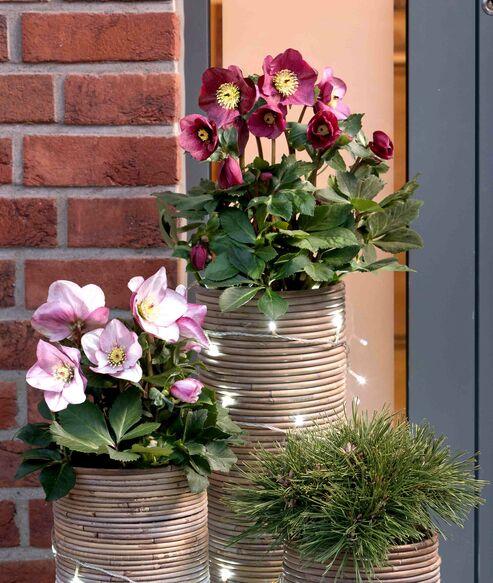
Helleborus Winter Ballet Leila Burgundy is a standout in the Winter Ballet series, prized for its outward-facing, velvety burgundy flowers that appear when few other perennials are in bloom. A long-lived, clump-forming hellebore, it carries handsome, leathery evergreen foliage that anchors shady borders year-round. Flowers emerge from late winter into early spring, providing crucial early-season nectar for pollinators. Robust and adaptable, it thrives in dappled light with rich, well-drained soils, and its naturally deer-resistant foliage makes it a low-maintenance mainstay for woodland and courtyard plantings.
Suggested Uses
- Woodland & shade borders
- Understory planting beneath trees
- Early-season pollinator resource
- Outdoor containers & courtyard pots
- Front of mixed perennial beds
- Naturalizing with spring bulbs
-
 Cut Flowers & floating bowl displays
Note: While excellent in containers outdoors, hellebores are not suitable as long-term houseplants.
Plant Details
-
 Botanical NameHelleborus Winter Ballet Leila Burgundy
-
 Common NameHelleborus Winter Ballet (Lenten Rose series)
-
 Size & Growth12–18 in tall × 18–24 in wide; clump-forming, long-lived perennial
-
 Hardiness ZonesUSDA Zones 4–9 (evergreen in mild climates)
-
 Foliage TypeEvergreen to semi-evergreen; leathery, palmately divided, deep green leaves
-
 Bloom TimeLate winter to early spring (Dec–Mar in mild areas; Feb–Apr in colder zones)
-
 Growth RateModerate; steadily forms dense, tidy clumps over time
-
 Light RequirementsPartial shade to full shade; best with morning sun and afternoon shade
-
 Attracts PollinatorsYes—early bees and beneficial insects in late winter
-
 Indoor FriendlyNot recommended as a long-term houseplant; best outdoors in cool shade
-
 Container FriendlyYes—excellent for outdoor pots; choose a large, well-drained container
-
 Deer ResistantYes—foliage is typically avoided by deer and rabbits
-
 Pet WarningToxic if ingested; sap may irritate skin—wear gloves when handling
-
 FragrantLightly fragrant to unscented; prized primarily for color and form
-
Cut FlowerYes—long-lasting when picked at seedpod stage; ideal for floating arrangements
-
 Grows Well WithGrows Well With Ferns, Hostas, Heuchera, Epimedium, Pulmonaria, Carex, snowdrops & dwarf Narcissus
Care Tips
-
 Planting InstructionsPlant in fall or early spring. Loosen soil and mix in compost. Position crown at or just above soil level; space plants 18–24 in apart and water thoroughly to settle soil.
-
 Soil MoistureKeep evenly moist but never waterlogged. Moderate drought tolerance once established; best performance with consistent moisture.
-
 Soil TypeRich, well-drained loam with added organic matter; pH neutral to slightly alkaline (6.5–7.5), tolerates mildly acidic soils.
-
 HumidityAverage garden humidity is ideal. Ensure good air circulation; avoid hot, stagnant sites.
-
 Pruning InstructionsIn late winter, remove old, tattered leaves before buds open to reduce disease. Deadhead if self-seeding is not desired. Divide clumps after flowering every 5–7 years if needed.
-
 Winter CareMulch 2–3 in in fall to buffer freeze–thaw. In very cold zones, provide wind protection with evergreen boughs. Do not bury the crown under heavy mulch.
-
 Planting DepthSet the top of the root ball level with surrounding soil; keep the crown slightly exposed. Do not plant deeper than it grew in the pot.
-
 FertilizationTop-dress with compost in early spring. Apply a light dose of slow-release, balanced fertilizer at bud break; avoid heavy summer feeding.
-
 Special CareWear gloves (sap can irritate). Avoid moving once established (deep roots). Watch for aphids, slugs, and leaf spot; sanitize tools and water at the base to limit disease.
General cultural details provided where cultivar-specific data varies. Always adjust care to local climate and site conditions.