

RedCrocus Van Pelt's Blue Lawson False Cypress Live Plant, Evergreen Blue Conifer, Deer Resistant, Outdoor Landscape Tree or Hedge, Container Friendly, Full Sun, USDA Zones 5-8 5 Gallon Nursery Pot
RedCrocus Van Pelt's Blue Lawson False Cypress Live Plant, Evergreen Blue Conifer, Deer Resistant, Outdoor Landscape Tree or Hedge, Container Friendly, Full Sun, USDA Zones 5-8 5 Gallon Nursery Pot
Regular price
$500.00 USD
Regular price
$650.00 USD
Sale price
$500.00 USD
Unit price
per
Shipping calculated at checkout.
SKU:berbfe0-redcrocus
Couldn't load pickup availability
Chamaecyparis Law. Van Pelts Blue
Description
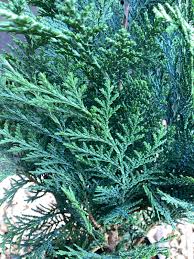
A refined, upright-pyramidal Lawson false cypress noted for its dense, steel-blue evergreen sprays. Holds color year-round, forms a tidy spire with fine texture, and provides four-season structure with minimal pruning.
Suggested Uses
Striking specimen, narrow screen or hedge, foundation accent, mixed conifer border, and year-round structure in beds. Suitable for large containers when young.
Plant Details
-
 Botanical Name: Chamaecyparis lawsoniana 'Van Pelt's Blue'
 -
 Common Name: Lawson False Cypress 'Van Pelt's Blue'
 -
 Size & Growth: 10–15 ft tall x 4–6 ft wide in 10 years; ultimate 25–35 ft tall x 8–12 ft wide; moderate growth (8–12 in/yr)
 -
 Hardiness Zones: USDA 5–8
 -
 Foliage Type: Evergreen, scale-like sprays; steel-blue to silvery-blue
 -
 Bloom Time: Not showy; small pollen/seed cones in spring
 -
 Growth Rate: Moderate
 -
 Light Requirements: Full sun to light shade; best blue color in full sun
 -
 Attracts Pollinators: No (wind-pollinated conifer)
 -
 Indoor Friendly: No; outdoor landscape tree
 -
 Container Friendly: Yes, when young in large containers with regular water and drainage
 -
 Deer Resistant: Generally deer resistant
 -
 Pet Warning: Generally non-toxic to pets; ingestion may cause mild GI upset
 -
 Fragrant: Foliage lightly resinous-aromatic when crushed
 -
 Cut Flower: Excellent for long-lasting evergreen cut greens and winter arrangements
 -
 Grows Well With: Japanese maples, dwarf conifers, boxwood, heaths and heathers, Pieris
Care Tips
-
 Planting Instructions: Plant in spring or fall; dig a hole 2x the rootball width; set root flare at/just above grade; tease circling roots; backfill and water well; mulch 2–3 in, keeping mulch off the trunk
 -
 Soil Moisture: Keep evenly moist during the first 1–2 years; do not allow prolonged drought or waterlogging
 -
 Soil Type: Well-drained loam or sandy loam; slightly acidic to neutral (pH 5.5–7.0); avoid heavy, poorly drained clay
 -
 Humidity: Average outdoor humidity; provide good air circulation and shelter from hot, drying winds
 -
 Pruning Instructions: Minimal; tip-prune or lightly shape in late winter/early spring; remove dead or crossing branches; avoid cutting into old, bare wood
 -
 Winter Care: Hardy in zones 5–8; mulch root zone; water deeply before ground freezes; in exposed sites, shield from winter winds/sunscald; move containers to a sheltered spot
 -
 Planting Depth: Keep the top of the root ball level with or slightly above surrounding soil; never bury the crown
 -
 Fertilization: Apply a slow-release, balanced, acid-forming fertilizer in early spring per label; avoid heavy nitrogen late in summer
 -
 Special Care: Ensure excellent drainage to reduce Phytophthora risk; consider raised beds on heavy soils; monitor for cypress aphid and spider mites; provide deep watering during heat; best blue color in full sun