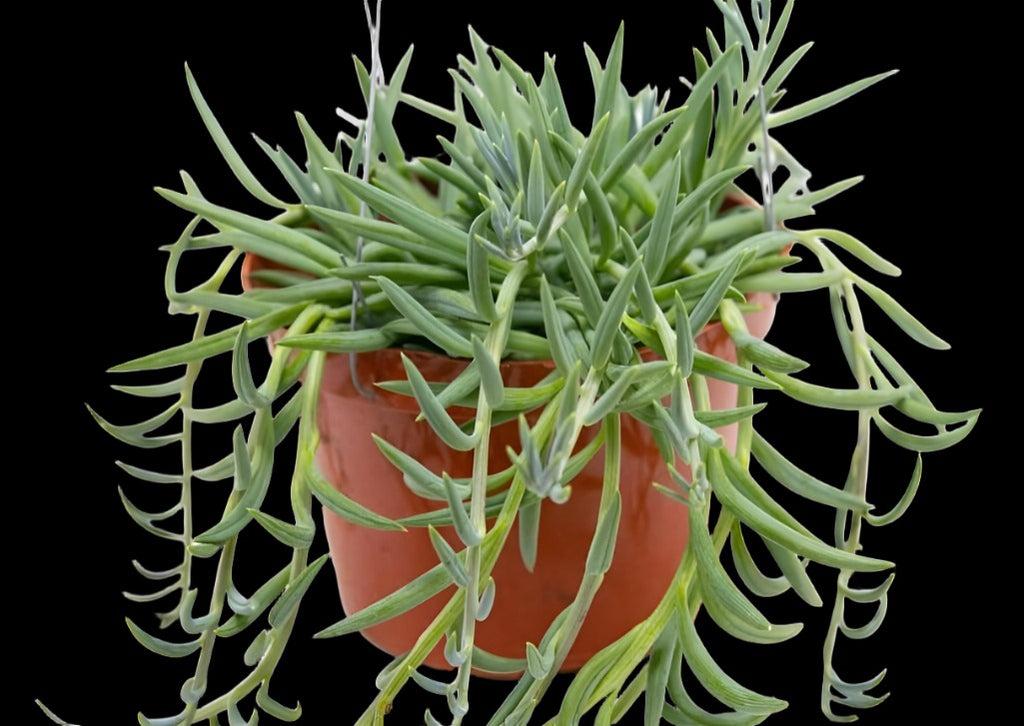


RedCrocus Fishhook Senecio Succulent- Curly, Silvery-Green Foliage, Pet-Friendly, Indoor & Outdoor, Drought-Resistant Plant for Modern Gardens and Containers 1 Quart Hanging Basket (1 Hanging Basket)
RedCrocus Fishhook Senecio Succulent- Curly, Silvery-Green Foliage, Pet-Friendly, Indoor & Outdoor, Drought-Resistant Plant for Modern Gardens and Containers 1 Quart Hanging Basket (1 Hanging Basket)
Regular price
$34.99 USD
Regular price
$45.49 USD
Sale price
$34.99 USD
Unit price
per
Shipping calculated at checkout.
SKU:berbd00-redcrocus
Couldn't load pickup availability
Succulent - Senecio Fishhook
Description
A drought-tolerant succulent with uniquely shaped, curly foliage resembling fishhooks. Its vibrant, silvery-green leaves add a striking texture to any arrangement.
Suggested Uses
Ideal for rock gardens, hanging baskets, indoor terrariums, and drought-resistant landscaping. Perfect for low-maintenance and modern garden designs.
Plant Details
-
 Botanical Name: Senecio rowleyanus
 -
 Common Name: Fishhook Senecio
 -
 Size & Growth: 6-12 inches tall, slow to moderate growth
 -
 Hardiness Zones: 10-11
 -
 Foliage Type: Succulent, Curly foliage
 -
 Growth Rate: Slow to moderate
 -
 Light Requirements: Bright, indirect sunlight
 -
 Attracts Pollinators: No
 -
 Indoor Friendly: Yes
 -
 Container Friendly: Yes
 -
 Deer Resistant: Yes
 -
 Pet Warning: Non-toxic
 -
 Fragrant: No
 -
 Cut Flower: No
 -
 Grows Well With: Succulents, Cacti, Low-growing Perennials
 Bloom Time: Spring to early summer
Care Tips
-
 Planting Instructions: Use well-draining soil and avoid overwatering. Water only when soil is dry.
 -
 Soil Moisture: Dry to slightly moist, well-drained soil
 -
 Soil Type: Sandy or cactus mix
 -
 Humidity: Tolerant of dry conditions
 -
 Pruning Instructions: Remove dead or damaged leaves as needed
 -
 Winter Care: Protect from frost; bring indoors in cold climates
 -
 Planting Depth: Plant at same depth as in container
 -
 Fertilization: Feed with cactus fertilizer during growing season
 -
 Special Care: Avoid overwatering, ensure excellent drainage