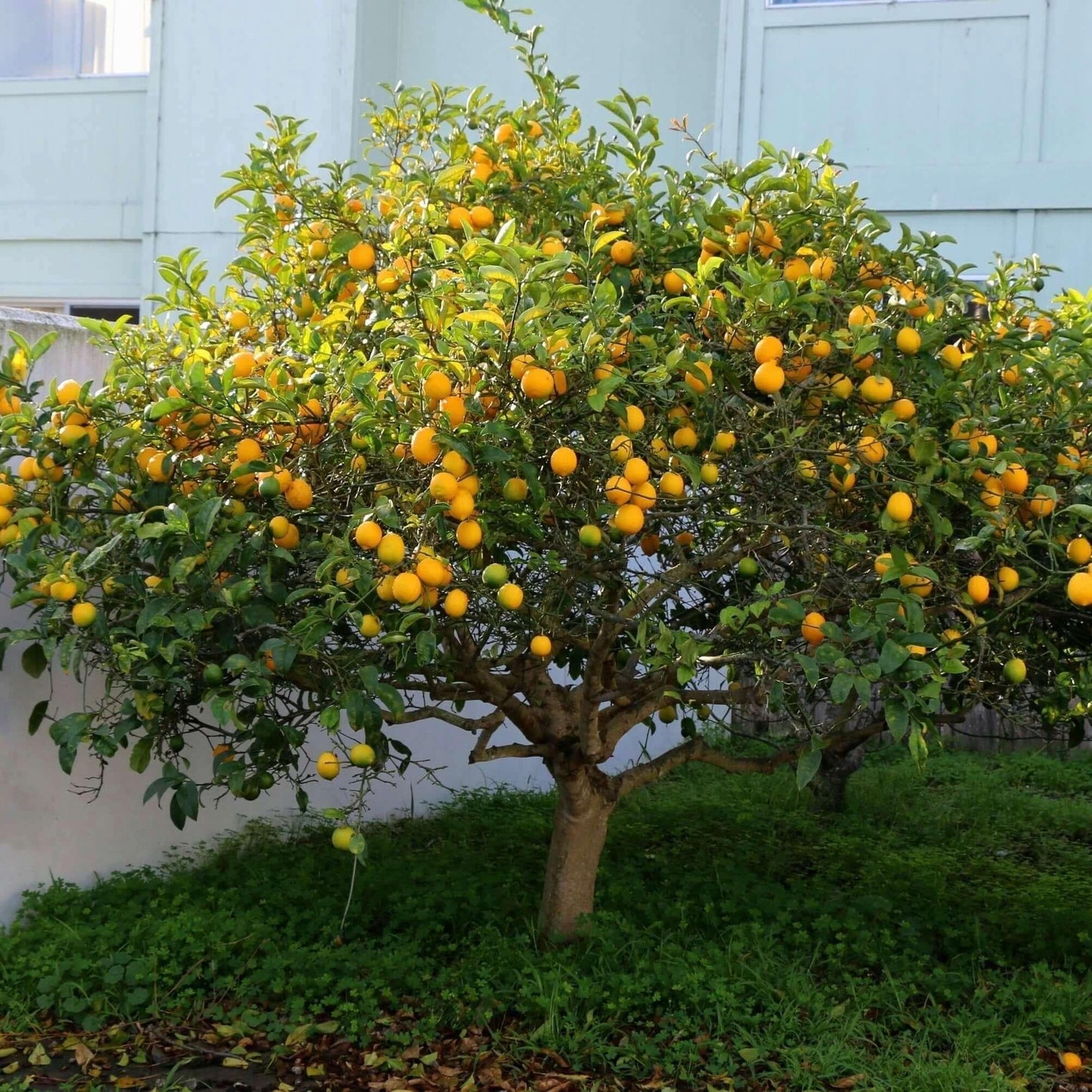


RedCrocus Meyer Lemon Tree- Fragrant, Evergreen Citrus for Home Gardens & Containers, Pollinator-Friendly & Indoor Safe 10 Gallon Pot
RedCrocus Meyer Lemon Tree- Fragrant, Evergreen Citrus for Home Gardens & Containers, Pollinator-Friendly & Indoor Safe 10 Gallon Pot
Regular price
$740.00 USD
Regular price
$962.00 USD
Sale price
$740.00 USD
Unit price
per
Shipping calculated at checkout.
SKU:berbc87-redcrocus
Couldn't load pickup availability
Citrus Tree Meyer Lemon
Description
A vibrant evergreen tree producing fragrant, yellow Meyer lemons ideal for culinary uses. It features glossy, dark green foliage and delicate white flowers that bloom in spring.
Suggested Uses
Perfect for home gardens, patio containers, and landscape borders. Adds fresh fruit and aroma to edible gardens and provides ornamental value.
Plant Details
-
 Botanical Name: Citrus limon 'Meyer'
 -
 Common Name: Meyer Lemon Tree
 -
 Size & Growth: Typically grows 6-10 ft tall with a rounded canopy.
 -
 Hardiness Zones: 8-11
 -
 Foliage Type: Evergreen
 -
 Bloom Time: Spring to early summer
 -
 Growth Rate: Moderate
 -
 Light Requirements: Full sun
 -
 Attracts Pollinators: Bees and butterflies
 -
 Indoor Friendly: Yes, with good light
 -
 Container Friendly: Yes
 -
 Deer Resistant: Yes
 -
 Pet Warning: Contains citrus enzymes; keep out of reach of pets
 -
 Fragrant: Yes, fragrant blossoms
 -
 Cut Flower: Yes, attractive for floral arrangements
 -
 Grows Well With: Basil, thyme, and other citrus-friendly plants
Care Tips
-
 Planting Instructions: Plant in well-drained soil in a sunny location; container grown in a pot with drainage holes.
 -
 Soil Moisture: Keep soil consistently moist but not waterlogged.
 -
 Soil Type: Acidic, well-draining loam or citrus-specific soil mix.
 -
 Humidity: Prefer moderate humidity; mist during dry periods if indoors.
 -
 Pruning Instructions: Prune to shape and remove dead or crossing branches in late winter.
 -
 Winter Care: Protect from frost; bring indoors in colder zones or cover during freezes.
 -
 Planting Depth: Plant at the same depth as in the nursery pot.
 -
 Fertilization: Use citrus-specific fertilizer monthly during growing season.
 -
 Special Care: Maintain consistent watering, avoid over-fertilizing.