

RedCrocus Picea 'Sanders Blue' Blue Spruce — Compact Evergreen Conifer for Containers, Rock Gardens & Sunny Borders; Deer-Resistant, Bird-Friendly, Live Plant 1 Gallon Nursery Pot
RedCrocus Picea 'Sanders Blue' Blue Spruce — Compact Evergreen Conifer for Containers, Rock Gardens & Sunny Borders; Deer-Resistant, Bird-Friendly, Live Plant 1 Gallon Nursery Pot
SKU:berb5e7-redcrocus
Couldn't load pickup availability
Picea Sanders Blue
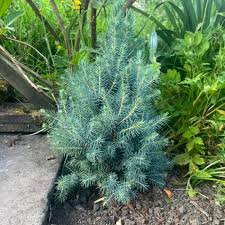
A compact, upright Colorado blue spruce selection admired for its intensely silvery-blue needles and tidy, pyramidal habit. Durable, cold-hardy, and architectural, it brings year-round color and structure to gardens and landscapes.
-

Specimen & Containers
Feature as a focal point near entries or patios; thrives in large, insulated containers while young (provide root protection in winter).
-

Conifer & Rock Gardens
Pairs beautifully with dwarf pines, junipers, heaths/heathers, and stones for year-round texture and color contrast.
-

Sunny Borders
Adds structure to mixed borders and gravel gardens; best color in full sun with well-drained soil.
-

Wildlife-Friendly Structure
Provides shelter and nesting sites for birds; generally deer-resistant compared to many ornamentals.
-

Four-Season Interest
Striking silhouette and color during winter; anchors the landscape when herbaceous plants are dormant.
-

Low-Maintenance Design
Naturally tidy habit requires little to no pruning—ideal for modern, minimal-care plantings.
-
 Size & GrowthCompact, upright pyramidal form. Reaches about 10–15 ft tall and 6–10 ft wide in 10–15 years; ultimate size can be larger with age. Growth ~6–10 inches per year (slow to moderate).
-
 Hardiness ZonesUSDA 2–7. Extremely cold-hardy; heat tolerance decreases in hot, humid climates—ensure excellent drainage and airflow.
-
 Foliage TypeEvergreen conifer. Stiff, prickly, four-sided needles with a vivid silvery-blue cast that intensifies in full sun.
-
 Bloom TimeInconspicuous pollen and seed cones in spring; seed cones mature late summer to fall. Not grown for flowers.
-
 Growth RateSlow to moderate. Expect 6–10 inches of extension growth per year under good conditions.
-
Light RequirementsFull sun (6+ hours) for best blue color; tolerates light shade with some reduction in intensity of foliage color.
-
 Attracts PollinatorsLow—wind-pollinated. Provides shelter and nesting sites for birds rather than nectar for insects.
-
 Indoor FriendlyNot suitable as a houseplant. Requires cold winters and full outdoor sun to thrive.
-
Container FriendlyYes, when young in large, well-insulated containers with sharp drainage; protect roots from deep freezes. Transplant to ground as it outgrows the pot.
-
Deer ResistantGenerally deer-resistant, though no plant is entirely deer-proof. Young plants may experience occasional browsing.
-
 Pet WarningNon-toxic to cats and dogs; sharp needles and resin can irritate if chewed—discourage ingestion and handle with gloves.
-
 FragrantMild resinous aroma when needles or stems are crushed; not notably fragrant at a distance.
-
 Cut FlowerNot used as a cut flower. Small boughs are suitable for winter greenery and arrangements.
-
Grows Well WithGrows Well With Dwarf pines (Pinus mugo), junipers, heaths/heathers (Erica/Calluna), lavender, Russian sage, and ornamental grasses—plants that enjoy sun and good drainage.
-
 Planting InstructionsPlant in spring or early fall. Dig a hole 2–3× wider than the root ball, set the root flare level to slightly above grade, backfill with native soil, water deeply, and mulch 2–3 in, keeping mulch off the trunk.
-
 Soil MoistureKeep evenly moist the first 1–2 years. Once established, moderately drought-tolerant; avoid waterlogged or compacted soils.
-
 Soil TypeWell-drained loam or sandy loam is ideal; tolerates slightly acidic to neutral pH (≈5.5–7.5). Improve heavy clay with drainage and organic matter.
-
 HumidityPrefers low to moderate humidity with good air circulation to reduce needle cast; avoid frequent late-day overhead watering.
-
Pruning InstructionsMinimal pruning needed. Tidy in late winter or early spring—remove dead or crossing wood. Avoid shearing and cutting into old wood. Optional light “candle” pinching of new growth to maintain shape.
-
Winter CareVery hardy. Water deeply before ground freezes and maintain mulch. In exposed sites, shield young plants from desiccating winds; container plants need root protection or an unheated sheltered spot.
-
 Planting DepthSet so the root flare is at soil level and never buried. Keep the graft (if present) above the soil line. Match container depth to the nursery level when potting up.
-
 FertilizationFeed lightly in early spring with a slow-release, balanced conifer fertilizer or a top-dress of compost if soil tests indicate need. Avoid high nitrogen late in the season.
-
 Special CareMonitor for spider mites in hot, dry weather; rinse foliage periodically. Watch for needle cast (Rhizosphaera); ensure drainage and spacing. Stake only in very windy sites and remove supports within a year.