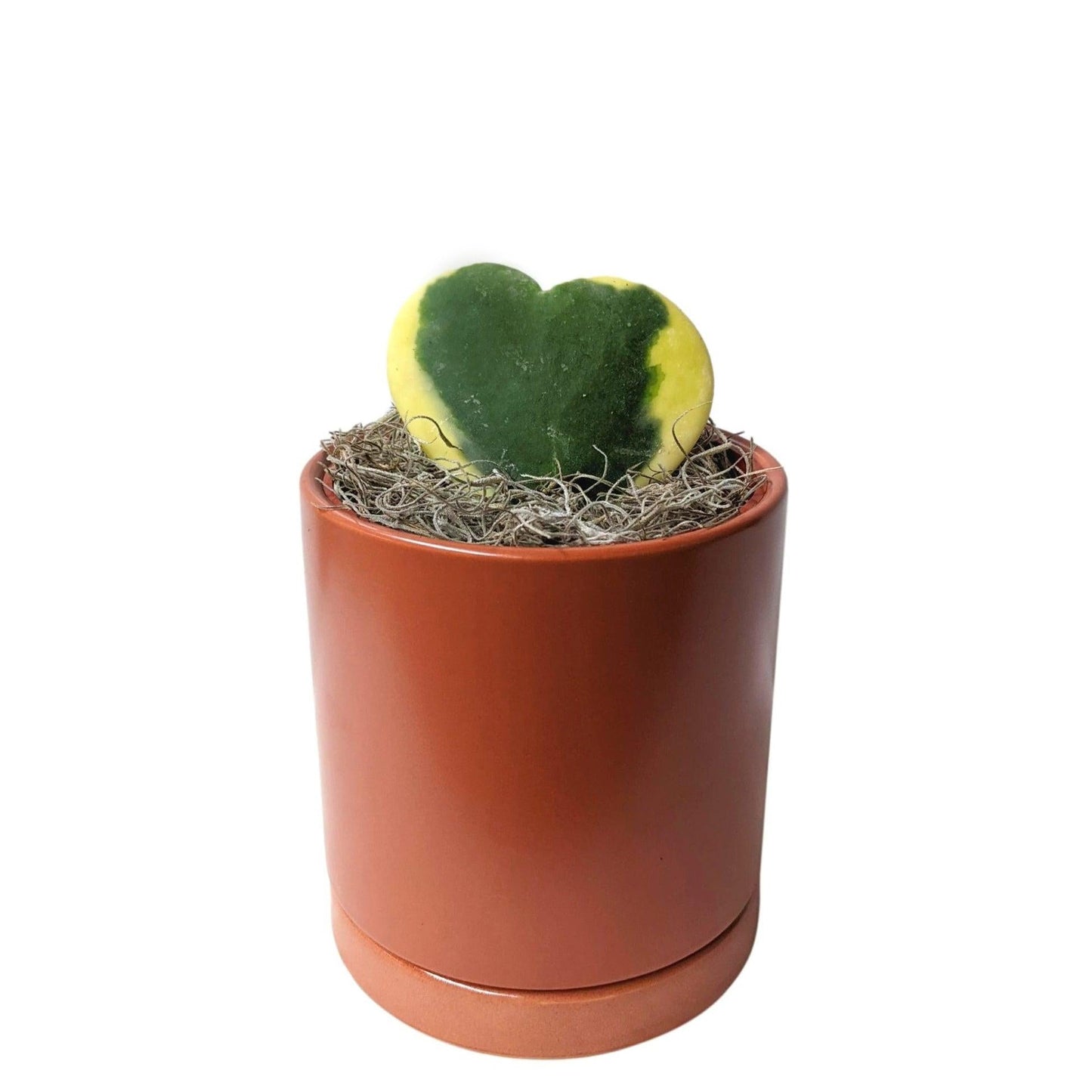


RedCrocus Sweetheart Hoya (Hoya kerrii) Live Plant in Terracotta Pot, Easy Care Heart Succulent, Giftable Houseplant with Fragrant Evening Blooms 4" Terracotta Pot
RedCrocus Sweetheart Hoya (Hoya kerrii) Live Plant in Terracotta Pot, Easy Care Heart Succulent, Giftable Houseplant with Fragrant Evening Blooms 4" Terracotta Pot
Regular price
$52.00 USD
Regular price
$67.60 USD
Sale price
$52.00 USD
Unit price
per
Shipping calculated at checkout.
SKU:beraf72-redcrocus
Couldn't load pickup availability
Hoya Heart Terracotta
Indoor Classic
Low Water
A charming, heart‑shaped Hoya in breathable terracotta — easy, slow‑growing, and irresistibly giftable.
Description
The Hoya Heart (often offered as a single, thick heart‑shaped leaf or as a young vining plant) is a succulent Hoya known for its glossy, evergreen foliage and famously forgiving nature. Potted in terracotta for optimal airflow and root health, it prefers bright, indirect light and modest watering. Mature vines produce clusters of starry, porcelain‑like flowers that are sweetly fragrant in the evening. A long‑lived houseplant that thrives slightly rootbound, it’s an ideal accent for sunny sills, desks, and shelves.
Note: Single‑leaf “heart” cuttings without a node may remain a decorative leaf; plants with one or more nodes will develop vines over time.
Suggested Uses
Bright windowsill accent Desk or shelf companion Giftable “living Valentine” Small-space, low‑water décor Trellised or hanging basket as it vines Pairs well with airy, chunky soil loversPlant Details

Botanical Name
Hoya Heart Terracotta

Common Name
Hoya Heart (Valentine Hoya; typically Hoya kerrii type)

Size & Growth
Slow-growing. Single-leaf plants stay compact; vining plants can reach 6–10 ft (1.8–3 m) over many years with support.

Hardiness Zones
USDA 10–12 outdoors (frost‑free). Commonly grown indoors elsewhere.

Foliage Type
Evergreen, succulent, thick heart‑shaped leaves; glossy and water‑storing.

Bloom Time
Spring–summer on mature vines; starry umbels; do not remove spent spurs (peduncles).

Growth Rate
Slow. Speeds up with warmth, bright light, and airy soil.

Light Requirements
Bright, indirect light; 1–3 hours of gentle morning sun is beneficial. Avoid harsh midday sun on leaves.

Attracts Pollinators
Outdoors, fragrant blooms attract bees and night‑active moths. Indoors, primarily ornamental.

Indoor Friendly
Excellent houseplant; tolerates average indoor humidity and prefers to be slightly rootbound.

Container Friendly
Ideal in small pots with drainage; terracotta promotes airflow and prevents overwatering.

Deer Resistant
Generally unbothered by deer due to thick, latex‑bearing leaves.

Pet Warning
Non‑toxic to cats and dogs; ingestion may cause mild stomach upset. Keep out of chewing reach.

Fragrant
Yes — mature flowers are sweetly fragrant, especially evenings.

Cut Flower
Not typically used as a cut flower; blooms are best enjoyed on the plant.

Grows Well With
Snake Plant (Sansevieria), ZZ Plant (Zamioculcas), Peperomia, and other Hoyas in airy, fast‑draining mixes.
Care Tips

Planting Instructions
Pot into a container with a drainage hole (terracotta preferred). Keep the crown at the same depth as in its nursery pot. If propagating, ensure at least one node is buried for vining potential.

Soil Moisture
Allow the top 1–2 in (2.5–5 cm) of mix to dry before watering. Water less in winter. Never leave sitting in water.

Soil Type
Very airy and fast‑draining: roughly 1 part high‑quality potting soil, 1 part orchid bark, 1 part perlite/pumice; optional horticultural charcoal.

Humidity
Average indoor humidity (40–60%) is fine; appreciates 50–70% for faster growth. Provide gentle airflow and avoid cold drafts.

Pruning Instructions
Minimal pruning. Trim leggy vines in spring to shape. Never remove flower spurs (peduncles); they rebloom from the same points.

Winter Care
Provide the brightest light available, keep above 55°F (13°C), and reduce watering. Avoid cold windows and wet soil in cool rooms.

Planting Depth
Set at original soil line; bury nodes, not leaves. Keep the leaf base slightly above the soil to prevent rot.

Fertilization
During spring–summer, feed monthly at 1/4–1/2 strength with a balanced or 3‑1‑2 fertilizer; switch to a bloom booster only when buds are present. No feeding in winter.

Special Care
Provide a small trellis or hoop as vines develop; rotate plant for even growth; wipe dust from leaves; repot only when snugly rootbound (every 2–3 years).