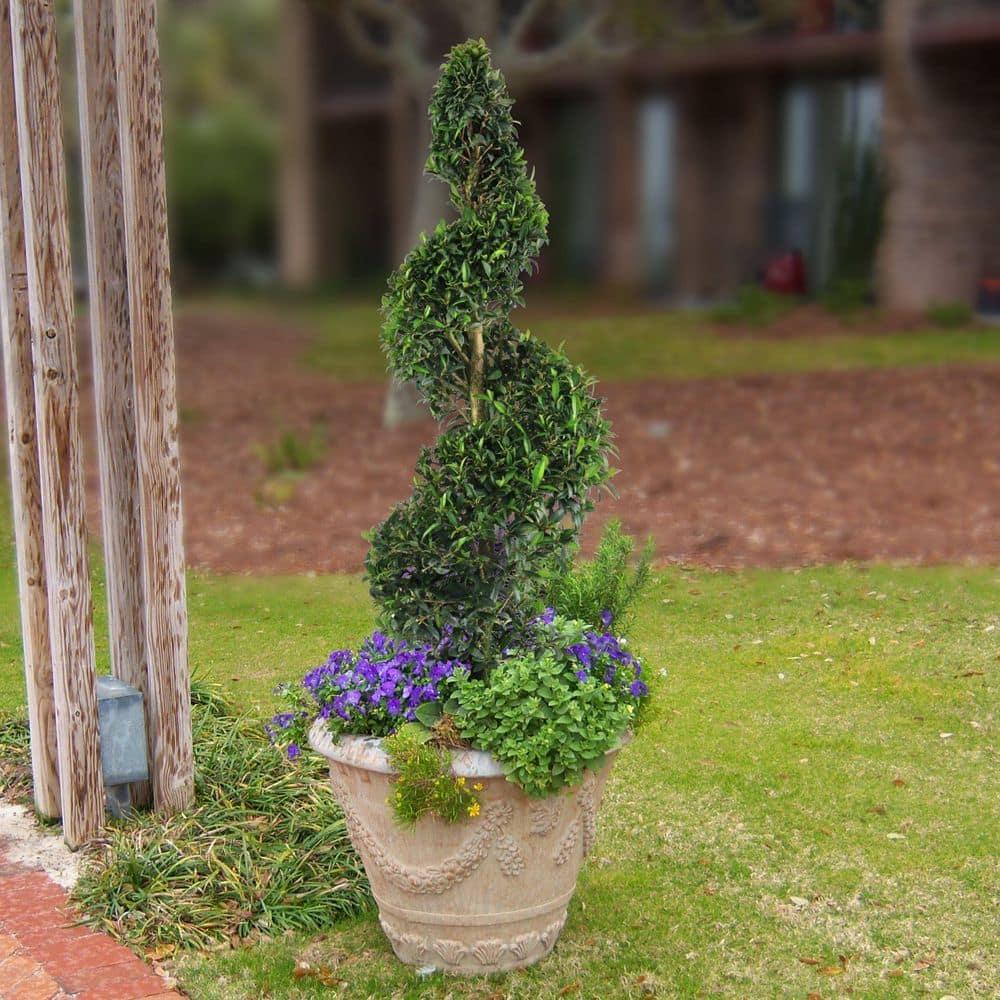


RedCrocus Eugenia Spiral Topiary- Evergreen Plant for Gardens & Containers, Attracts Pollinators, Indoor-Friendly, Perfect for Hedges & Focal Points 10" Pot
RedCrocus Eugenia Spiral Topiary- Evergreen Plant for Gardens & Containers, Attracts Pollinators, Indoor-Friendly, Perfect for Hedges & Focal Points 10" Pot
Regular price
$260.00 USD
Regular price
$338.00 USD
Sale price
$260.00 USD
Unit price
per
Shipping calculated at checkout.
SKU:berabc2-redcrocus
Couldn't load pickup availability
Eugenia- Spiral Spiral Topiary
Description
A compact evergreen shrub known for its distinctive spiral-shaped foliage, adding architectural interest to gardens and patios.
Suggested Uses
Perfect for container displays, formal hedges, or as a focal point in landscape designs.
Plant Details
-
 Botanical Name: Eugenia- Spiral Spiral Topiary
 -
 Common Name: Eugenia- Spiral
 -
 Size & Growth: Usually grows up to 3-4 feet tall with a dense, compact form.
 -
 Hardiness Zones: 10-11
 -
 Foliage Type: Evergreen
 -
 Bloom Time: Summer to early fall
 -
 Growth Rate: Moderate
 -
 Light Requirements: Bright indirect light to full sun
 -
 Attracts Pollinators: Bees and butterflies
 -
 Indoor Friendly: Yes, with sufficient light
 -
 Deer Resistant: Yes
 -
 Pet Warning: Keep out of reach of pets if sensitive; consult veterinarian
 -
 Fragrant: No
 -
 Cut Flower: Yes, suitable for floral arrangements
 -
 Grows Well With: other evergreen shrubs and ornamental plants
 Container Friendly: Yes
Care Tips
-
 Planting Instructions: Plant in well-draining soil in a location with ample sunlight. Water regularly, allowing the soil to dry slightly between waterings.
 -
 Soil Moisture: Moderately moist; avoid waterlogging
 -
 Soil Type: Well-draining, slightly acidic to neutral
 -
 Humidity: Prefers moderate humidity
 -
 Pruning Instructions: Light pruning to maintain shape, best done in early spring
 -
 Winter Care: Protect from frost; bring indoors or provide cover in colder zones
 -
 Planting Depth: Ensure root ball is level with soil surface
 -
 Fertilization: Apply balanced fertilizer during active growing season
 -
 Special Care: Mulch around base to retain moisture and suppress weeds