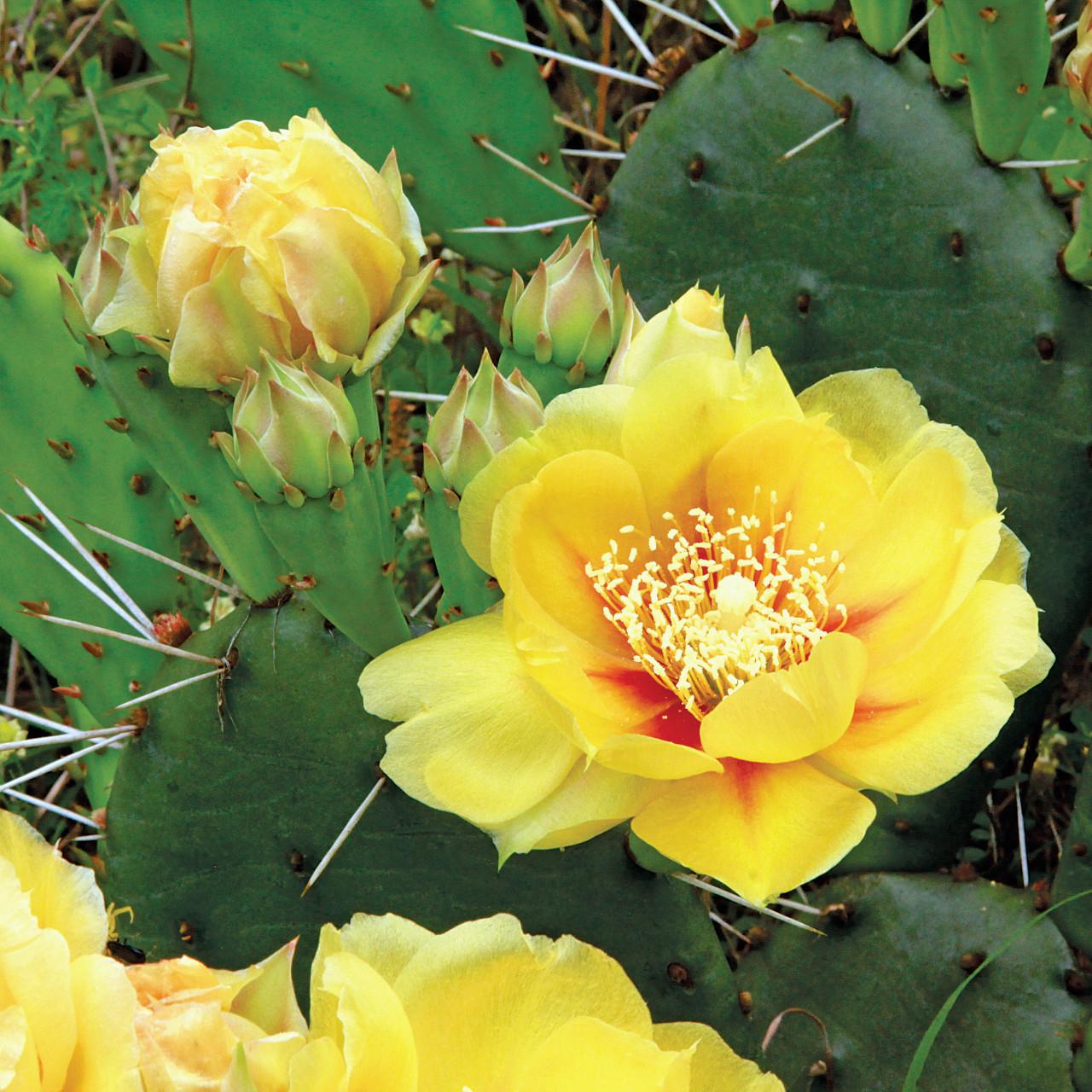


RedCrocus Prickly Pear Cactus- Edible Opuntia ficus-indica, Succulent Plant for Gardens & Containers, Full Sun, Low Water Care 1 Gallon Pot
RedCrocus Prickly Pear Cactus- Edible Opuntia ficus-indica, Succulent Plant for Gardens & Containers, Full Sun, Low Water Care 1 Gallon Pot
Regular price
$110.00 USD
Regular price
$143.00 USD
Sale price
$110.00 USD
Unit price
per
Shipping calculated at checkout.
SKU:bera6a3-redcrocus
Couldn't load pickup availability
Cactus - Opuntia Prickly Pear
Description
A succulent cactus featuring flattened, paddle-shaped stems and bright yellow flowers. Native to arid regions, it stores water efficiently and produces edible fruit called "tuna". This low-maintenance plant thrives in full sun with minimal water requirements.
Suggested Uses
Ideal for xeriscaping, rock gardens, and containers. Its vibrant blooms attract pollinators and add visual interest to outdoor landscapes.
Plant Details
-
 Botanical Name: Opuntia ficus-indica
 -
 Common Name: Prickly Pear Cactus
 -
 Size & Growth: 3-6 ft tall and wide; slow to moderate growth rate
 -
 Hardiness Zones: 9-11
 -
 Foliage Type: Succulent, paddle-shaped pads
 -
 Bloom Time: Late spring to early summer
 -
 Growth Rate: Slow to moderate
 -
 Light Requirements: Full sun
 -
 Attracts Pollinators: Bees and butterflies
 -
 Indoor Friendly: Yes, with ample sunlight
 -
 Container Friendly: Yes
 -
 Deer Resistant: Yes
 -
 Pet Warning: Contains spines, handle with care
 -
 Fragrant: No
 -
 Cut Flower: No
 -
 Grows Well With: Agave, succulents, desert mosses
Care Tips
-
 Planting Instructions: Plant in well-draining soil in full sun. Water sparingly, allowing soil to dry out completely between watering.
 -
 Soil Moisture: Dry
 -
 Soil Type: Sandy or gritty cactus mix
 -
 Humidity: Low
 -
 Pruning Instructions: Remove dead pads and shape as needed in spring.
 -
 Winter Care: Protect from frost; bring indoors if temperatures drop below 20°F (-6°C).
 -
 Planting Depth: Plant at same depth as in nursery pot
 -
 Fertilization: Occasional feeding with cactus fertilizer during growing season
 -
 Special Care: Watch for spines, handle with gloves; avoid overwatering to prevent rot.