

RedCrocus Weeping Blue Spruce Live Plant - Picea pungens 'The Blues' - Cascading Evergreen Specimen for Landscape, Containers, Rock Gardens 6 Gallon Nursery Pot
RedCrocus Weeping Blue Spruce Live Plant - Picea pungens 'The Blues' - Cascading Evergreen Specimen for Landscape, Containers, Rock Gardens 6 Gallon Nursery Pot
SKU:ber9f0e-redcrocus
Couldn't load pickup availability
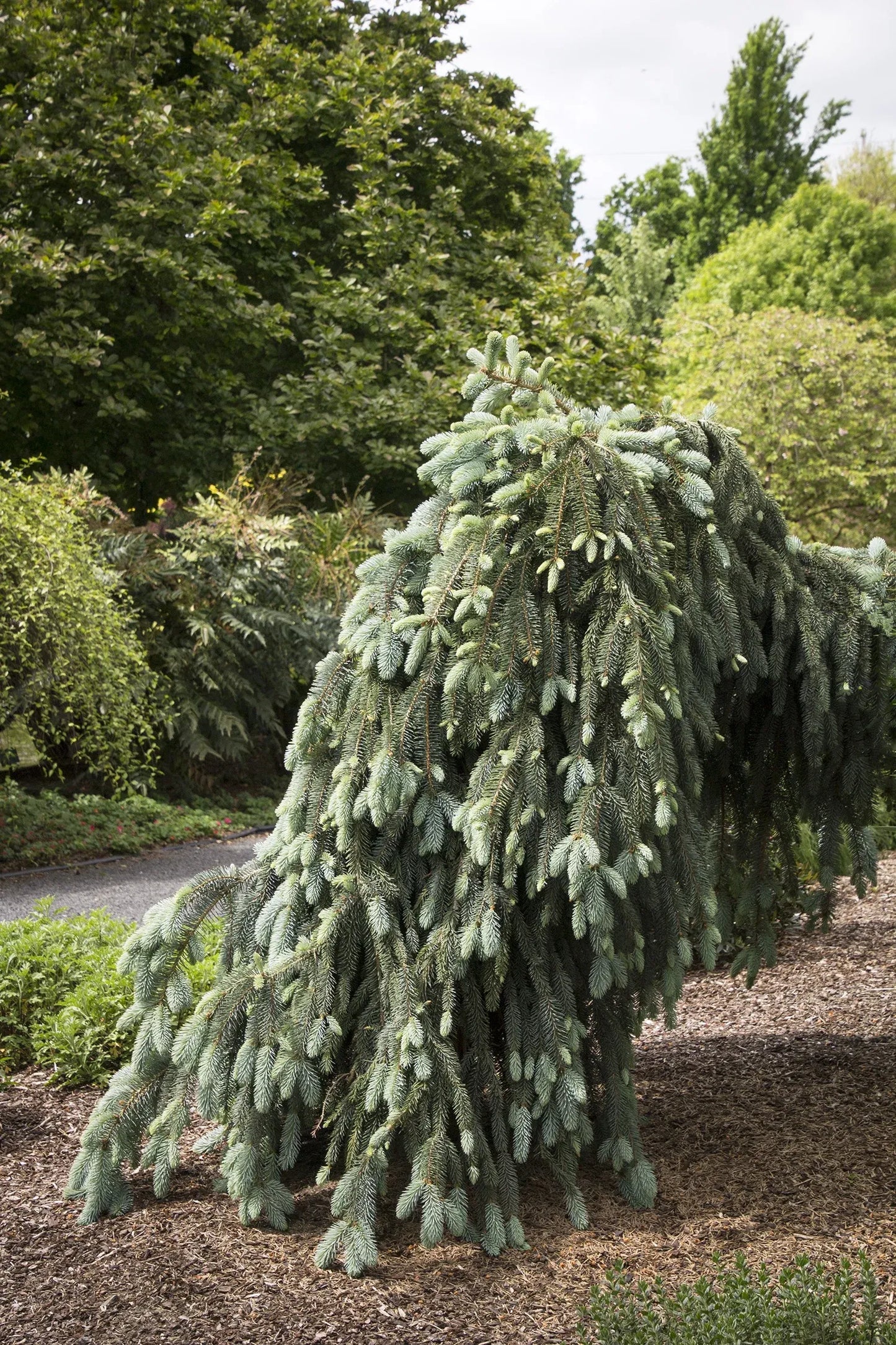
Picea pungens 'The Blues' — Weeping Blue Spruce
A strikingly blue, architectural conifer with a dramatic weeping habit. Train its leader to create living sculpture in gardens and containers.
Evergreen Full Sun USDA Zones 2–7 Deer Resistant Weeping Form Low MaintenanceDescription
Picea pungens 'The Blues' is a distinctive weeping selection of Colorado blue spruce renowned for its intensely silver‑blue needles and cascading, ground‑hugging branches. Typically grafted and trained, it offers tremendous design flexibility—stake the leader early for height and elegant drape, or allow it to spill and meander for a dramatic, sculptural groundcover effect. Needles are stiff and glaucous, providing year‑round color, texture, and contrast to stones, dark evergreens, and warm‑toned plantings. Exceptionally hardy and wind‑tolerant once established, it thrives in full sun and well‑drained soils, rewarding minimal pruning with a naturally graceful silhouette.
Suggested Uses
-

Focal Point
Train as a living sculpture near entries, courtyards, or water features for high visual impact.
-

Rock & Gravel Gardens
Pairs beautifully with stonework; the blue needles and weeping habit complement boulders and gravel.
-

Large Containers
Excellent in tall, well‑drained containers on patios for many years; stake to desired height and form.
-

Mixed Conifer Border
Adds contrast among upright conifers and broadleaf evergreens; highlights purple, gold, and chartreuse foliage.
-

Four‑Season Structure
Evergreen color and cascading form deliver strong winter presence and year‑round architectural interest.
Plant Details
-
 Botanical NamePicea pungens 'The Blues' (Weeping Blue Spruce)
-
 Common NamePicea pungens 'The Blues'
-
 Size & GrowthTypically 6–10 ft tall x 3–6 ft wide in 10 years with staking; ultimate size varies by training, often 10–15+ ft over time. Growth rate slow to moderate (about 6–12 in/year).
-
 Hardiness ZonesUSDA 2–7; exceptionally cold hardy once established.
-
 Foliage TypeEvergreen conifer with stiff, 4‑sided needles (about 1–1.5 in) in intense silver‑blue.
-
 Bloom TimeInconspicuous pollen and seed cones in spring; grown for foliage and form rather than flowers.
-
 Growth RateSlow to moderate; training and site conditions influence annual extension growth.
-
 Light RequirementsFull sun (6+ hrs) for best blue color; light shade tolerated but color softens.
-
 Attracts PollinatorsNo—primarily wind‑pollinated; does provide shelter for birds and wildlife.
-
 Indoor FriendlyNot suitable as a houseplant; requires outdoor sun, airflow, and seasonal cues. Outdoors Only
-
Container FriendlyYes, in large, well‑drained containers while young; long‑term, plant in ground for best performance. Large Pot
-
 Deer ResistantGenerally deer resistant due to stiff, prickly needles. Low Browse
-
 Pet WarningNon‑toxic to cats and dogs; sharp needles can irritate mouth and skin—discourage chewing. Sap may be mildly irritating.
-
 FragrantNot notably fragrant; foliage has a pleasant resinous scent when crushed.
-
 Cut FlowerBranches and tips are excellent as cut greens for winter arrangements and holiday décor.
-
 Grows Well WithGrows Well With Dwarf conifers (Pinus mugo, Juniperus, Chamaecyparis), heaths/heathers (Erica, Calluna), silver/gray perennials (Artemisia, Santolina), drought‑tolerant accents (Lavandula, Sedum), and grasses (Festuca glauca). Prefers companions that like sun and well‑drained soils.
Care Tips
-
 Planting InstructionsPlant in spring or early fall. Dig a hole 2–3× the width of the root ball and the same depth. Set the root flare at or slightly above grade; keep the graft union well above soil. Backfill with native soil, water to settle, and mulch 2–3 in, keeping mulch off the trunk. Stake the leader early if height and a strong weeping cascade are desired.
-
 Soil MoistureKeep evenly moist but never waterlogged during the first 1–2 years. Once established, allow the top inch of soil to dry between waterings; deep, infrequent soaking is best. Avoid chronically wet sites.
-
 Soil TypeWell‑drained loam or sandy loam; tolerates slightly acidic to slightly alkaline pH. Incorporate grit on heavy soils to improve drainage; avoid compacted clay pockets.
-
 HumidityPrefers average to low humidity with good air circulation. In hot, humid climates, choose an open, breezy site to reduce mite and disease pressure.
-
 Pruning InstructionsMinimal pruning required. Stake and tie a leader to set height; remove ties once wood hardens. Lightly edit wayward shoots in late winter. Do not shear; optional tip‑pinching of new growth after candle elongation can increase density.
-
 Winter CareDeeply water before ground freeze in fall. Maintain mulch to buffer roots. Newly planted trees in exposed sites may benefit from wind protection the first winter. Guard trunk from rodents; check and secure stakes before storms.
-
 Planting DepthPlace with root flare level to 1 in above finished grade; never bury the crown. Keep graft union several inches above soil line to prevent scion rooting and graft failure.
-
 FertilizationFeed lightly in early spring with a slow‑release, balanced conifer fertilizer if soil tests indicate need. Avoid high nitrogen that forces weak, lush growth. Mulch with composted bark to improve soil biology over time.
-
 Special CareTraining is key: stake the leader to define height, then allow side branches to drape. Inspect for spruce spider mite, aphids, and needle cast; hose foliage in early morning during hot, dry spells and maintain even moisture to reduce stress. Ensure excellent drainage—root stress invites pests and disease.