Skip to product information
1 of 18

RedCrocus Begonia Rex Crackling Rosie Live Houseplant - Pink & Silver Foliage, Spiral Leaves - Indoor Plant for Bright Indirect Light 4" Pot

RedCrocus Begonia Rex Crackling Rosie Live Houseplant - Pink & Silver Foliage, Spiral Leaves - Indoor Plant for Bright Indirect Light 4" Pot

Regular price $52.00 USD
Regular price $67.60 USD Sale price $52.00 USD
Sale Sold out
Shipping calculated at checkout.

SKU:ber94ae-redcrocus

Pot Size

Begonia- Rex Crackling Rosie

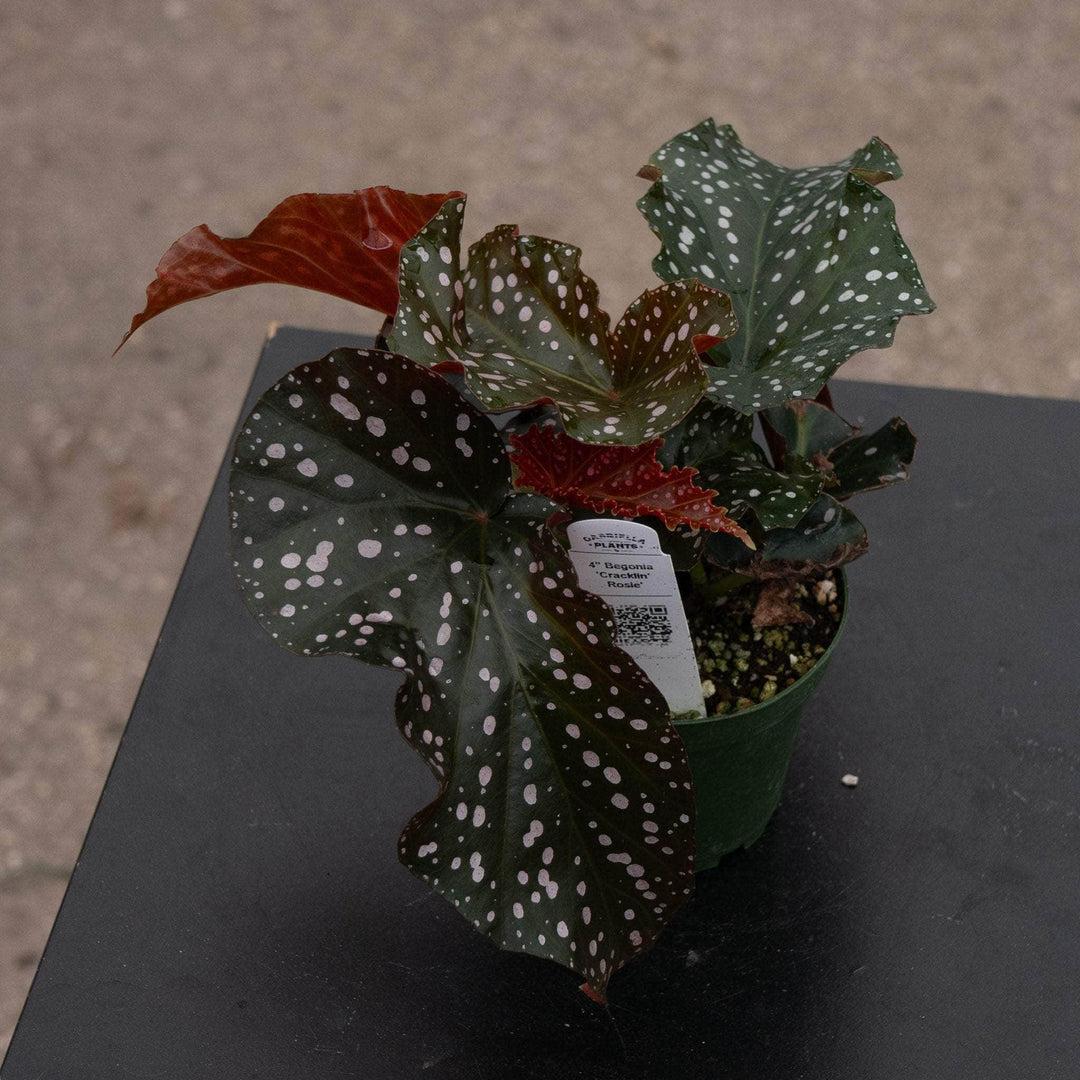
A show-stopping Rex Begonia with crackled pink and silver splashed across deep burgundy, spiral-textured leaves. Grown primarily for its dramatic foliage, it thrives with bright, filtered light and steady humidity.

Indoor Friendly Shade & Bright-Indirect Container Superstar USDA 10–11

Description

Begonia- Rex Crackling Rosie is a rhizomatous Rex Begonia prized for bold, iridescent foliage. The large, asymmetrical leaves unfurl in rich burgundy tones streaked and “crackled” with hot pink and silver, often showing a light metallic sheen that changes with the angle of light. Compact and clump-forming, it makes a refined statement plant for desks, shelves, and shaded patio containers. Color is most vivid in bright, indirect light with moderate to high humidity. While small winter blooms may appear, the true appeal is its luxuriant, painterly foliage.

Suggested Uses

• Feature as a focal foliage plant in modern indoor containers
• Combine in shaded mixed planters with ferns and coleus for texture contrast
• Brighten low-light nooks with colorful leaves where flowers struggle
• Accent plant for shaded patios, porches, and covered balconies in warm climates
• Group with other humidity-loving houseplants for a lush, botanical display
• Use foliage sparingly in small floral arrangements for a dramatic color pop

Plant Details

Botanical Name icon
Botanical Name
Begonia- Rex Crackling Rosie
Common Name icon
Common Name
Begonia- Rex (Rex Begonia)
Size & Growth icon
Size & Growth
Compact, 10–16 in tall x 12–18 in wide; rhizomatous, clump-forming habit.
Hardiness Zones icon
Hardiness Zones
USDA 10–11 as a perennial; grow as a houseplant or warm-season annual in cooler zones.
Foliage Type icon
Foliage Type
Ornamental, evergreen foliage; large asymmetrical leaves, deep burgundy with pink/silver “crackle” and light metallic sheen.
Bloom Time icon
Bloom Time
Winter to early spring; small pinkish blooms, not the main feature.
Growth Rate icon
Growth Rate
Moderate; faster with warmth, bright-filtered light, and steady humidity.
Light Requirements icon
Light Requirements
Bright, indirect light; gentle morning sun is fine; avoid harsh midday sun to prevent leaf scorch.
Attracts Pollinators icon
Attracts Pollinators
Low. Flowers are modest; plant is primarily valued for foliage.
Indoor Friendly icon
Indoor Friendly
Excellent houseplant; thrives with stable temperatures and humidity.
Container Friendly icon
Container Friendly
Ideal for containers; prefers shallow, wide pots with ample drainage.
Deer Resistant icon
Deer Resistant
Generally deer-resistant; foliage texture/sap makes it less palatable.
Pet Warning icon
Pet Warning
Toxic to cats and dogs if ingested; can cause oral irritation, drooling, and vomiting. Keep out of reach.
Fragrant icon
Fragrant
No; grown for foliage rather than fragrance.
Cut Flower icon
Cut Flower
Not a traditional cut flower; foliage stems can accent small arrangements (short-lived).
Grows Well With icon
Grows Well With
Caladium, Coleus, Ferns (e.g., Maidenhair, Bird’s Nest), Fittonia, Hypoestes, Peperomia, Pilea.
Tip: Color saturation improves with bright, indirect light and a slight day–night temperature dip. Avoid strong direct sun to prevent leaf scorch.

Care Tips

Planting Instructions icon
Planting Instructions
Pot at the same depth as in the nursery pot; keep crown at soil surface and lay rhizomes horizontally. Use a container with drainage; space 10–12 in apart in beds.
Soil Moisture icon
Soil Moisture
Keep lightly and consistently moist. Water when the top 0.5–1 in of mix feels dry. Never let sit in water; avoid wetting leaves.
Soil Type icon
Soil Type
Light, airy, well-drained mix: 40% peat/coir, 30% perlite, 20% fine bark, 10% compost. Slightly acidic pH 5.5–6.5.
Humidity icon
Humidity
Best at 50–60%+. Use a pebble tray or humidifier; avoid direct misting to reduce fungal spots; ensure gentle air movement.
Pruning Instructions icon
Pruning Instructions
Remove yellowed or tattered leaves at the base; pinch tips to encourage branching. Sterilize tools to prevent disease spread.
Winter Care icon
Winter Care
Protect from cold; keep 65–75°F (18–24°C), never below 55°F (13°C). Reduce watering and hold fertilizer until days lengthen.
Planting Depth icon
Planting Depth
Set crown level with soil; rhizome should be at or just barely covered by the mix to prevent rot.
Fertilization icon
Fertilization
Feed lightly spring–summer every 4–6 weeks with a balanced liquid fertilizer at 1/4–1/2 strength. Flush salts periodically; do not fertilize dry soil.
Special Care icon
Special Care
Avoid overpotting; rotate for even growth; keep from drafts. Monitor for mealybugs/spider mites and powdery mildew—treat early with insecticidal soap or neem.

Water quality matters: if leaf edges crisp despite good humidity, try rainwater or filtered water to reduce mineral build-up.

Placement guide: East or north windows are ideal. If using a south/west window, diffuse light with a sheer curtain and maintain consistent humidity.
View full details