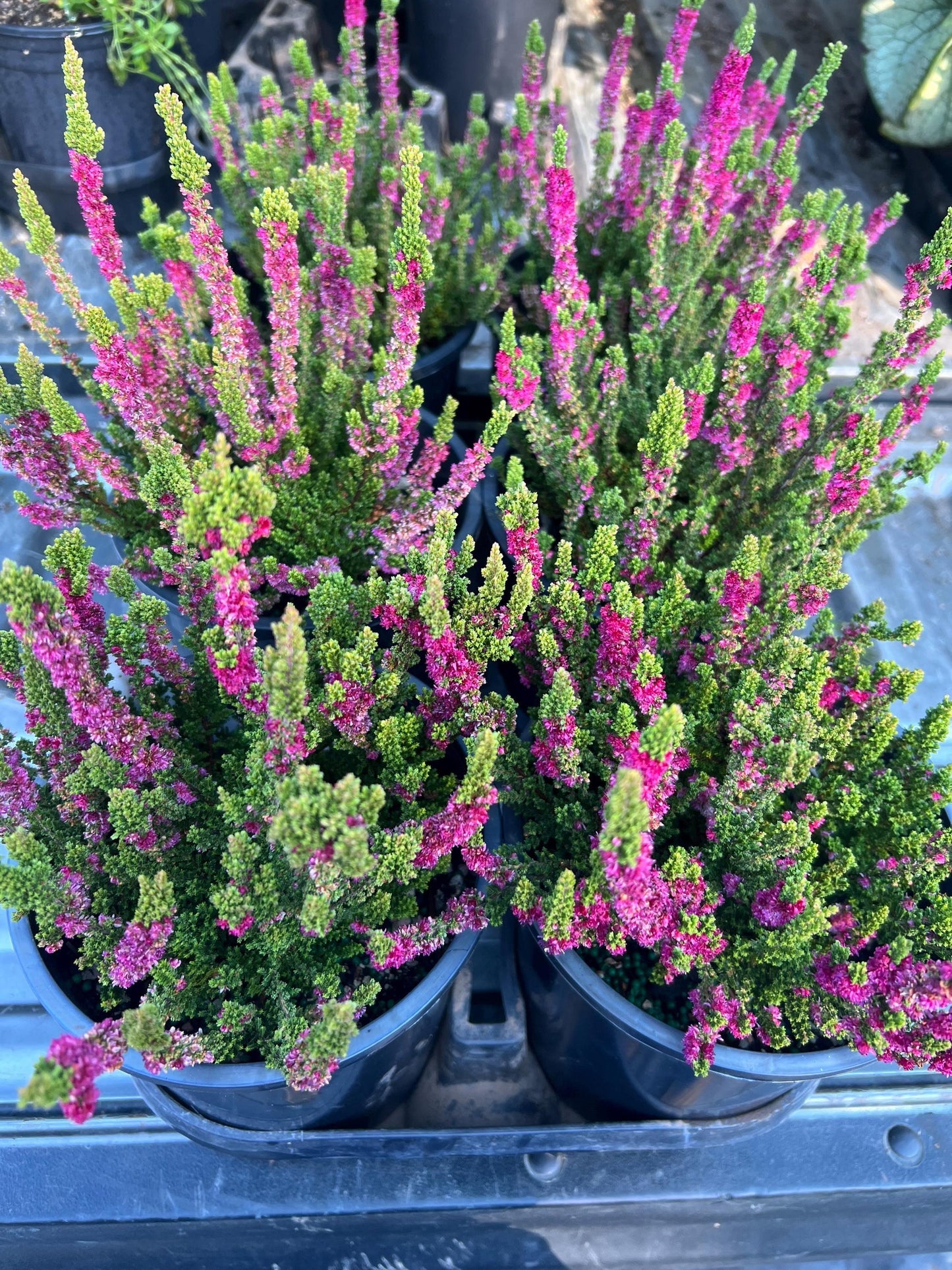


RedCrocus Calluna vulgaris 'Skyline Dark Green' Heather Live Plant - Evergreen Dark-Green Foliage, Compact Outdoor Shrub, Hardy Zones 4-7 4" Pot
RedCrocus Calluna vulgaris 'Skyline Dark Green' Heather Live Plant - Evergreen Dark-Green Foliage, Compact Outdoor Shrub, Hardy Zones 4-7 4" Pot
SKU:ber8dba-redcrocus
Couldn't load pickup availability
Calluna Vulgaris "skyline Dark Green" Calluna Heather
An architectural, evergreen heather with deep green, cypress-like texture for year‑round structure in acidic, well‑drained soils.
Evergreen Full Sun USDA 4–7 (to 8 in cool summers) Acid-Loving Container ReadyCalluna vulgaris “Skyline Dark Green” is a compact, upright heather prized for its saturated dark‑green foliage and strong, architectural form. The fine, scale‑like leaves cloak vertical shoots that read almost coniferous, giving containers and beds crisp texture from spring through winter. Flowers may be sparse or inconspicuous on this foliage-first selection; when present, they appear in late summer. Superb for modern plantings, it excels in acidic, sharply drained media and bright light.
Use it where year‑round structure is needed: front‑of‑border ribbons, matrix plantings, rock and gravel gardens, and cool‑season container displays. Protect from waterlogged soils and hot, drying winds.
-
 Botanical NameCalluna Vulgaris "skyline Dark Green" Calluna Heather
-
 Common NameCalluna Vulgaris "skyline Dark Green"
-
 Size & GrowthCompact, upright habit; typically 10–14 in (25–35 cm) tall and 10–12 in (25–30 cm) wide over 2–3 years.
-
 Hardiness ZonesUSDA 4–7; may perform in 8 where summers are cool and soils remain acidic and well-drained.
-
 Foliage TypeEvergreen; fine, scale-like foliage with rich dark‑green color year‑round.
-
 Bloom TimeTypically sparse on this selection; if present, late summer to early autumn (Aug–Sep).
-
 Growth RateSlow to moderate; forms a dense, tidy mound with light annual shaping.
-
 Light RequirementsFull sun (6+ hours) for best color; bright partial sun with afternoon shade in hotter climates.
-
 Attracts PollinatorsModerate—flowers (when present) draw bees and late-season pollinators.
-
 Indoor FriendlyBest outdoors; suitable only as a short‑term indoor accent in a bright, cool spot.
-
 Container FriendlyExcellent for containers; use acidic, sharply drained mix with ample drainage holes.
-
 Deer ResistantGenerally deer-resistant; foliage is seldom browsed.
-
 Pet WarningConsidered non‑toxic to cats and dogs; ingestion may cause mild stomach upset—discourage chewing.
-
 FragrantNot notably fragrant; foliage provides color and texture rather than scent.
-
 Cut FlowerGood for fresh or dried arrangements; stems hold form and color when dried.
-
 Grows Well WithGrows Well With Erica (heath), Gaultheria procumbens, Vaccinium, dwarf conifers (Pinus mugo, Chamaecyparis), Festuca glauca, Carex, and other acid‑loving companions.
-
 Planting InstructionsPlant in spring or early fall. Tease roots of pot‑bound plants. Set crown level with surrounding soil; space 10–14 in apart. Mulch with pine bark/needles; avoid lime.
-
 Soil MoistureKeep evenly moist but never soggy. Water when the top 1 in of soil is dry; increase frequency in containers and during heat spells.
-
 Soil TypeAcidic (target pH 4.5–5.5), sandy/peaty, sharply drained soil. Amend with composted bark; consider raised beds if clay is heavy.
-
 HumidityAverage outdoor humidity is fine; protect from hot, drying winds. A mulch layer helps buffer swings in moisture.
-
 Pruning InstructionsLightly shear after flowering or late winter before new growth. Trim only the green tips (up to one‑third); avoid cutting into old brown wood.
-
 Winter CareMulch 2–3 in once soil is cold to prevent heave. Ensure excellent drainage; in containers, move to a sheltered spot and insulate pot if temperatures plunge.
-
 Planting DepthSet so the top of the root ball is flush with the soil surface; do not bury the stem base. In pots, keep soil 1 in below the rim for easy watering.
-
 FertilizationFeed lightly in early spring with an acid‑forming fertilizer (rhododendron/azalea type) at half strength. Avoid lime and high‑phosphorus products.
-
 Special CareUse rainwater where tap water is hard; monitor and maintain acidic pH. Ensure sharp drainage, especially in winter. Rotate container plants for even light; avoid heavy summer shearing.