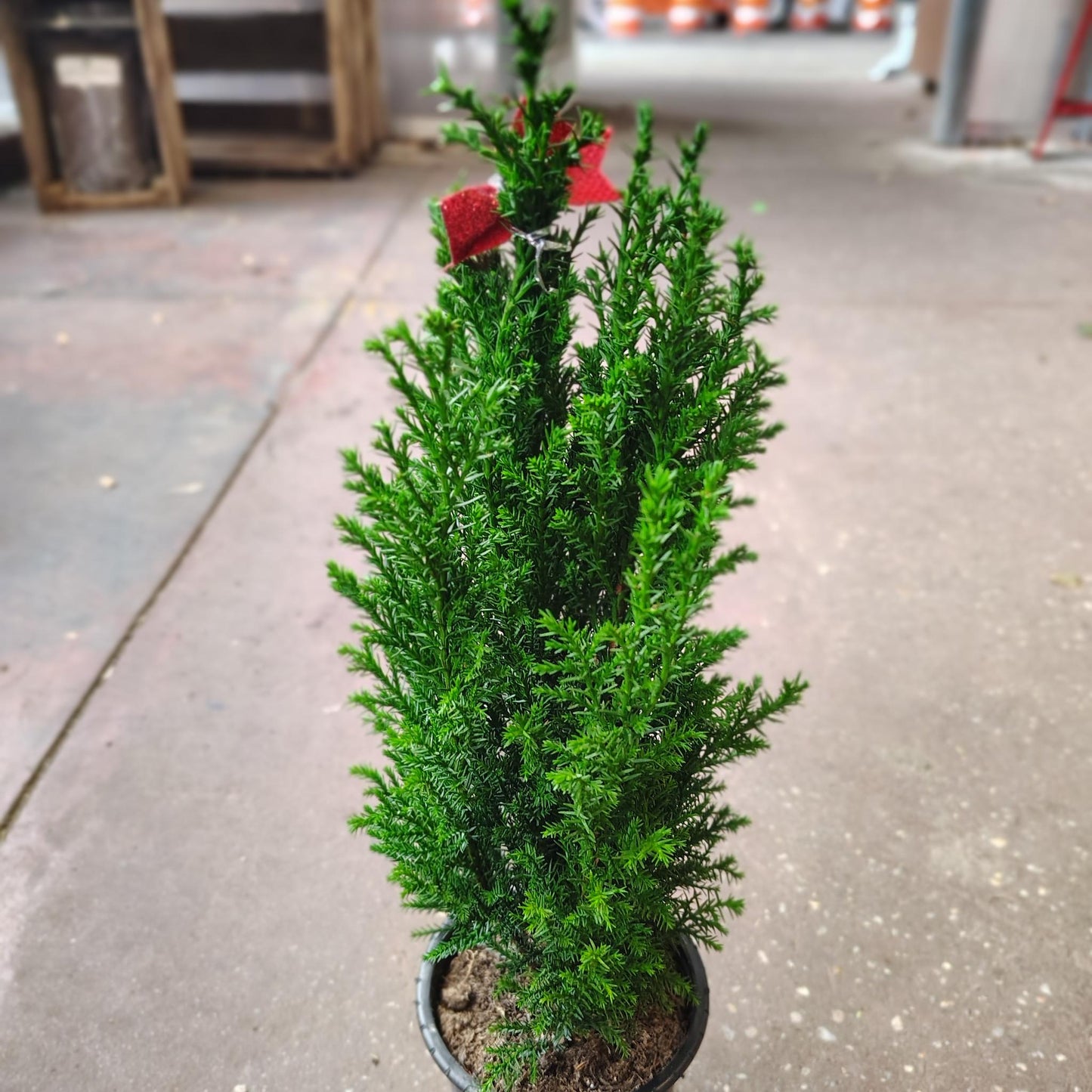


RedCrocus Euro Cypress 'Ellwoodii' Live Plant - Lawson Cypress, Blue-Green Evergreen, Upright Habit, Indoor/Outdoor 4" Pot
RedCrocus Euro Cypress 'Ellwoodii' Live Plant - Lawson Cypress, Blue-Green Evergreen, Upright Habit, Indoor/Outdoor 4" Pot
Regular price
$130.00 USD
Regular price
$169.00 USD
Sale price
$130.00 USD
Unit price
per
Shipping calculated at checkout.
SKU:ber8b63-redcrocus
Couldn't load pickup availability
Chamaecyparis Law. Elwoodii Green Eurocypress
Elegant, narrow Lawson cypress with dense blue‑green sprays — ideal for containers and cool‑climate gardens.
Evergreen
USDA 5–8
Slow–Moderate Growth
Container Friendly
Description
Chamaecyparis lawsoniana ‘Ellwoodii’—commonly sold as Green Eurocypress—is a refined, columnar conifer prized for its fine‑textured, blue‑green foliage held in dense, upright sprays. Naturally narrow and slow‑growing, it offers year‑round structure and color with minimal pruning. Frequently used as a festive tabletop or porch accent in cool seasons, it thrives long‑term outdoors in bright, cool conditions with evenly moist, well‑drained soil.
Note: Unlike the lemon‑scented Goldcrest, ‘Ellwoodii’ has only a light resinous aroma.
Suggested Uses
- Four‑season container specimen for entries, patios, and balconies
- Mixed conifer borders and rock gardens for vertical accent
- Winter planters with heathers, pansies, cyclamen, and evergreen perennials
- Formal topiary forms (light shearing only)
- Seasonal indoor décor for a short period in bright, cool rooms
- Cut greenery for winter arrangements and wreaths
Plant Details
-
 Botanical NameChamaecyparis Law. Elwoodii Green Eurocypress (Chamaecyparis lawsoniana ‘Ellwoodii’)
-
 Common NameChamaecyparis Law. Elwoodii — Euro Cypress; Lawson Cypress ‘Ellwoodii’
-
 Size & GrowthIn ground: 10–15 ft tall × 3–5 ft wide over time; containers: typically 1–4 ft. Annual growth ~6–12 in (15–30 cm).
-
 Hardiness ZonesUSDA 5–8; prefers cool summer climates and shelter from drying winds.
-
 Foliage TypeEvergreen conifer; fine, scale‑like sprays; dense, blue‑green color year‑round.
-
 Bloom TimeNot grown for flowers; inconspicuous pollen cones in spring; small seed cones late season.
-
 Growth RateSlow to moderate, naturally narrow and upright habit.
-
 Light RequirementsFull sun to light shade outdoors; indoors, brightest possible window (4–6+ hours), cool room.
-
 Attracts PollinatorsNo — wind‑pollinated conifer, not a nectar source.
-
 Indoor FriendlyYes for short‑term display; best grown outdoors long‑term in cool, bright conditions.
-
 Container FriendlyExcellent in pots with sharp drainage; choose a deep container and avoid heat buildup on roots.
-
 Deer ResistantModerate — often avoided but may be sampled if browsing pressure is high.
-
 Pet WarningGenerally non‑toxic to cats and dogs; ingestion of plant material may cause mild GI upset—discourage chewing.
-
 FragrantLight, resinous scent when foliage is rubbed; not strongly aromatic in the air.
-
 Cut FlowerYes — long‑lasting cut greens for bouquets, wreaths, and holiday arrangements.
-
 Grows Well WithGrows Well With Heathers (Calluna/Ericas), Heuchera, Skimmia, Helleborus, dwarf conifers, ornamental grasses, winter pansies, cyclamen.
Care Tips
-
 Planting InstructionsPlant in spring or early fall. Tease circling roots, set straight, and backfill with native soil improved with 20–30% compost. Water in thoroughly and mulch 2–3 in, keeping mulch off the trunk.
-
 Soil MoistureKeep evenly moist—never bone dry or waterlogged. Water deeply, then allow the top inch to dry between waterings in containers.
-
 Soil TypeWell‑drained loam or sandy loam; slightly acidic to neutral (pH 5.5–7.0). For pots, use a bark‑ and peat‑based mix with perlite for drainage.
-
 HumidityPrefers cool, moderately humid air. Indoors maintain ~40–60% RH and keep away from heat vents and hot, dry rooms.
-
 Pruning InstructionsMinimal pruning required. Lightly tip‑prune or shear for shape in late winter or after a flush. Do not cut back into old brown wood; remove dead or crossing twigs only.
-
 Winter CareHardy in ground to Zone 5. Mulch roots before deep freezes and water during dry spells. Container plants: protect root ball (wrap pot, move to sheltered spot) and avoid saturation during freeze‑thaw cycles.
-
 Planting DepthSet the root flare level with or slightly above surrounding soil. In containers, keep the top of the root ball ~0.5–1 in below the rim for watering space.
-
 FertilizationFeed lightly in early spring with a slow‑release, balanced fertilizer for evergreens. Container plants: half‑strength liquid feed monthly spring through mid‑summer; stop 6–8 weeks before first frost.
-
 Special CareEnsure sharp drainage; rotate containers for even light; repot every 2–3 years; monitor for spider mites/aphids; provide afternoon shade in hot inland climates; acclimate gradually when moving between indoor and outdoor settings.