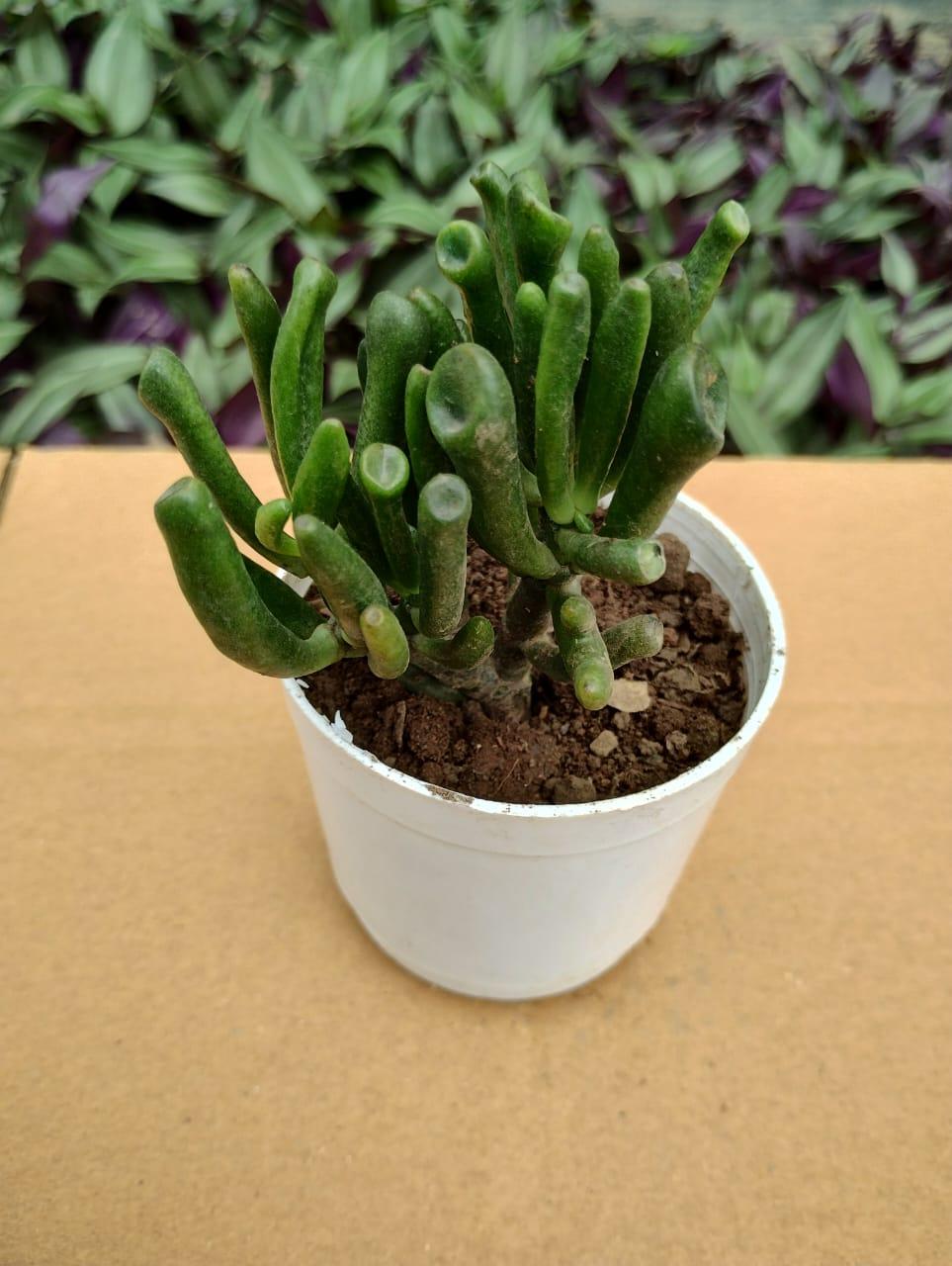


RedCrocus Hobbit Jade (Crassula ovata) Live Succulent Houseplant, Drought-Tolerant, Bonsai-Friendly, Easy Indoor Windowsill Plant 7" Terracotta Pot
RedCrocus Hobbit Jade (Crassula ovata) Live Succulent Houseplant, Drought-Tolerant, Bonsai-Friendly, Easy Indoor Windowsill Plant 7" Terracotta Pot
Regular price
$260.00 USD
Regular price
$338.00 USD
Sale price
$260.00 USD
Unit price
per
Shipping calculated at checkout.
SKU:ber884f-redcrocus
Couldn't load pickup availability
Succulent- Crassula Ovata Hobbit JadeEvergreen Succulent
A sculptural jade plant with distinctive tubular, trumpet-like leaves that blush red at the tips in strong light. Succulent- Crassula Ovata Hobbit Jade is a long-lived, low-maintenance houseplant and patio staple that adapts well to containers and can be trained as a small bonsai. Mature plants may produce clusters of starry, white to pale-pink blooms in the cool season.
Description
Hobbit Jade is a compact selection of jade plant prized for its whimsical, tubular foliage and sturdy, branching habit. The fleshy leaves store water, making it highly drought-tolerant once established. Indoors, it thrives in bright windows and responds well to occasional pruning for shape. Outdoors in frost-free regions, it forms a dense, shrub-like accent for dry gardens and containers, developing colorful red leaf margins with ample sun and cool nights.
Note: Flowering is most reliable on mature plants given bright light, cool nights, and slightly drier winter conditions.
Suggested Uses
-
 Containers & Patio PotsExcellent for decorative pots, troughs, and mixed succulent planters; responds well to bonsai training.
 -
 Indoor HouseplantThrives on bright windowsills (south/west) with infrequent watering and low humidity.
 -
 Waterwise / Drought-Tolerant GardensSuitable for xeric plantings in frost-free climates; pairs with other arid succulents.
 -
 Bonsai & Form PruningNaturally branches and thickens; easy to shape via tip-pinching and selective pruning.
Plant Details
-
 Botanical NameSucculent- Crassula Ovata Hobbit Jade
-
 Common NameSucculent- Crassula Ovata (Hobbit Jade)
-
 Size & GrowthTypically 2–3 ft tall and wide in containers; older specimens can reach 3–4 ft. Compact, branching habit; suitable for bonsai training.
-
 Hardiness ZonesUSDA 10–11; can be grown in 9b with protection from frost/freezing temperatures (very frost-sensitive).
-
 Foliage TypeEvergreen succulent; tubular, trumpet-shaped leaves that develop red tips with strong light and cool nights.
-
 Bloom TimeWinter to early spring on mature plants; clusters of small, starry white to pale pink flowers (less frequent indoors).
-
 Growth RateSlow to moderate; faster with warm temperatures, high light, and excellent drainage.
-
 Light RequirementsBright light to full sun; aim for 4–6+ hours daily. Indoors, a south or west window is ideal; acclimate to direct sun to avoid scorch.
-
 Attracts PollinatorsYes—flowers attract bees and other beneficial insects when in bloom outdoors.
-
Indoor FriendlyExcellent houseplant; tolerates typical indoor humidity and infrequent watering.
-
Container FriendlyIdeal for containers with drainage; heavy pots help stabilize mature plants with woody stems.
-
 Deer ResistantGenerally deer and rabbit resistant; fleshy leaves are typically avoided by browsing wildlife.
-
 Pet WarningToxic to cats and dogs if ingested (Crassula spp.); keep out of reach of pets and children.
-
 FragrantMildly fragrant when flowering, with a light sweet scent (flowering varies indoors).
-
 Cut FlowerNot typically used as a cut flower; stem cuttings root easily for propagation and can be used in succulent arrangements.
-
 Grows Well WithGrows Well With Echeveria, Sedum, Haworthia, Aloe, Senecio (Curio), Aeonium, and other arid, well-drained succulents.
Care Tips
-
 Planting InstructionsUse a pot with drainage. Set the plant at the same depth as in its original container; backfill with a gritty mix and do not bury stems. Brush soil off leaves and avoid watering for 2–3 days after repotting to allow any damaged roots to callus.
-
 Soil MoistureWater deeply, then allow 2/3 of the mix to dry before watering again. Reduce significantly in winter; never let the pot sit in water. Wrinkling leaves signal thirst; mushy leaves indicate overwatering.
-
 Soil TypeFast-draining cactus/succulent mix amended with 30–50% pumice, perlite, or coarse grit. Neutral to slightly acidic pH is ideal.
-
 HumidityPrefers low to average indoor humidity; ensure good air circulation. Avoid persistently damp conditions around foliage and crown.
-
 Pruning InstructionsPinch tips in spring/summer to encourage branching. Prune leggy or crossing stems after bloom or in late winter; use clean, sharp tools. Cuttings can be callused and rooted easily.
-
 Winter CareProtect from frost; ideal indoor temps 55–70°F (13–21°C) with bright light. Water sparingly and keep soil mostly dry to encourage potential winter flowering on mature plants.
-
 Planting DepthPosition so the root crown sits just above the soil line. Bury roots only; keep 1–2 inches of lower stem above the media to prevent rot.
-
 FertilizationLight feeder. Apply a balanced, low-nitrogen fertilizer at 1/4 strength every 6–8 weeks in spring–summer. Do not fertilize in fall–winter.
-
 Special CareRotate the pot monthly for even growth; acclimate gradually to full sun to avoid scorch. Repot every 2–3 years in spring. Watch for mealybugs and scale; treat early. Ensure excellent drainage and avoid overwatering.