

RedCrocus Fire Chief Arborvitae (Thuja occidentalis) - Dwarf Globe Evergreen Shrub, Golden Foliage with Fiery Orange-Red in Cool Seasons, Live Landscape Plant 1 Quart Pot
RedCrocus Fire Chief Arborvitae (Thuja occidentalis) - Dwarf Globe Evergreen Shrub, Golden Foliage with Fiery Orange-Red in Cool Seasons, Live Landscape Plant 1 Quart Pot
Regular price
$170.00 USD
Regular price
$221.00 USD
Sale price
$170.00 USD
Unit price
per
Shipping calculated at checkout.
SKU:ber8473-redcrocus
Couldn't load pickup availability
Thuja Occ. Fire Chief Sold Out
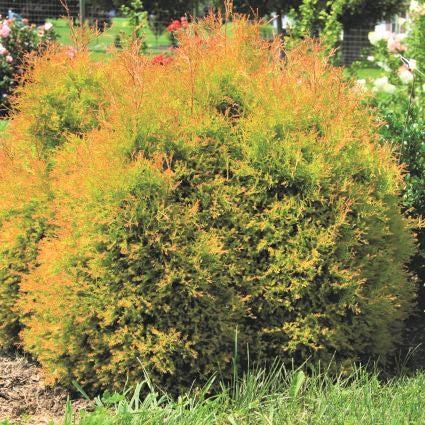
Dwarf globe arborvitae with glowing gold foliage and fiery orange-red tints in cool seasons
Evergreen
Compact • Globe Form
Low Maintenance
Full Sun to Part Sun
Description
Thuja occidentalis ‘Fire Chief’ is a naturally rounded, dwarf arborvitae prized for its dense, fine-textured sprays of foliage that glow chartreuse to golden in spring and summer, then flush with rich orange to red highlights as temperatures cool. Its tidy, slow-growing, globe habit makes it an ideal four-season accent that brings reliable color and structure with very little pruning. Best color develops in ample sun with consistent moisture and a layer of mulch to keep roots cool.
Suggested Uses
- Front-of-border accent
- Foundation & walkway edging
- Rock & conifer gardens
- Mixed shrub borders
- Massed low hedging
- Four-season container
- Color contrast in fall/winter
Quick Care Note
Provide 6+ hours of sun for best gold color; in hotter climates, protect with light afternoon shade. Keep soil consistently moist (not waterlogged), especially for container-grown plants and during the first growing seasons.
In areas with deer pressure, protect plants—Thuja occidentalis is a favorite browse in winter.
Plant Details

Botanical NameThuja Occ. Fire Chief Sold Out

Common NameThuja Occ. Fire Chief

Size & GrowthDwarf, naturally globe-shaped; about 3–4 ft tall and 3–4 ft wide at 10 years (ultimate 4–5 ft over time); very dense habit.

Hardiness ZonesUSDA Zones 5–8 (best performance in 5–7; protect from hot, drying winds in warm zones).

Foliage TypeEvergreen, fine, scale-like sprays; golden-chartreuse in summer, turning orange to red-tipped in cool seasons.

Bloom TimeNot grown for flowers; inconspicuous cones form in spring; ornamental interest is foliage and form.

Growth RateSlow; typically 3–6 inches of new growth per year under good conditions.

Light RequirementsFull sun to part sun (6+ hours). In hotter regions, provide light afternoon shade to prevent scorch and maintain color.

Attracts PollinatorsLow; wind-pollinated conifer, primarily valued for evergreen color and structure.

Indoor FriendlyNot recommended; best grown outdoors where it receives ample light and seasonal cooling.

Container FriendlyYes—excellent in large containers for many years; ensure consistent moisture and winter root protection.

Deer ResistantNo; arborvitae is frequently browsed by deer—use fencing or repellents, especially in winter.

Pet WarningFoliage contains essential oils; ingestion may cause mild GI upset. Sap may irritate skin—discourage chewing and wear gloves when pruning.

FragrantFoliage is pleasantly resinous when brushed or crushed; not a strong ambient fragrance.

Cut FlowerUseful as evergreen filler in arrangements and winter décor; long-lasting when hydrated.

Grows Well WithOther dwarf conifers, Spiraea, Heuchera, Allium ‘Millenium’, perennial geraniums, dwarf grasses (e.g., Festuca), Panicle Hydrangea.
Care Tips

Planting InstructionsPlant in spring or early fall. Dig a hole 2× the width of the root ball and same depth; set the root flare level with or slightly above soil grade. Backfill with native soil (amend heavy clay with compost), water to settle, and mulch 2–3 inches, keeping mulch off the trunk.

Soil MoistureKeep evenly moist, especially the first 1–2 years. Avoid waterlogging; allow the top inch to dry slightly between waterings. Containers dry faster—check often in heat and wind.

Soil TypeWell-drained loam is ideal; tolerates sandy or clay soils if drainage is improved. pH neutral to slightly alkaline or slightly acidic is acceptable.

HumidityAverage outdoor humidity is fine. In windy, exposed sites, provide a windbreak to reduce desiccation, particularly in winter and early spring.

Pruning InstructionsMinimal pruning needed. Lightly shear or tip-prune after spring flush to maintain shape. Do not cut into old, bare wood as it will not resprout. Remove any winter-burned tips in early spring.

Winter CareWater deeply until the ground freezes; maintain mulch. In areas with strong winter sun/wind or heavy deer pressure, use burlap screens and physical protection. Avoid de-icing salt spray and salt-laden runoff.

Planting DepthSet so the top of the root ball is level with the soil surface (or up to 1 inch above in heavy soils). Never bury the trunk or cover the root flare with soil or mulch.

FertilizationFeed lightly in early spring with a slow-release, balanced fertilizer formulated for evergreens (follow label rates). Over-fertilization can reduce compactness and color intensity.

Special CareSpace plants 3–4 ft apart for air flow and form. Monitor for spider mites in hot, dry weather; rinse foliage periodically if dusty. Use deer protection where needed. For containers, choose a 16–22 inch pot with drainage and insulate roots over winter.
Tip: Best color and density come from a combination of strong sun, steady moisture, and a light-colored mulch that reflects light into the plant’s interior.