

Containers & Courtyards
Premium pots on patios, balconies, and entryways; pairs beautifully to frame doors or pathways.
SKU:ber8338-redcrocus
Couldn't load pickup availability
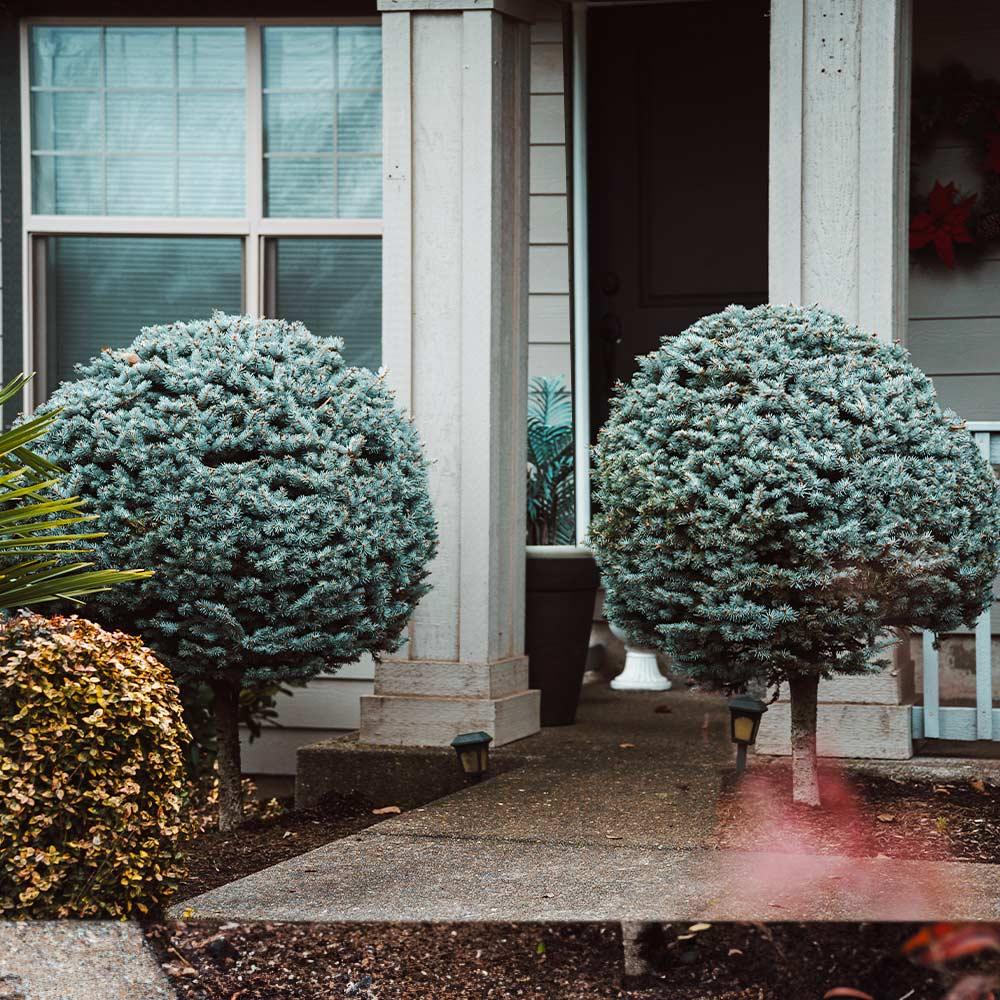
Picea Hexenbessen Topiary Standard Topiary is a slow-growing, dwarf spruce crafted from a witches’ broom selection and grafted onto a straight trunk (standard). It forms a dense, rounded crown of short, stiff needles that deliver crisp texture and sculptural presence in every season. The inherently compact habit makes it an impeccable architectural accent for entrances, courtyards, small gardens, and premium containers. Unlike faster conifers, this topiary holds its shape with minimal intervention, offering elegant structure without overwhelming nearby plantings.


 Botanical NamePicea Hexenbessen Topiary Standard Topiary (dwarf witches’ broom spruce trained on a standard)
 Common NamePicea Hexenbessen Topiary; Witches’ Broom Dwarf Spruce (standard form)
 Size & GrowthVery compact; topiary head typically 18–30 in (45–75 cm) wide in 10 years. Overall height equals graft height (commonly 3–6 ft / 0.9–1.8 m) with minimal annual increase.
 Hardiness ZonesUSDA 3–7; reliably cold-hardy with protection from extreme winter wind when container-grown.
 Foliage TypeEvergreen needles; short, stiff, and densely set; medium to deep green with fine, tidy texture.
 Bloom TimeNon-flowering in the ornamental sense; small pollen cones in spring are inconspicuous and not showy.
 Growth RateVery slow; typically 1–2 in (2.5–5 cm) per year under good culture.
Light RequirementsFull sun to light shade; aim for 6+ hrs sun in cool climates; provide light afternoon shade in hotter regions.
Growth RateVery slow; typically 1–2 in (2.5–5 cm) per year under good culture.
Light RequirementsFull sun to light shade; aim for 6+ hrs sun in cool climates; provide light afternoon shade in hotter regions.
 Attracts PollinatorsLow. Spruce is wind-pollinated; provides structure for small birds rather than nectar for insects.
 Indoor FriendlyNot suitable as a houseplant; requires outdoor light, airflow, and winter chill for long-term health.
Container FriendlyExcellent choice for large, well-drained containers; ideal for patios, terraces, and formal entrances.
Deer ResistantGenerally deer-resistant; minor browsing possible on tender growth when food is scarce.
Indoor FriendlyNot suitable as a houseplant; requires outdoor light, airflow, and winter chill for long-term health.
Container FriendlyExcellent choice for large, well-drained containers; ideal for patios, terraces, and formal entrances.
Deer ResistantGenerally deer-resistant; minor browsing possible on tender growth when food is scarce.
 Pet WarningConsidered non-toxic; ingestion of needles may cause mild GI upset. Prevent chewing on sharp foliage.
 FragrantNeedles have a mild resinous scent when crushed; not notably fragrant in the landscape.
 Cut FlowerNot used as a cut flower; small sprigs can accent winter greenery arrangements.
Grows Well WithGrows Well With Dwarf pines (Pinus mugo), junipers, Calluna/Erica (heaths & heathers), Heuchera, Sedum, and Festuca glauca.
Cut FlowerNot used as a cut flower; small sprigs can accent winter greenery arrangements.
Grows Well WithGrows Well With Dwarf pines (Pinus mugo), junipers, Calluna/Erica (heaths & heathers), Heuchera, Sedum, and Festuca glauca.
 Planting InstructionsPlant at the same depth as in the pot; keep the graft union and trunk flare above the mulch line. Stake the standard for the first season in windy sites to keep the crown upright. Backfill with native soil improved only if drainage is poor; water to settle.
 Soil MoistureKeep evenly moist during the first growing season. Thereafter, water deeply and allow the top inch of soil to dry between waterings. Avoid waterlogged conditions, especially in containers.
 Soil TypeWell-drained loam or sandy loam; slightly acidic to neutral (pH 5.5–7.0). Amend heavy clay with grit and compost. Containers must have generous drainage holes.
 HumidityAverage outdoor humidity is ideal. Ensure good air circulation; avoid cramped corners that trap heat and moisture in summer.
 Pruning InstructionsMinimal pruning required. Lightly pinch or shear new growth after the spring flush to maintain the sphere. Do not cut back into old, leafless wood. Remove any suckers or shoots emerging below the graft.
 Winter CareIn-ground plants are hardy in USDA 3–7. For containers in cold regions, insulate the pot, group with others, or move to a sheltered spot. Water during winter thaws to prevent desiccation; provide a windbreak in exposed sites.
 Planting DepthSet the top of the root ball level with surrounding soil. Keep the trunk flare and graft 3–6 in (7–15 cm) above soil/mulch. Apply 2–3 in (5–7.5 cm) mulch, pulling it back from the stem.
 FertilizationFeed lightly in early spring with a slow‑release, balanced conifer fertilizer (e.g., 5‑3‑2) at label rates. Avoid heavy nitrogen and avoid fertilizing after midsummer.
 Special CareMonitor for spider mites and spruce gall adelgids; rinse foliage periodically and treat early if detected. Rotate container quarterly for even light. Re‑pot every 3–5 years, refreshing 1/3 of the mix. Check and adjust ties/stakes as the trunk thickens.