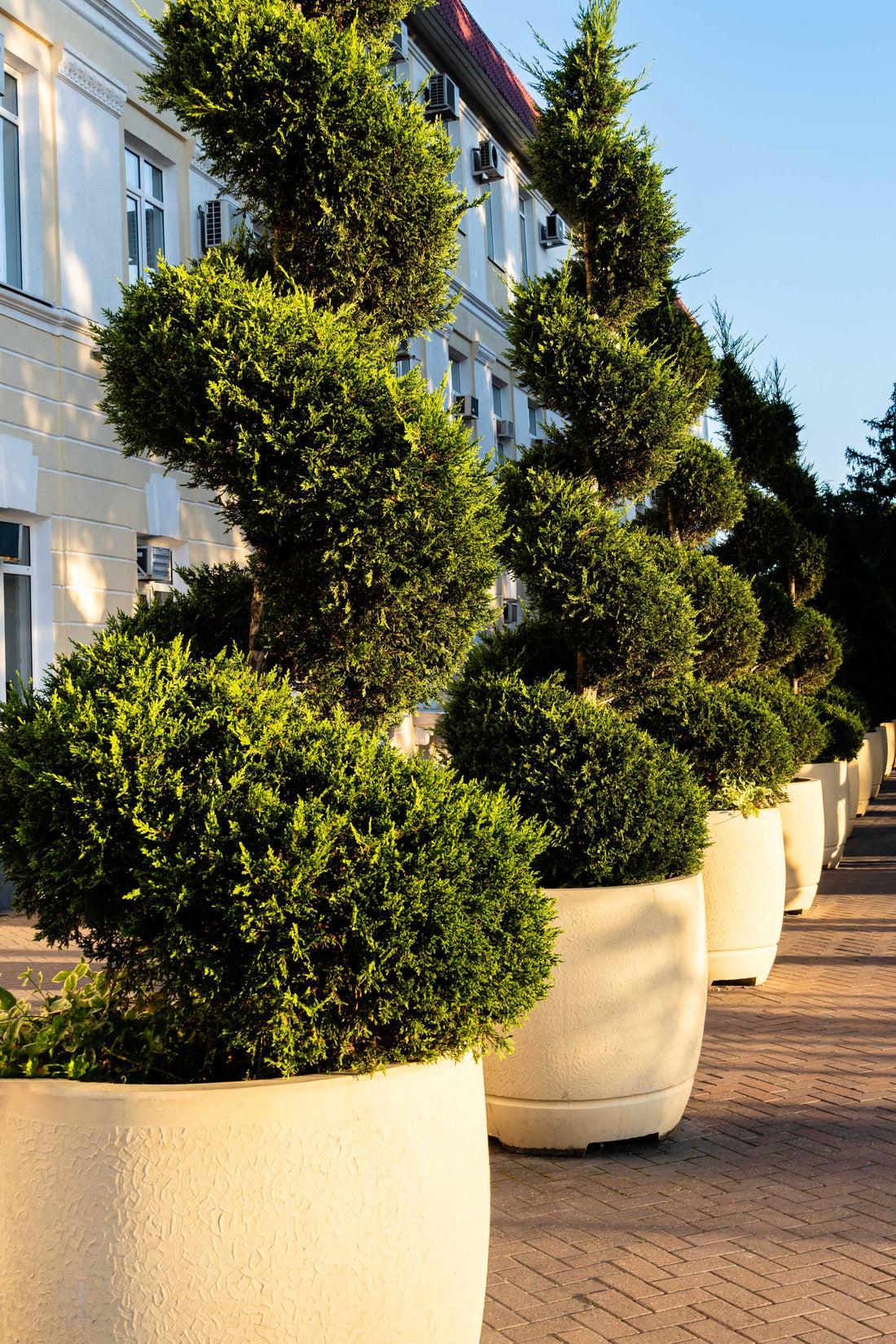


RedCrocus Buxus 'Green Mountain' Spiral Topiary - Live Boxwood Evergreen, Cold-Hardy, for Containers & Entryways 5 Gallon Nursery Pot
RedCrocus Buxus 'Green Mountain' Spiral Topiary - Live Boxwood Evergreen, Cold-Hardy, for Containers & Entryways 5 Gallon Nursery Pot
SKU:ber82b6-redcrocus
Couldn't load pickup availability
Buxus Green Mountain- Topiary Spiral Topiary
Description
Buxus Green Mountain– Topiary Spiral Topiary is a sculpted form of the cold-hardy ‘Green Mountain’ boxwood renowned for its naturally upright, pyramidal habit and dense, small glossy leaves that hold rich green color through winter. Trained into an elegant spiral, it makes a sophisticated focal point for entries, patios, and formal gardens. Slow to moderate growth and tight internodes ensure crisp lines when sheared. Tolerant of both full sun and partial shade, this broadleaf evergreen performs best in evenly moist, well-drained soils and benefits from light, periodic shaping to maintain its silhouette.
Note: While the botanical cultivar is widely listed as Buxus × ‘Green Mountain’, this entry presents the plant in its popular spiral topiary form.
Suggested Uses
 Statement containers for entries and patios
 Formal gardens, parterres, and knot gardens
 Foundation plantings and evergreen structure
 Flanking doorways and lining walkways
 Year-round and winter interest
 Urban courtyards and small-space gardens
Plant Details
-
 Botanical NameBuxus Green Mountain- Topiary Spiral Topiary
-
 Common NameBuxus Green Mountain- Topiary
-
 Size & GrowthTypically 5–7 ft tall × 2–4 ft wide in-ground; smaller in containers. Slow–moderate growth (about 3–6 in per year). Readily maintained smaller with shearing.
-
 Hardiness ZonesUSDA 4–9; provide wind protection in exposed, cold sites to reduce winter bronzing and leaf scorch.
-
 Foliage TypeBroadleaf evergreen; small, dense, glossy green leaves that hold color well through winter (may bronze slightly in extreme cold).
-
 Bloom TimeLate spring; tiny greenish-cream flowers, not showy.
-
 Growth RateSlow to moderate; ideal for precise topiary maintenance and clean outlines.
-
 Light RequirementsFull sun to part shade; in hot summers, afternoon shade helps prevent stress and bronzing.
-
 Attracts PollinatorsLow; insignificant blooms may attract a few early-season bees.
-
 Indoor FriendlyNot a long-term houseplant. Short indoor displays are possible in bright, cool rooms but best grown outdoors year-round.
-
Container FriendlyExcellent in large containers; protect roots in winter (wrap pots or move to sheltered spot in cold climates).
-
 Deer ResistantYes—generally deer resistant, though no plant is completely deer-proof.
-
 Pet WarningBoxwood foliage contains alkaloids; ingestion may cause gastrointestinal upset in pets. Avoid pruning debris access.
-
 FragrantLow; flowers are faintly fragrant. Foliage can have a musky scent when wet or bruised.
-
 Cut FlowerNot a cut flower; sprigs of foliage are useful, long-lasting greenery in arrangements and wreaths.
-
 Grows Well WithGrows Well With Hydrangea, Hosta, Heuchera, Ilex crenata, Taxus, Liriope, ornamental grasses, and seasonal annuals with similar moisture needs.
Care Tips
-
 Planting InstructionsPlant in spring or early fall. Loosen the hole 2–3× root ball width, same depth. Tease circling roots. Backfill with native soil, water to settle, and mulch 2–3 in, keeping mulch off the stem. Align spiral so the best face meets the primary viewpoint.
-
 Soil MoistureKeep evenly moist but never waterlogged. Water deeply, then allow the top inch to dry. Once established, moderate drought tolerance; container plants dry faster—check often in heat.
-
 Soil TypeWell-drained loam or sandy loam; prefers neutral to slightly alkaline pH (about 6.5–7.5). Improve heavy clay with compost and coarse material for drainage; avoid soggy sites.
-
 HumidityAverage outdoor humidity is fine. Ensure air circulation and water at the base to keep foliage dry, helping prevent foliar diseases and boxwood blight.
-
 Pruning InstructionsShear lightly 1–3× per season to maintain the spiral: first after spring flush, again mid-summer. Avoid hard pruning in late fall. Sanitize tools between plants to reduce disease spread; avoid cutting into old, leafless wood.
-
 Winter CareWater well before ground freeze. Mulch root zone 2–3 in. Shield from harsh winter sun and wind with burlap wrap or windbreaks. For containers, insulate pots or move to a sheltered, unheated location above 20°F.
-
 Planting DepthSet the root flare at or slightly above surrounding soil. Do not bury the trunk. In containers, choose a pot with drainage holes and size up 2–3 in wider than the root ball.
-
 FertilizationLight feeder. Apply a slow-release, balanced fertilizer in early spring or after the first flush, or top-dress with compost. Avoid high nitrogen late in the season. Maintain soil pH around 6.5–7.5 per soil test.
-
 Special CareMonitor for boxwood leafminer, psyllid, and mites; treat early if noted. Provide good sanitation and spacing to minimize blight. Rotate containers periodically for even light, and use soft ties to gently train and refine the spiral as needed.