

RedCrocus Buxus 'Faulkner' Boxwood Ball – Live Evergreen Shrub for Hedges & Topiary, Compact Rounded Form, Full Sun to Part Shade, Zones 6–9 5 Gallon Nursery Pot
RedCrocus Buxus 'Faulkner' Boxwood Ball – Live Evergreen Shrub for Hedges & Topiary, Compact Rounded Form, Full Sun to Part Shade, Zones 6–9 5 Gallon Nursery Pot
Regular price
$200.00 USD
Regular price
$260.00 USD
Sale price
$200.00 USD
Unit price
per
Shipping calculated at checkout.
SKU:ber8198-redcrocus
Couldn't load pickup availability
Buxus Faulkner Ball
Evergreen | Compact | Formal Accent
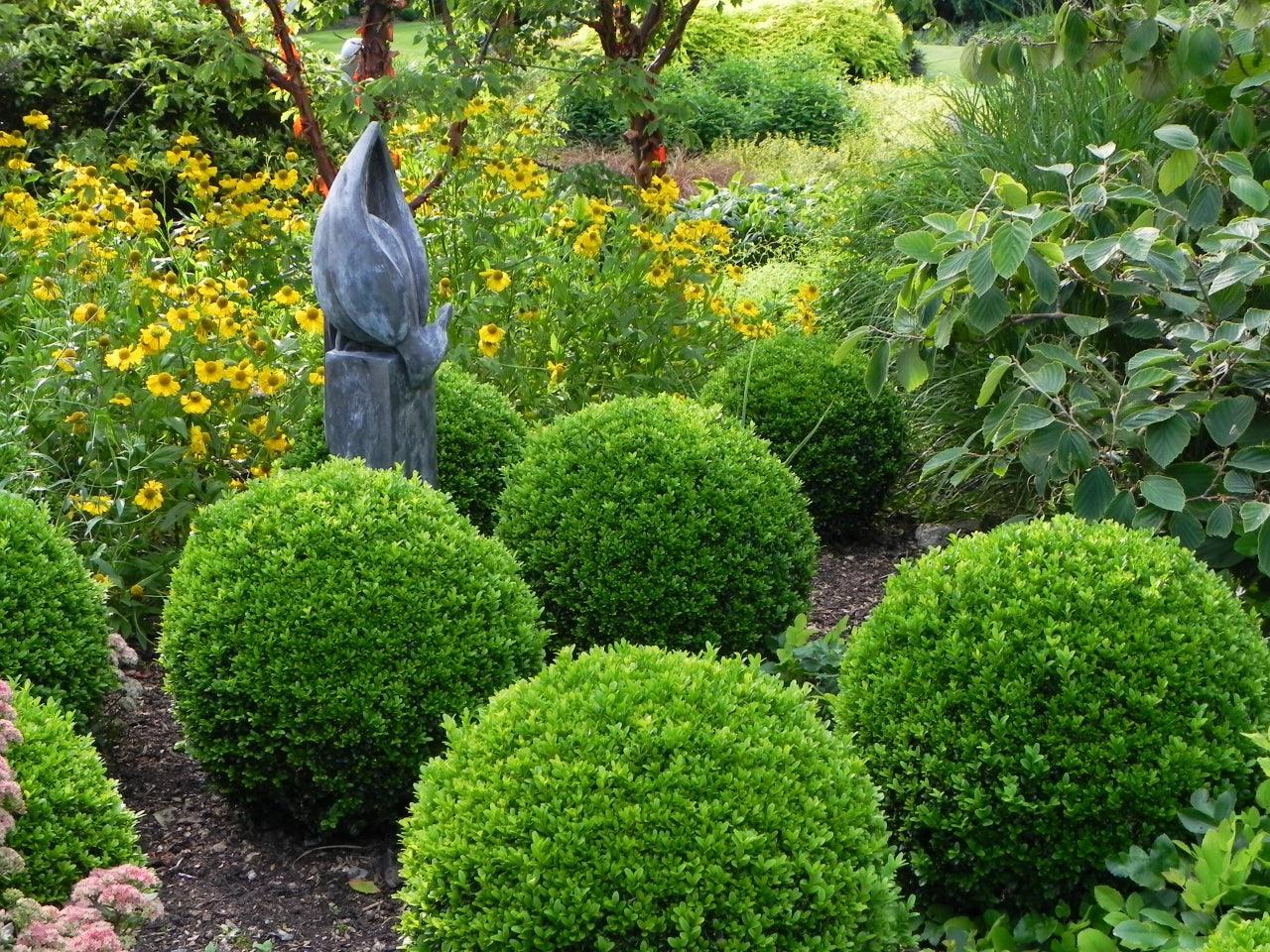
A naturally dense, sphere-forming boxwood prized for crisp structure, year-round color, and dependable performance in borders, containers, and formal designs.
Description
Buxus Faulkner Ball is a refined selection of boxwood valued for its innate, tight, rounded habit that forms a near-perfect green sphere with minimal shaping. The small, glossy, evergreen leaves hold rich color through the seasons with only slight winter bronzing in exposed sites. Slow to moderate growth, excellent response to light shearing, and strong tolerance of pruning make it ideal for topiary and crisp structural accents. Discreet spring blooms may attract bees, though the plant is primarily grown for its foliage and form. Reliable, versatile, and long-lived when planted in well‑drained soil with consistent moisture and good air flow.
Suggested Uses
- Formal edging or low hedges along paths and patios
- Potted accents framing entries, steps, and terraces
- Evergreen punctuation in mixed borders and parterres
- Topiary spheres, cones, and tailored shapes
- Year-round structure for cottage, modern, and classic gardens
Borders
Containers
Topiary
Foundation Planting
Formal Gardens
Plant Details
-
 Botanical NameBuxus Faulkner Ball (marketed name); botanically aligned with Buxus microphylla ‘Faulkner’
-
 Common NameBuxus Faulkner; Faulkner Boxwood (ball form)
-
 Size & GrowthMature size about 3–4 ft tall x 3–4 ft wide (0.9–1.2 m); naturally rounded, dense habit; slow–moderate growth (2–4 in/yr).
-
 Hardiness ZonesUSDA Zones 6–9; provide wind protection and mulch in colder edges of the range.
-
 Foliage TypeEvergreen; small, glossy, dark green leaves with good winter color; minimal bronzing in harsh exposure.
-
 Bloom TimeSpring; tiny, inconspicuous greenish‑cream flowers (ornamentally modest, nectar for bees).
-
 Growth RateSlow to moderate; maintains compact ball shape with light, periodic shearing.
-
 Light RequirementsFull sun to partial shade; best with morning sun and afternoon shade in hot climates (4–6+ hrs light).
-
 Attracts PollinatorsYes — spring flowers draw bees, though blooms are not showy.
-
 Indoor FriendlyNot recommended as a houseplant; performs best outdoors with seasonal temperature cycles and airflow.
-
 Container FriendlyExcellent — thrives in large containers with good drainage; ideal for entryways and patios.
-
 Deer ResistantYes — typically avoided by deer; not entirely foolproof under heavy pressure.
-
 Pet WarningToxic if ingested (leaves/stems); may cause GI upset; keep away from pets and livestock.
-
 FragrantMildly — small spring flowers have a light scent; foliage aromatic when bruised or sheared.
-
 Cut FlowerNot a cut-flower plant; evergreen sprigs widely used in arrangements, wreaths, and holiday décor.
-
 Grows Well WithGrows Well With Hydrangea, Hellebore, Heuchera, Liriope, Salvia, Roses, Japanese Maple, ornamental grasses, and dwarf conifers.
Note: Cultural details reflect typical performance of the Faulkner boxwood selection in a compact “ball” form; adjust care to your local climate and site conditions.
Care Tips
-
 Planting InstructionsPlant in early spring or early fall. Loosen roots, set crown at or slightly above surrounding soil, and space for airflow. Backfill with native soil amended with compost; water to settle and mulch 2–3 in, keeping mulch off stems.
-
 Soil MoistureKeep evenly moist while establishing; allow the top inch to dry slightly between waterings. Avoid waterlogging; provide deep, infrequent irrigation once established.
-
 Soil TypeWell-drained loam or sandy loam; tolerates clay if drainage is improved. Optimal pH near neutral to slightly alkaline (≈6.5–7.8).
-
 HumidityAverage outdoor humidity is fine; prioritize good air circulation and avoid prolonged leaf wetness to reduce disease risk.
-
 Pruning InstructionsLightly shear after the spring flush to maintain a tight ball; touch up mid‑summer if needed. Avoid hard pruning late in the season. Clean and disinfect tools to prevent disease spread.
-
 Winter CareWater deeply before ground freeze, mulch root zone, and shield from harsh wind/sun with burlap screens in exposed sites to prevent desiccation and bronzing.
-
 Planting DepthSet the root flare level with or 1–2 in above grade; never bury the trunk. Container culture: keep the top of the root ball slightly proud of the potting mix surface.
-
 FertilizationFeed in early spring with a slow‑release, balanced fertilizer or organic shrub food. Supplement with compost. Avoid high‑nitrogen feeding after midsummer.
-
 Special CareEnsure sharp drainage and airflow; water at the base (not overhead). Monitor for boxwood leafminer, mites, and foliar diseases; promptly remove debris under plants and refresh mulch annually.