

RedCrocus Graptopetalum amethystinum Live Succulent - Lavender Pebbles, Easy-Care, Drought Tolerant, Full Sun to Bright Light, Indoor/Outdoor, Pollinator Friendly 4" Pot
RedCrocus Graptopetalum amethystinum Live Succulent - Lavender Pebbles, Easy-Care, Drought Tolerant, Full Sun to Bright Light, Indoor/Outdoor, Pollinator Friendly 4" Pot
Regular price
$100.00 USD
Regular price
$130.00 USD
Sale price
$100.00 USD
Unit price
per
Shipping calculated at checkout.
SKU:ber7dfd-redcrocus
Couldn't load pickup availability
Succulent- Graptopetalum Amethystinum
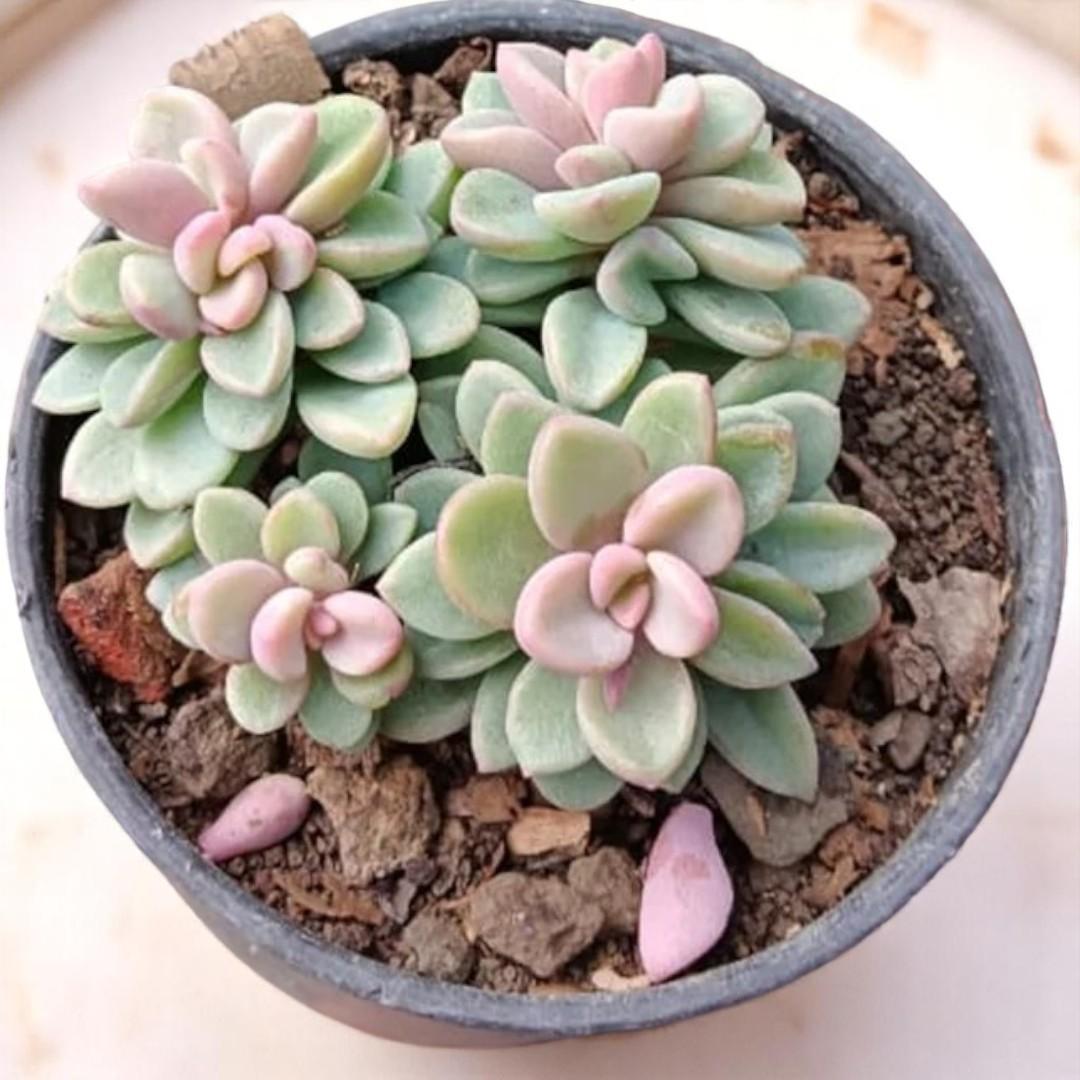
Lavender Pebbles — a compact, pastel-toned rosette succulent prized for its powdery, jewel-like leaves and elegant, trailing stems.
USDA 9–11
Full Sun to Bright Light
Low Water
Excellent for Containers
Bee Friendly
Description
Graptopetalum amethystinum, commonly known as Lavender Pebbles, forms tight, rounded rosettes of thick, glaucous leaves coated in a delicate, powdery bloom. The foliage shifts from silvery blue to soft lavender-pink under strong light and cool, dry conditions. In late spring to summer it sends up wiry inflorescences of small, starry, pale pink to whitish flowers that attract pollinators. With time, rosettes may trail over pot rims on short stems, creating a graceful, sculptural effect perfect for modern containers, rock gardens, and bright indoor displays.
Handle leaves gently—the natural powdery coating (epicuticular wax) is easily rubbed off and will not regrow on that leaf.
Suggested Uses
- Decorative ContainersTop choice
- Rock & Gravel Gardens
- Windowsills & Desks
- Xeriscapes
- Trailing Accent in Bowls
- Succulent Bouquets & Crafts
- Hanging Baskets
- Courtyards & Patios
Plant Details
-
 Botanical NameSucculent- Graptopetalum Amethystinum (syn. Graptopetalum amethystinum)
-
 Common NameSucculent- Graptopetalum; also known as Lavender Pebbles
-
 Size & GrowthRosettes 4–8 in (10–20 cm) wide; plant 6–12 in (15–30 cm) tall; clumps to 12–18 in (30–45 cm) over time via offsets.
-
 Hardiness ZonesUSDA 9–11 (protect from frost; brief light frost may scar leaves).
-
 Foliage TypeEvergreen succulent rosettes with thick, glaucous leaves; color ranges from silvery blue to pink-lavender with sun stress.
-
 Bloom TimeLate spring to summer; small starry flowers on airy stems.
-
 Growth RateModerate; faster in warm seasons with abundant light and excellent drainage.
-
 Light RequirementsFull sun to bright, direct light (4–6+ hrs). In very hot climates, provide light afternoon shade to prevent scorch.
-
 Attracts PollinatorsYes—flowers attract small bees and beneficial insects in bloom season.
-
 Indoor FriendlyExcellent near a bright south or west window; supplement with grow lights in dim interiors.
-
 Container FriendlyOutstanding in shallow, wide bowls and well-drained pots (terra cotta preferred).
-
 Deer ResistantGenerally deer and rabbit resistant; fleshy leaves are usually ignored.
-
 Pet WarningConsidered non-toxic to pets; ingestion may cause mild stomach upset—discourage chewing.
-
 FragrantNot notably fragrant; flowers may have a very light, sweet scent up close.
-
 Cut FlowerOccasionally used in succulent arrangements; rosettes can be wired/pinned, moderate vase longevity.
-
 Grows Well WithGrows Well With Echeveria, Graptosedum, Sedum, Crassula, Curio (Senecio), Kalanchoe, and other sun-loving, drought-tolerant succulents.
Note: Color intensity varies with light, temperature, and watering. Acclimate plants to higher light gradually to preserve the protective leaf bloom.
Care Tips
-
 Planting InstructionsUse a pot with large drainage holes; plant rosettes so the crown sits just above the soil line. Space 6–12 in (15–30 cm) in beds. Acclimate to direct sun over 10–14 days.
-
 Soil MoistureWater thoroughly, then allow soil to dry 80–100% before next watering. Typical cadence: every 10–14 days in warm seasons; every 3–4+ weeks in winter indoors.
-
 Soil TypeFast-draining cactus/succulent mix amended with 30–50% pumice, perlite, or coarse grit; avoid water-holding peat-heavy media.
-
 HumidityPrefers low humidity and excellent airflow; keep foliage dry to reduce risk of rot and mealybugs.
-
 Pruning InstructionsRemove spent flower stalks and shriveled lower leaves. Trim and re-root leggy stems in spring or summer; allow cut ends to callus 2–5 days before planting.
-
 Winter CareKeep above 35–40°F (2–4°C). Provide the brightest light possible and water sparingly. Protect outdoor plants from prolonged rain/cold snaps.
-
 Planting DepthSet so the first leaf layer is just above the soil surface. For cuttings, insert 0.5–1 in (1–2.5 cm) into the medium after callusing.
-
 FertilizationLight feeder: apply a diluted (1/4–1/2 strength) balanced cactus fertilizer once in mid-spring and once in midsummer; none in winter.
-
 Special CareProvide strong light to maintain compact form and color; rotate pots monthly. Avoid touching leaves to preserve the powdery bloom. Watch for mealybugs; treat early with isopropyl swabs and improved airflow.
Tip: Terra cotta pots help prevent overwatering by allowing the root zone to dry faster.