

RedCrocus Golden Mop Threadleaf False Cypress (Chamaecyparis pisifera) Live Evergreen Shrub, Dwarf Conifer with Bright Golden Foliage 4" Pot
RedCrocus Golden Mop Threadleaf False Cypress (Chamaecyparis pisifera) Live Evergreen Shrub, Dwarf Conifer with Bright Golden Foliage 4" Pot
SKU:ber730b-redcrocus
Couldn't load pickup availability
Chamaecyparis Pis. Gold Mop Mop Cypress
Description
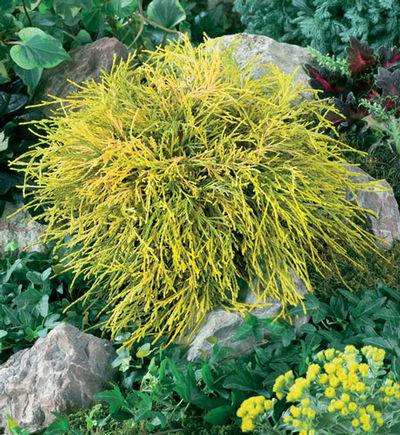
Commonly sold as “Gold Mop” or “Golden Mop,” this compact selection of Chamaecyparis pisifera develops a softly cascading, mop-like texture of fine, threadleaf sprays. New growth emerges bright lemon-gold, maturing to warm chartreuse through summer and holding color well in winter. Its naturally rounded, shaggy form provides year‑round structure and cheerful contrast to green plantings. Slow and steady in growth, it’s ideal for foundation beds, rock gardens, and containers where reliable evergreen color is desired with minimal pruning.
Suggested Uses
Excellent as a golden accent in mixed borders and foundation plantings; effective in rock and conifer gardens; superb for four‑season interest in large containers; softens hard edges along paths, steps, and retaining walls; pairs beautifully with blue, burgundy, and deep green foliage for high contrast; useful as a low evergreen anchor in front‑of‑bed compositions.
Plant Details
-
 Botanical NameChamaecyparis Pis. Gold Mop Mop Cypress
-
 Common NameChamaecyparis Pis. Gold Mop; “Golden Mop” Threadleaf False Cypress
-
 Size & GrowthDwarf, mounded habit; typically 3–5 ft H × 4–6 ft W in ~10 years; may slowly reach 6+ ft over time.
-
 Hardiness ZonesUSDA 4–8 (cold-hardy; heat tolerant with adequate moisture and drainage).
-
 Foliage TypeEvergreen, fine threadleaf sprays; bright golden‑yellow aging to chartreuse; soft, cascading texture.
-
 Bloom TimeNon‑flowering ornamental; may produce small, inconspicuous cones; valued for year‑round foliage color.
-
 Growth RateSlow to moderate (about 3–6 in / 7–15 cm per year under good conditions).
-
 Light RequirementsFull sun to part sun; best gold color with 6+ hours sun. In hot summers, provide afternoon shade to prevent scorch.
-
 Attracts PollinatorsNot significant for pollinators; primarily grown for foliage and form.
-
 Indoor FriendlyNo — best grown outdoors year‑round; indoor conditions are typically too dry and low‑light.
-
 Container FriendlyYes — thrives in large containers with excellent drainage; ideal for patios and entryways.
-
 Deer ResistantGenerally deer‑resistant; browsing is uncommon but may occur where food pressure is high.
-
 Pet WarningConsidered non‑toxic; ingestion of foliage may cause mild stomach upset — discourage chewing.
-
 FragrantFoliage has a light, resinous aroma when rubbed or pruned; not strongly fragrant in the landscape.
-
 Cut FlowerNot a traditional cut flower; sprigs are useful in winter arrangements, wreaths, and holiday décor.
-
 Grows Well WithGrows Well With Dwarf conifers (Juniperus, Picea), heaths & heathers (Erica, Calluna), Japanese maple, Spirea, Barberry, Blue fescue, Sedum.
Care Tips
-
 Planting InstructionsPlant in spring or early fall. Loosen circling roots; set the root ball so the top sits 0–1 in above finished grade. Backfill with native soil amended lightly with compost. Water to settle and mulch 2–3 in, keeping mulch off the trunk.
-
 Soil MoistureKeep evenly moist the first growing season. Once established, moderately drought‑tolerant; avoid chronic sogginess or standing water.
-
 Soil TypeWell‑drained sandy or loamy soils are ideal; slightly acidic to neutral pH (≈5.5–7.0). In heavy clay, amend with coarse grit and organic matter or consider a raised bed.
-
 HumidityTolerates typical outdoor humidity. Ensure good air flow; in hot, humid regions, favor morning sun with light afternoon shade and excellent drainage.
-
 Pruning InstructionsMinimal pruning needed. Lightly shear after spring flush to shape. Do not cut back into old, leafless wood. Remove dead or wayward sprays in late winter.
-
 Winter CareHardy in Zones 4–8. Water deeply before freeze. In exposed, windy sites, provide a windbreak or anti‑desiccant. Maintain 2–3 in mulch over the root zone for insulation.
-
 Planting DepthKeep the trunk flare at or slightly above soil level; avoid burying the crown. In containers, plant with the same rule and ensure the pot drains freely.
-
 FertilizationFeed in early spring with a slow‑release, balanced, acid‑formulating fertilizer for evergreens. Optional light midsummer feed if growth is pale; avoid late‑season nitrogen.
-
 Special CareMonitor for spider mites during hot, dry spells; rinse foliage periodically to reduce dust. Keep mulch off the trunk. Rotate container specimens for even light and color; avoid reflected heat that can scorch leaves.