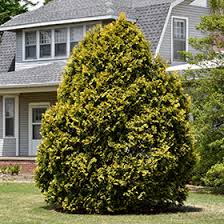


RedCrocus Thuja Yellow Ribbon Arborvitae Live Plant - Golden Columnar Evergreen for Hedges & Foundations, Cold-Hardy, Low Maintenance 2 Gallon Nursery Pot
RedCrocus Thuja Yellow Ribbon Arborvitae Live Plant - Golden Columnar Evergreen for Hedges & Foundations, Cold-Hardy, Low Maintenance 2 Gallon Nursery Pot
Regular price
$180.00 USD
Regular price
$234.00 USD
Sale price
$180.00 USD
Unit price
per
Shipping calculated at checkout.
SKU:ber6fb6-redcrocus
Couldn't load pickup availability
Thuja Yellow Ribbon
Evergreen Conifer • Narrow, Upright Habit


Year-round golden foliage on a space-saving arborvitae ideal for hedges, accents, and mixed borders.
Description
Thuja Yellow Ribbon is an upright, narrow selection of American arborvitae prized for its vibrant golden-yellow new growth that softens to chartreuse through the season. The finely textured, scale-like foliage holds color well in winter, lending brightness to cold-climate landscapes when most plants are dormant.
With a naturally tidy, columnar form and moderate growth, Yellow Ribbon is a reliable choice for foundation plantings, entry accents, and privacy screens where space is limited. It thrives in full sun with consistent moisture and tolerates a range of soils, making it an easy, low-maintenance evergreen for four-season structure.
Suggested Uses
Narrow Privacy Screen
Foundation Planting
Accent / Specimen
Mixed Shrub Border
Formal Hedge
Entryway Flankers
Four-Season Structure
Containers (large)
Quick Facts
Plant Details
Botanical Name
Thuja Yellow Ribbon
Common Name
Thuja Yellow Ribbon (Arborvitae)
Size & Growth
Typically 10–15 ft tall × 3–5 ft wide; naturally narrow, pyramidal/columnar habit.
Hardiness Zones
USDA Zones 3–7 (cold-hardy; protect from desiccating winter winds).
Foliage Type
Evergreen, scale-like sprays; golden-yellow new growth, chartreuse to green-yellow in winter.
Bloom Time
Not applicable; inconspicuous cones rather than flowers (ornamentally insignificant).
Growth Rate
Moderate; about 6–12 inches (15–30 cm) per year under good conditions.
Light Requirements
Full sun for best golden color; tolerates light shade (color may reduce in shade).
Attracts Pollinators
Not a pollinator plant; provides shelter and nesting cover for birds and beneficials.
Indoor Friendly
No; best grown outdoors. Needs full sun, air movement, and seasonal cues.
Container Friendly
Yes, in large containers for several years; ensure consistent moisture and winter protection for roots.
Deer Resistant
No; deer may browse foliage, especially in winter—protect with fencing or repellents where pressure is high.
Pet Warning
Generally considered non-toxic; ingestion of large amounts may cause mild GI upset. Keep prunings away from pets.
Fragrant
Foliage has a mild, resinous scent when crushed; not a floral fragrance.
Cut Flower
Not for flowers; foliage sprigs can be used as evergreen filler in arrangements and winter décor.
Grows Well With
Hydrangea paniculata, Spirea, Boxwood, dwarf Junipers, Ninebark, Coneflower, Daylily, and hardy ornamental grasses.
Note: Also sold as Thuja occidentalis ‘Yellow Ribbon’. Color intensity improves with stronger sun and good nutrition.
Care Tips
Planting Instructions
Plant in spring or early fall. Dig a hole 2× the width of the root ball and equal depth. Set the root flare at or slightly above soil level, backfill with native soil, and water thoroughly to settle.
Soil Moisture
Keep evenly moist—never soggy. Do not allow to dry out, especially the first 2 years. Apply 2–3 in. mulch, keeping it a few inches away from the trunk.
Soil Type
Fertile, well-drained loam is ideal; tolerates clay if drainage is acceptable. pH slightly acidic to neutral (approx. 6.0–7.5).
Humidity
Average outdoor humidity. In windy, exposed sites, provide windbreaks to reduce winter burn and desiccation.
Pruning Instructions
Minimal pruning needed. Lightly shear in late winter or early spring to refine shape; avoid cutting into old wood. Remove dead or damaged stems as needed.
Winter Care
Water deeply before ground freezes. Mulch root zone and consider burlap wrapping in very windy or south-facing exposures to prevent scorch. Brush off heavy snow to avoid breakage.
Planting Depth
Position so the top of the root flare is level with or 1–2 in. above the surrounding soil. Do not bury the trunk or cover with mulch.
Fertilization
Feed in early spring with a balanced, slow-release evergreen fertilizer. Avoid high nitrogen late in the season. A soil test helps fine-tune rates and pH.
Special Care
Space 3–4 ft apart for a tight hedge. Monitor for bagworms and spider mites; treat early if detected. Protect from road salt spray. In containers, insulate pots or move to a sheltered, unheated area for winter.
Watering rule of thumb: 1–1.5 in. per week from rain or irrigation during the first two growing seasons; adjust for heat and soil type.
Placement & Spacing
Hedge spacing: 3–4 ft on center for a dense screen; single specimens can be given 4–5 ft of width for best form and airflow.
Sun exposure: Choose a site with at least 6 hours of direct sun for strongest golden color and dense branching.