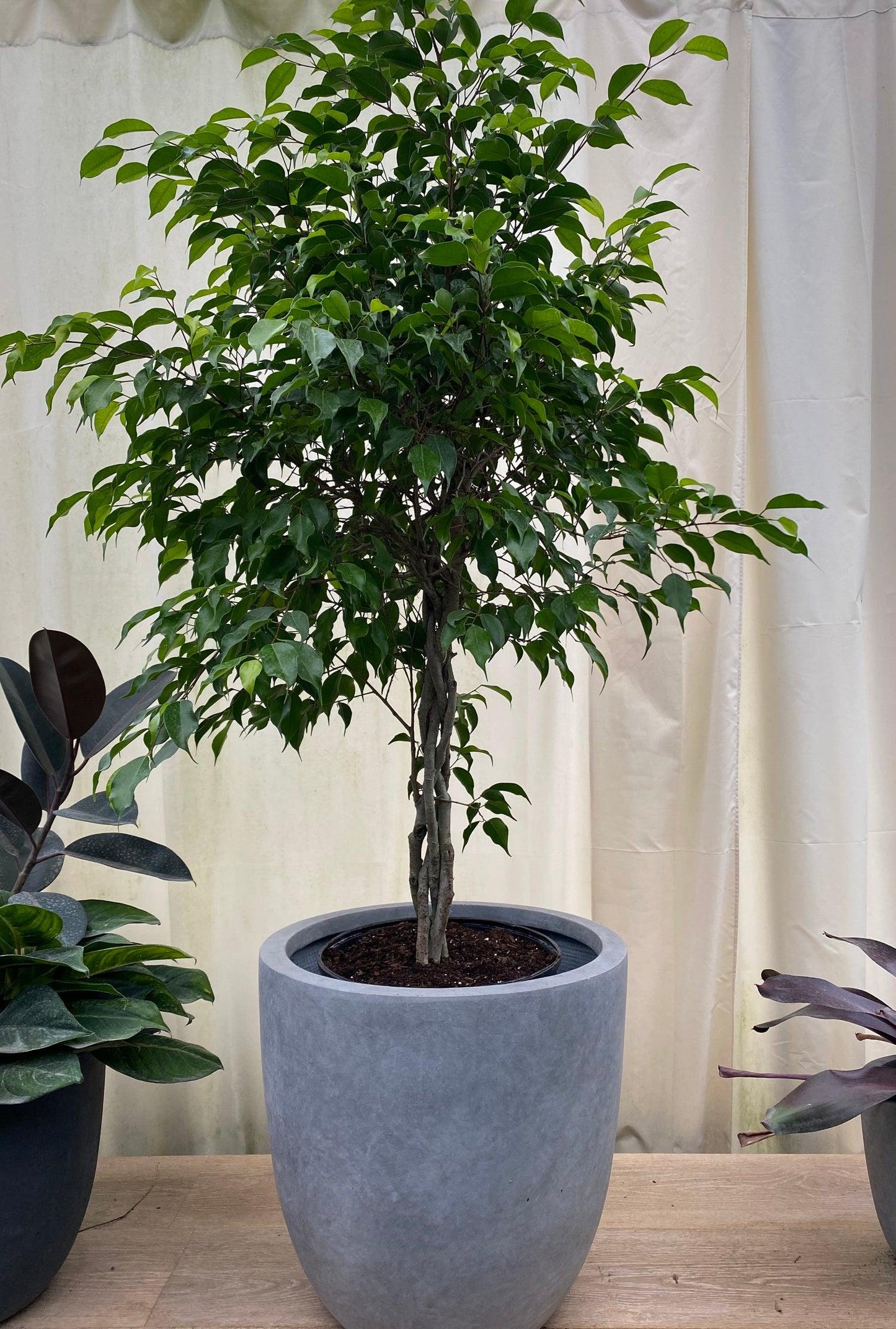


RedCrocus Ficus Braided Topiary- Indoor Plant, Elegant Green Foliage, Decorative Pot, Pet-Safe (Toxic if Ingested, Keep Away Pets & Kids), Versatile for Home & Office 12" Pot
RedCrocus Ficus Braided Topiary- Indoor Plant, Elegant Green Foliage, Decorative Pot, Pet-Safe (Toxic if Ingested, Keep Away Pets & Kids), Versatile for Home & Office 12" Pot
Regular price
$340.00 USD
Regular price
$442.00 USD
Sale price
$340.00 USD
Unit price
per
Shipping calculated at checkout.
SKU:ber6c4c-redcrocus
Couldn't load pickup availability
Ficus - Braided Topiary Green Lady
Description
A compact, meticulously braided Ficus topiary renowned for its lush green foliage and sculptural form, ideal for decorative indoor and outdoor spaces.
Suggested Uses
Perfect for patio borders, elegant garden accents, indoor focal points, or as a stylish container plant for lobbies and offices.
Plant Details
-
 Botanical Name: Ficus - Braided Topiary Green Lady
 -
 Common Name: Ficus - Braided Topiary
 -
 Size & Growth: Typically 3-5 feet tall; Slow to moderate growth rate
 -
 Hardiness Zones: 10-11
 -
 Foliage Type: Evergreen
 -
 Growth Rate: Slow to moderate
 -
 Light Requirements: Bright, indirect light
 -
 Attracts Pollinators: No
 -
 Indoor Friendly: Yes
 -
 Container Friendly: Yes
 -
 Deer Resistant: Yes
 -
 Pet Warning: Toxic if ingested; keep away from pets and children
 -
 Fragrant: No
 -
 Cut Flower: Not suitable
 -
 Grows Well With: Other indoor plants, decorative stones, containers
 Bloom Time: Rarely flowers indoors
Care Tips
-
 Planting Instructions: Use well-draining potting mix; water when topsoil feels dry
 -
 Soil Moisture: Keep consistently moist but not waterlogged
 -
 Soil Type: Rich, well-draining soil
 -
 Humidity: Prefers moderate to high humidity; mist occasionally
 -
 Pruning Instructions: Shape as needed; remove dead or damaged leaves
 -
 Winter Care: Reduce watering in winter; maintain bright indirect light
 -
 Planting Depth: Plant so that the root ball is level with soil surface
 -
 Fertilization: Feed with balanced liquid fertilizer monthly during growing season
 -
 Special Care: Consistent pruning enhances its braided form