

RedCrocus Sempervivum 'Gold Nugget' Live Hens-and-Chicks Succulent, Hardy Outdoor Rosettes, Gold to Orange Color, Rock Garden & Container Plant, Deer Resistant 4" Pot (Pack of 2)
RedCrocus Sempervivum 'Gold Nugget' Live Hens-and-Chicks Succulent, Hardy Outdoor Rosettes, Gold to Orange Color, Rock Garden & Container Plant, Deer Resistant 4" Pot (Pack of 2)
Regular price
$36.00 USD
Regular price
$46.80 USD
Sale price
$36.00 USD
Unit price
per
Shipping calculated at checkout.
SKU:ber6bb5-redcrocus
Couldn't load pickup availability
Sempervivum- Chick Charms Gold Nugget
Description
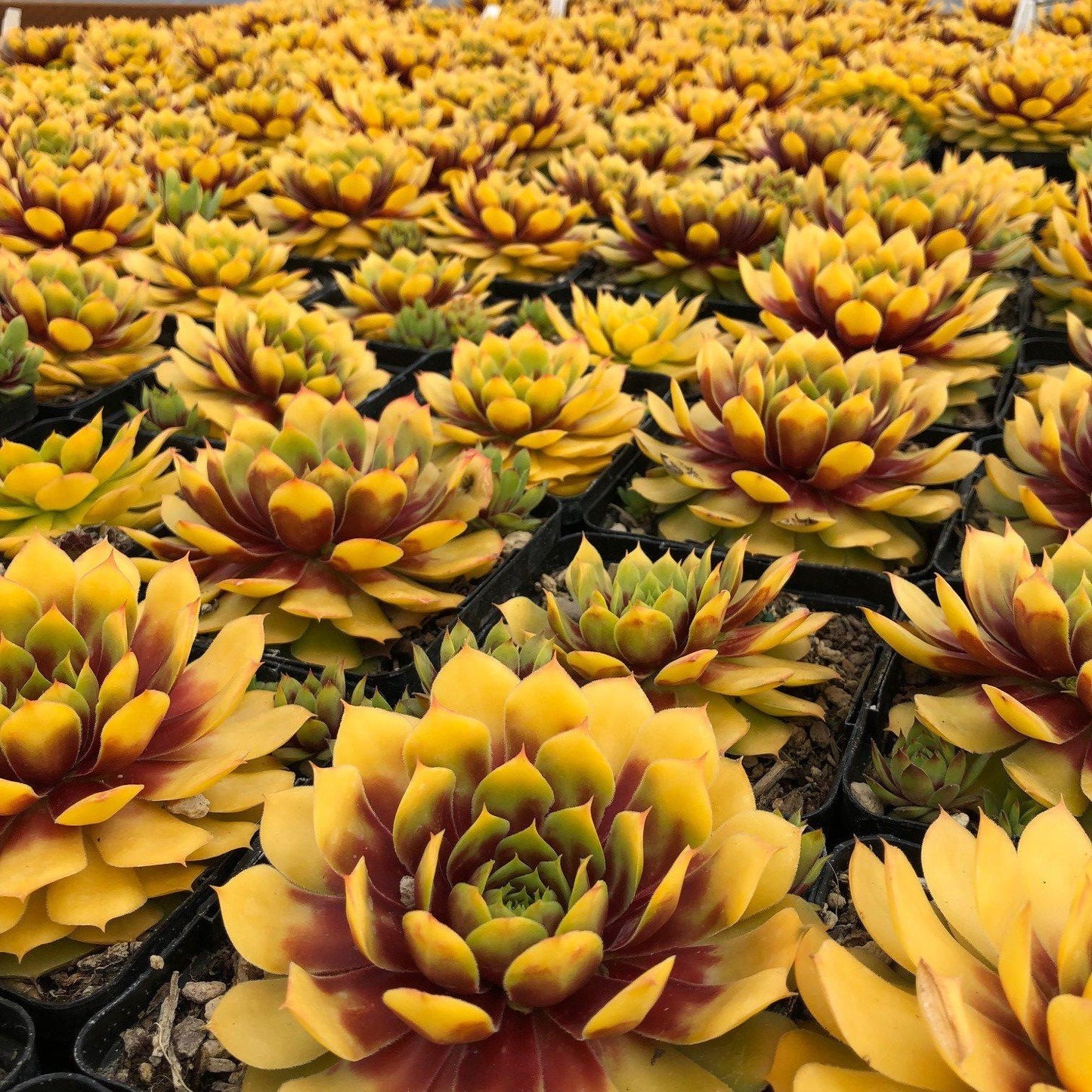
A hardy, mat-forming hens-and-chicks prized for its color-shifting rosettes. Gold Nugget flushes neon gold to fiery orange with red edges in cool spring and fall, turning chartreuse with red tips in summer. Evergreeny succulent rosettes offset freely, forming tight clusters that shine in rock gardens and containers.
Suggested Uses
Rock and crevice gardens, troughs and containers, green roofs, xeriscapes, edging, and small-scale groundcover in sunny, well-drained sites.
Plant Details
-
 Botanical Name: Sempervivum 'Gold Nugget' (Chick Charms Series)
 -
 Common Name: Hens-and-chicks, Chick Charms Gold Nugget
 -
 Size & Growth: Rosettes 2–3 in. tall; spreads 6–12 in. via offsets; clumps enlarge over time
 -
 Hardiness Zones: USDA 3–9
 -
 Foliage Type: Evergreen to semi-evergreen succulent rosettes; gold/chartreuse to orange-red in cool weather
 -
 Bloom Time: Summer; pink starry flowers on short stalks; each rosette is monocarpic (dies after flowering)
 -
 Growth Rate: Moderate; offsets freely under good light and drainage
 -
 Light Requirements: Full sun to light shade; best color with 6+ hours of sun
 -
 Attracts Pollinators: Yes—flowers attract bees and beneficial insects
 -
 Indoor Friendly: Not ideal long-term; short-term indoors only in very bright, cool light
 -
 Container Friendly: Yes—excellent for troughs and patio containers with sharp drainage
 -
 Deer Resistant: Yes; generally deer and rabbit resistant
 -
 Pet Warning: Non-toxic to cats and dogs; discourage chewing
 -
 Fragrant: No
 -
 Cut Flower: Not typically used as a cut flower
 -
 Grows Well With: Sedum (stonecrop), Delosperma (ice plant), Thymus (creeping thyme), Armeria, dwarf Dianthus
Care Tips
-
 Planting Instructions: Space 6–8 in. apart; set rosette at soil surface; backfill with gritty mix and top-dress with gravel for crown dryness
 -
 Soil Moisture: Water to establish, then allow soil to dry between waterings; avoid soggy conditions
 -
 Soil Type: Sharply drained, sandy/gravelly soil or cactus/succulent mix; neutral to slightly alkaline
 -
 Humidity: Prefers low humidity and excellent airflow; prolonged wet crowns may cause rot
 -
 Pruning Instructions: Remove dried lower leaves; cut spent flower stalks; divide or detach offsets in spring/summer
 -
 Winter Care: Fully hardy in-ground with drainage; for containers, keep out of standing water and protect from freeze–thaw cycles
 -
 Planting Depth: Roots covered, crown/rosette sitting on the soil surface—do not bury the crown
 -
 Fertilization: Minimal needs; apply a light, half-strength, low-nitrogen feed once in spring if desired
 -
 Special Care: Best color in cool seasons with strong sun; avoid overhead watering; note each rosette dies after bloom—offsets fill in