

RedCrocus Variegated Agave (Agave variegata) Live Plant, Rare Architectural Succulent for Containers, Indoor/Outdoor, Full Sun, Drought Tolerant, Hardy Zones 9–11 4" Pot
RedCrocus Variegated Agave (Agave variegata) Live Plant, Rare Architectural Succulent for Containers, Indoor/Outdoor, Full Sun, Drought Tolerant, Hardy Zones 9–11 4" Pot
SKU:ber680e-redcrocus
Couldn't load pickup availability
Agave- Variegata Rare
A striking, compact variegated Agave with bold, architectural form and superb container performance.
Description
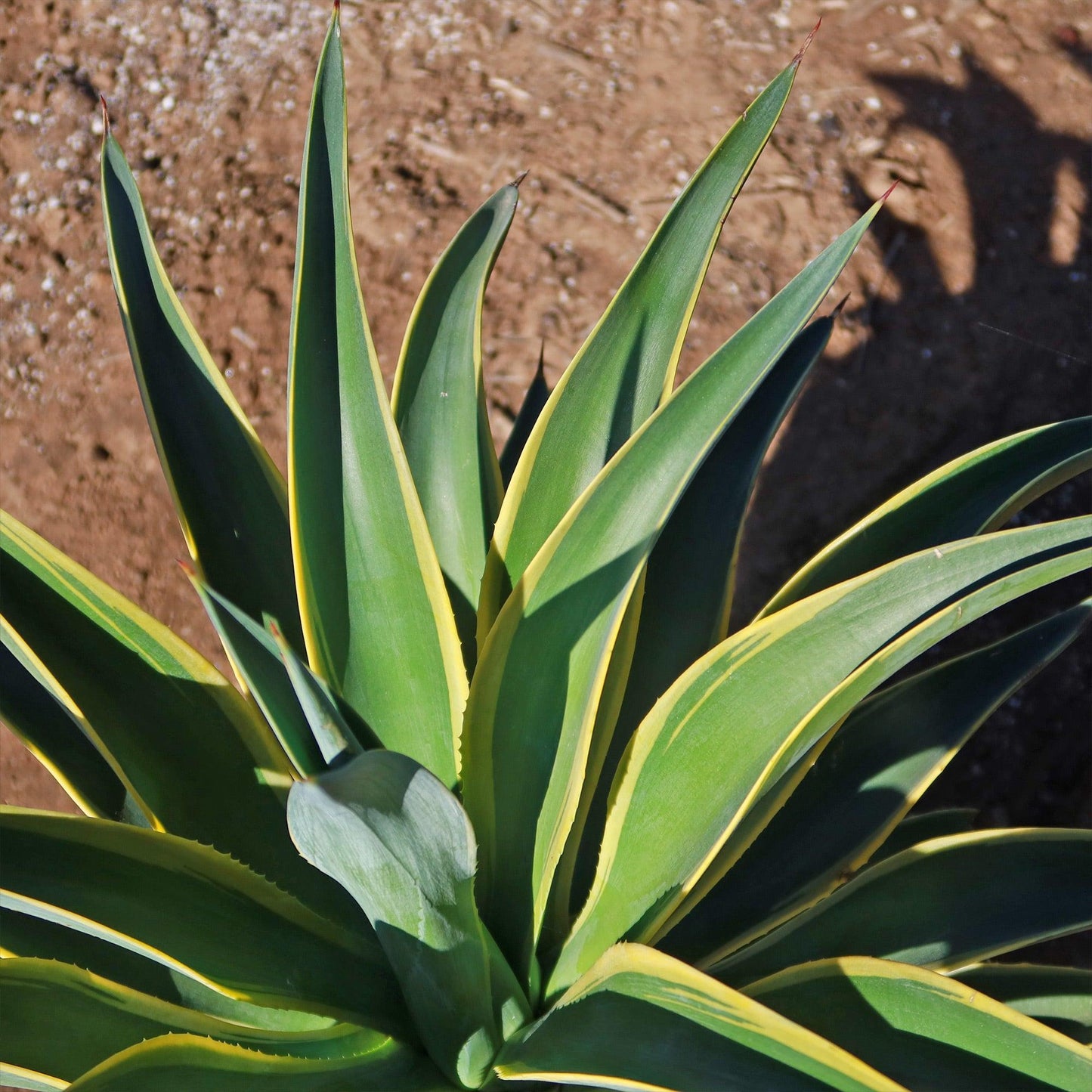
Agave- Variegata Rare is a collectible variegated agave forming a dense, symmetrical rosette of thick, sword-like leaves highlighted with creamy variegation and edged with fine teeth and a sharp terminal spine. This evergreen succulent is highly drought-tolerant, thrives in bright light, and delivers year-round structure in modern landscapes and statement containers. Like most agaves, it is monocarpic (flowers once after many years), often offsetting (“pups”) before and after bloom to continue the clump.
Plant Details
-
 Botanical NameAgave- Variegata Rare
-
 Common NameAgave- Variegata
-
 Size & GrowthTypically 1.5–3 ft tall x 2–4 ft wide over 5–8+ years; compact habit ideal for containers; may slowly produce offsets (pups).
-
 Hardiness ZonesUSDA 9–11 outdoors (approx. 25°F / -4°C with excellent drainage). Grow in containers and overwinter indoors in colder zones.
-
 Foliage TypeEvergreen, architectural rosette; thick, variegated leaves (cream to yellow with blue-green) with small marginal teeth and a sharp terminal spine.
-
 Bloom TimeRare; blooms once at maturity (often 10–20+ years), usually late spring–summer. Tall flowering spike; plant dies after blooming but offsets persist.
-
 Growth RateSlow to moderate; quicker in warm seasons with abundant light and excellent drainage.
-
 Light RequirementsFull sun to very bright light (6–8+ hours). In hot low-desert climates, provide light afternoon shade to prevent leaf scorch on variegation.
-
 Attracts PollinatorsYes—when flowering, the tall spike draws hummingbirds, bees, butterflies, and in its native range, nectar-feeding bats.
-
 Indoor FriendlyExcellent as a bright-window houseplant (south or west exposure) with strong light and good airflow.
-
 Container FriendlyYes—thrives in sturdy, well-drained containers with a gritty cactus mix; top-dress with gravel for a clean finish.
-
 Deer ResistantYes—spines and tough foliage deter browsing wildlife.
-
 Pet WarningNot pet-safe. Sap can irritate skin; ingestion may cause GI upset. Sharp spines—keep away from walkways and children/pets.
-
 FragrantNot typically fragrant; occasional mild scent on blooms in some species.
-
 Cut FlowerNot ideal for fresh cuts; towering bloom stalks are best enjoyed in situ. Dried stalks can be used decoratively.
-
 Grows Well WithGrows Well With Aloe, Echeveria, Hesperaloe, Yucca, Dasylirion, Sedum, Mangave, Opuntia, and blue chalksticks (Senecio serpens) in fast-draining soils.
Note: Sizes and hardiness may vary slightly among variegated agave selections; guidance above reflects typical performance for compact variegated types.
Care Tips
-
 Planting InstructionsSet the crown level with the soil surface in a raised or well-drained site/pot. Acclimate to full sun over 7–10 days. Use a pot with drainage; top-dress with gravel.
-
 Soil MoistureWater deeply, then allow soil to dry out thoroughly between waterings. In heat: every 10–14 days; indoors: every 3–4 weeks. Little to no water in winter dormancy.
-
 Soil TypeFast-draining cactus/succulent mix amended with 30–50% mineral grit (pumice, perlite, or lava rock). pH near neutral to slightly alkaline.
-
 HumidityPrefers low humidity and good air movement; avoid consistently damp, enclosed spaces.
-
 Pruning InstructionsWear gloves/eye protection. Remove spent or damaged leaves at the base with sterile tools. Detach offsets in warm weather; let cut surfaces callus before replanting.
-
 Winter CareProtect from hard frost and cold/wet soils. Move containers indoors before freezing; provide bright light and keep nearly dry at 50–60°F (10–16°C).
-
 Planting DepthPlant with the crown at or slightly above the soil line. For pups, bury roots and basal stem, not leaves; allow 18–36 in spacing for mature spread.
-
 FertilizationLight feeder. Apply a dilute (¼-strength) low-nitrogen cactus fertilizer once in spring; optionally once again mid-summer. Do not fertilize in winter.
-
 Special CareAvoid overwatering; ensure sharp drainage. Provide sun acclimation to prevent scorch. Handle with tongs/gloves. Check for mealybugs/scale; treat promptly. Repot every 2–3 years.