

RedCrocus Blue Ice Arizona Cypress Live Plant - Cupressus arizonica 'Blue Ice' Evergreen Conifer, Silvery-Blue Foliage, Drought & Heat Tolerant 5 Gallon Nursery Pot
RedCrocus Blue Ice Arizona Cypress Live Plant - Cupressus arizonica 'Blue Ice' Evergreen Conifer, Silvery-Blue Foliage, Drought & Heat Tolerant 5 Gallon Nursery Pot
Regular price
$260.00 USD
Regular price
$338.00 USD
Sale price
$260.00 USD
Unit price
per
Shipping calculated at checkout.
SKU:ber62ec-redcrocus
Couldn't load pickup availability
Cupressus Ariz. Blue Ice
Evergreen Conifer
USDA 6–9
Full Sun
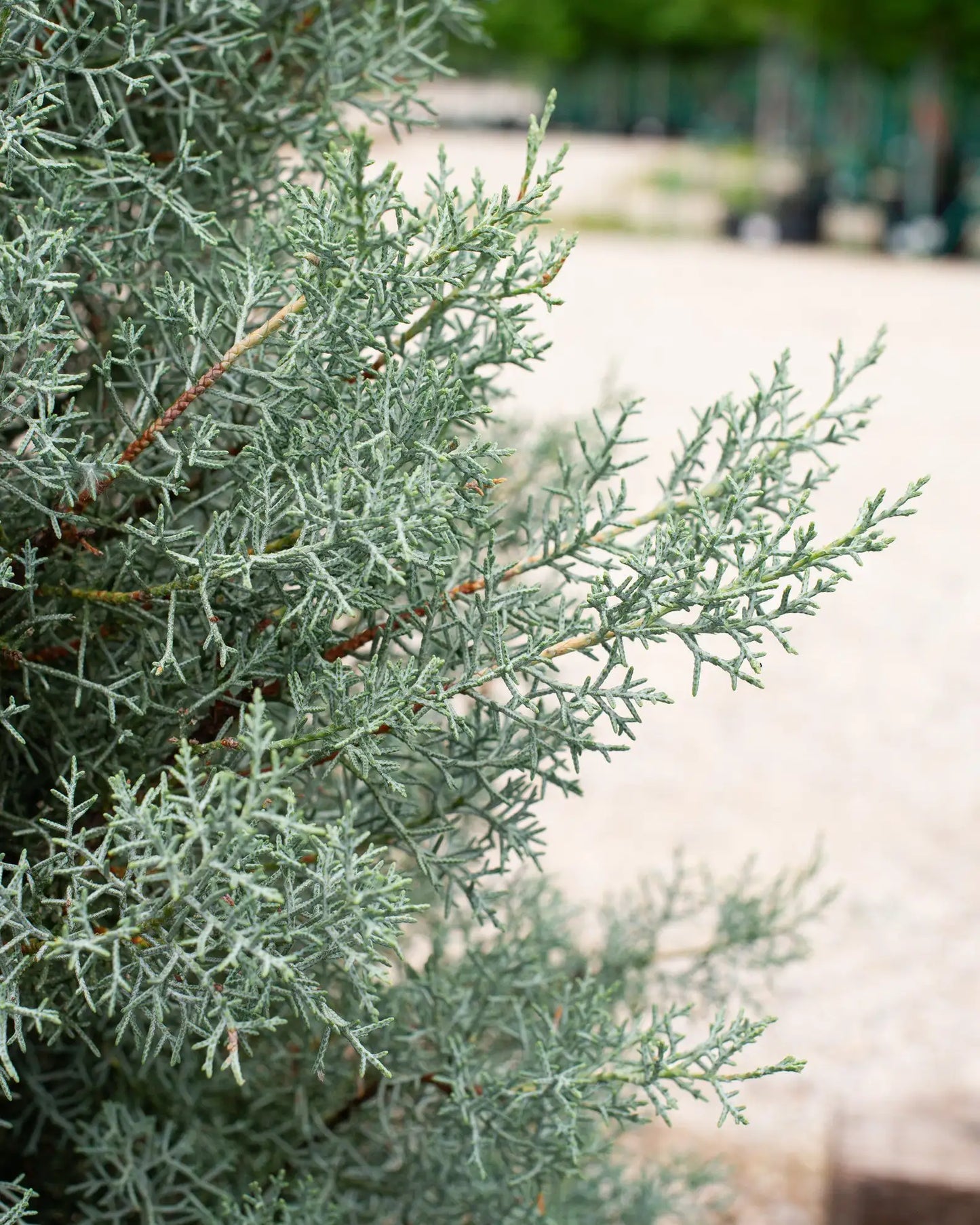
A striking Arizona cypress selection prized for its dense, icy blue foliage, upright conical form, and excellent drought and heat tolerance once established.
Description
Cupressus Ariz. Blue Ice is an architectural evergreen with powdery, silvery‑blue scale-like foliage that holds its color year‑round. Dense branching forms a tidy, naturally conical silhouette that makes a bold focal point in modern, Mediterranean, and water‑wise landscapes. Durable and low‑maintenance, it thrives in full sun and well‑drained soils, showing good tolerance to heat, drought, and wind once established. Aromatic foliage is excellent for cutting and seasonal décor.
 Aromatic foliage
 Deer resistant
 Fast growth
Suggested Uses
- Specimen tree
- Privacy screen / Hedge
- Windbreak
- Modern / Mediterranean gardens
- Xeriscape / Drought‑tolerant beds
- Large containers (young plants)
- Driveway or entry alleé
- Cut winter greenery
- Coastal‑adjacent sites (with drainage)
Plant Details

Botanical Name
Cupressus Ariz. Blue Ice

Common Name
Cupressus Ariz. Blue Ice

Size & Growth
Typically 30–50 ft tall × 12–20 ft wide; naturally conical; 12–24 in of new growth per year under good conditions.

Hardiness Zones
USDA 6–9 (provide wind protection and winter mulch in the coldest areas).

Foliage Type
Evergreen, scale-like, dense and aromatic; striking silvery‑blue to icy blue year‑round.

Bloom Time
Non‑showy; wind‑pollinated male/female cones typically appear late winter to spring.
Growth Rate
Fast once established.

Light Requirements
Full sun (6+ hours direct sun daily) for best color and density.

Attracts Pollinators
Primarily wind‑pollinated; offers shelter and nesting cover for birds and beneficial wildlife.

Indoor Friendly
Not a houseplant; suitable only for short‑term holiday display indoors. Best grown outdoors year‑round.

Container Friendly
Yes when young; use a large, well‑drained container. Eventually outgrows containers and prefers ground planting.
Deer Resistant
Generally resistant due to aromatic foliage; browsing is uncommon.

Pet Warning
Not edible; ingestion may cause mild gastrointestinal upset. Discourage chewing; avoid access to prunings.
Fragrant
Yes—foliage releases a pleasant, resinous aroma when brushed or crushed.

Cut Flower
Excellent for cut greenery and winter arrangements; long‑lasting in water.

Grows Well With
Lavender, Rosemary, Santolina, Juniper, Yucca, Salvia, Nepeta, Rockrose (Cistus), Ceanothus, and drought‑tolerant ornamental grasses.
Care Tips

Planting Instructions
Plant in full sun with excellent drainage. Dig a hole 2–3× wider than the root ball and the same depth. Loosen circling roots, set level, backfill, water deeply, and mulch. For screens, space 10–15 ft apart.

Soil Moisture
Keep evenly moist the first growing season; then water deeply but infrequently. Allow the top few inches to dry between waterings. Drought tolerant once established.

Soil Type
Prefers well‑drained sandy or loamy soils; tolerates poor and slightly alkaline conditions. Avoid heavy clay or improve with drainage and coarse amendments.

Humidity
Best in dry to average humidity. Provide good air circulation—persistent high humidity favors canker and needle blight.

Pruning Instructions
Minimal pruning needed. Shape lightly in late winter to early spring. Tip‑prune current season’s growth; avoid cutting into old, leafless wood. Can be lightly sheared for formal hedges.

Winter Care
Mulch 2–3 in to moderate soil temperature; water deeply before the ground freezes. In Zone 6, shelter from harsh winter winds and avoid late‑season nitrogen to prevent tender growth.

Planting Depth
Set the root flare at or slightly above the surrounding soil line. Do not bury the trunk; keep mulch a few inches away from the bark.

Fertilization
Feed lightly in early spring with a balanced, slow‑release fertilizer for evergreens. Avoid heavy or late‑season fertilization.

Special Care
Prioritize sharp drainage; avoid chronic overwatering and overhead irrigation. Space plants for airflow. Sanitize tools to reduce disease spread. Monitor for cypress canker and bagworms. Stake young trees in windy sites.