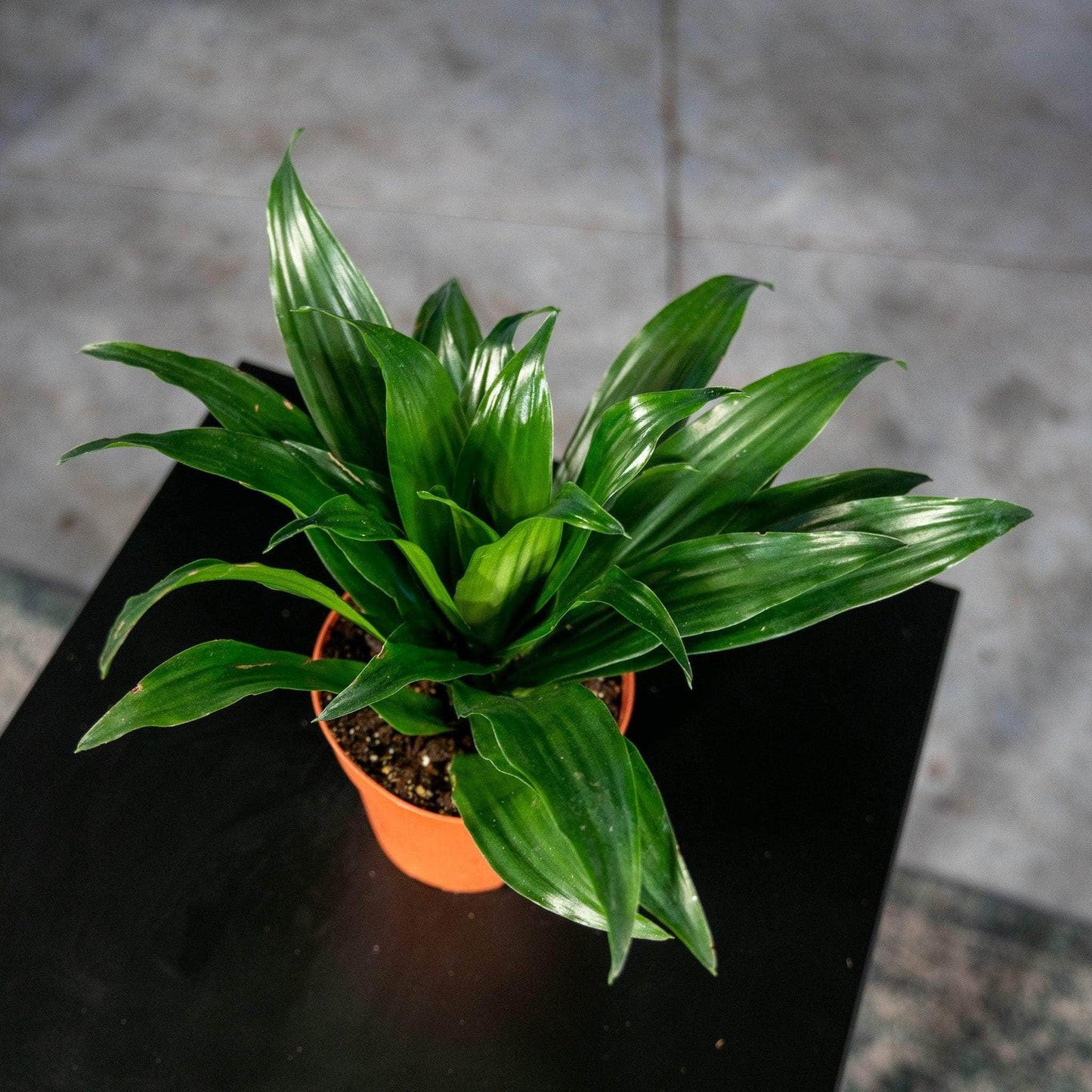


RedCrocus Dracaena Janet Craig Compacta - Low Light Indoor Plant, Air-Purifying, Slow-Growing, Beginner-Friendly Office & Desk Plant, Glossy Green Foliage 4" Pot
RedCrocus Dracaena Janet Craig Compacta - Low Light Indoor Plant, Air-Purifying, Slow-Growing, Beginner-Friendly Office & Desk Plant, Glossy Green Foliage 4" Pot
SKU:ber5c2c-redcrocus
Couldn't load pickup availability
Dracaena Janet Craig Compacta
Description
Dracaena Janet Craig Compacta is a compact selection of the Janet Craig group, notable for its tight leaf rosettes on thick canes and a distinctly architectural silhouette. The foliage is rich, glossy green and arranged in stacked whorls, giving a tailored, modern look that suits homes and offices alike. It thrives in bright, indirect light but is notably tolerant of lower light, making it one of the most reliable indoor evergreens.
Botanically aligned with Dracaena fragrans (syn. D. deremensis), this cultivar grows slowly, stays neat, and asks for very little—just well‑draining soil, modest watering, and protection from direct sun and cold drafts.
Suggested Uses
- Statement plant for desks, side tables, and entryways
- Low‑light offices, lobbies, and hospitality interiors
- Modern, minimalist, and biophilic design schemes
- Container groupings with other low‑light tropicals
- Air‑purifying accent in bedrooms and living areas
- Great for beginners seeking a durable, slow‑growing plant
Plant Details

Botanical Name
Dracaena fragrans ‘Janet Craig Compacta’ (syn. D. deremensis); commonly marketed as “Janet Craig Compacta”.

Common Name
Dracaena; Janet Craig Compacta; Compact Janet Craig.

Size & Growth
Slow-growing; typically 1–4 ft tall and 1–2 ft wide indoors; can reach 5–6 ft over many years on canes in large containers.

Hardiness Zones
USDA 10–12 outdoors; commonly grown as a houseplant in cooler regions (protect from temps below 55–60°F / 13–16°C).

Foliage Type
Evergreen; glossy, rich green, sword‑like leaves forming dense rosettes atop sturdy canes.

Bloom Time
Rare indoors; when mature may flower late fall to winter. Flowers are highly fragrant, especially at night.

Growth Rate
Slow; compact habit maintains tidy form with minimal maintenance.

Light Requirements
Best in bright, indirect light; tolerates medium to low light. Avoid direct sun, which can scorch leaves.

Attracts Pollinators
Not typically; indoor blooms are uncommon. Outdoor blooms may draw night‑active pollinators when present.

Indoor Friendly
Excellent indoor performer; adapts well to offices and homes with stable temperatures and moderate light.

Container Friendly
Thrives in containers; prefers to be slightly root‑bound. Ensure good drainage to prevent root rot.

Deer Resistant
Generally not preferred by deer due to saponins; typically grown indoors in deer‑prone regions.

Pet Warning
Toxic to cats and dogs if ingested (saponins). Symptoms: vomiting, drooling, lethargy. Keep out of pet reach.

Fragrant
Foliage is not fragrant; flowers (rare indoors) can be strongly sweet‑fragrant, especially at night.

Cut Flower
Not commonly used as a cut flower. Stems and foliage sometimes used in foliage arrangements.

Grows Well With
ZZ plant (Zamioculcas), Snake plant (Sansevieria/Dracaena trifasciata), Pothos, Aglaonema, Philodendron, Aspidistra.
Care Tips

Planting Instructions
Use a pot with drainage. Set the cane at the same depth it was growing; do not bury the crown. Gently firm mix and water to settle; rotate the pot monthly for even growth.

Soil Moisture
Allow the top 1–2 in (2.5–5 cm) of mix to dry before watering. Drench thoroughly and empty saucers. Reduce watering 30–50% in winter. Avoid soggy soils.

Soil Type
Well‑draining, airy mix: 2 parts high‑quality houseplant mix + 1 part perlite + 1 part fine bark. pH ~6.0–7.0. Ensure excellent drainage.

Humidity
Prefers 40–60% relative humidity; tolerates standard indoor levels. Use a pebble tray or humidifier in very dry rooms.

Pruning Instructions
Remove yellow or brown leaves at the base. To control height, cut the cane above a node with sterile tools; new shoots will emerge below the cut.

Winter Care
Keep 65–75°F (18–24°C); never below 55–60°F (13–16°C). Protect from drafts and cold windows. Increase light and reduce watering; hold fertilizer.

Planting Depth
Top of root ball level with the new soil surface; crown at or slightly above soil line. Leave ~0.5 in (1–1.5 cm) headspace for watering.

Fertilization
Feed every 4–6 weeks in spring–summer with a balanced, dilute (¼–½ strength) houseplant fertilizer. Flush soil occasionally to prevent salt buildup; avoid fluoride‑heavy products.

Special Care
Use filtered/distilled water (fluoride sensitive). Wipe leaves to remove dust. Inspect for mealybugs, scale, and mites. Repot every 2–3 years; keep slightly root‑bound.