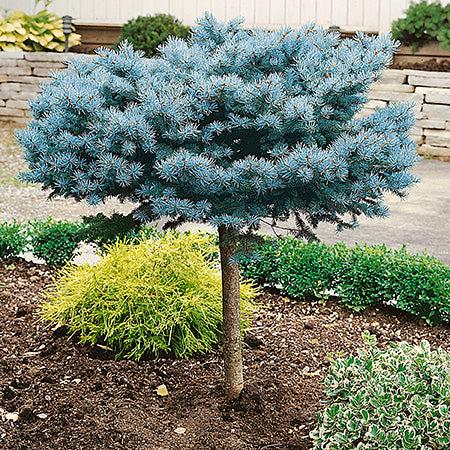


RedCrocus Picea pungens 'Glauca Globosa' Blue Spruce Standard Topiary Live Plant - Dwarf Evergreen, Steel-Blue Needles, Cold-Hardy Zones 3-7 3 Gallon Nursery Pot
RedCrocus Picea pungens 'Glauca Globosa' Blue Spruce Standard Topiary Live Plant - Dwarf Evergreen, Steel-Blue Needles, Cold-Hardy Zones 3-7 3 Gallon Nursery Pot
Regular price
$600.00 USD
Regular price
$780.00 USD
Sale price
$600.00 USD
Unit price
per
Shipping calculated at checkout.
SKU:ber54c2-redcrocus
Couldn't load pickup availability
Picea Pungens Glauca Globosa Blue- Topiary Standard Topiary
Premium Landscape Conifer
 USDA 3–7
 Full Sun
 Slow-growing
 Container Friendly
 Deer Resistant
Common Name: Picea Pungens Glauca Globosa Blue- Topiary · A compact, steel-blue Colorado spruce grafted on a clean stem for a refined, formal “lollipop” silhouette.
USDA 3–7
Full Sun
Slow-growing
Container Friendly
Deer Resistant
Description
Picea pungens ‘Glauca Globosa’ (Blue) in standard topiary form combines the intense, silvery-blue needles of Colorado Blue Spruce with a clean, upright stem for a formal yet compact specimen. The head forms a naturally dense, rounded globe that responds well to light shaping, making it a standout at entryways, along walks, or as a symmetrical pair in containers.
Expect sturdy, four-sided needles with a bright, icy-blue tone that holds all year. Growth is slow and controlled—ideal for small gardens and modern landscapes where structure and winter interest matter. As a standard, overall height is the trunk height plus the rounded crown; the crown itself typically reaches 3–5 ft wide over time.
Extremely cold-hardy and wind-tolerant once established, this conifer prefers full sun and well-drained soil. It is largely trouble-free with minimal pruning and offers outstanding color and texture 12 months of the year.
Expect sturdy, four-sided needles with a bright, icy-blue tone that holds all year. Growth is slow and controlled—ideal for small gardens and modern landscapes where structure and winter interest matter. As a standard, overall height is the trunk height plus the rounded crown; the crown itself typically reaches 3–5 ft wide over time.
Extremely cold-hardy and wind-tolerant once established, this conifer prefers full sun and well-drained soil. It is largely trouble-free with minimal pruning and offers outstanding color and texture 12 months of the year.
Suggested Uses
- Formal accents flanking doors, gates, and pathways
- Four-season focal point in modern or minimalist designs
- Large patio containers and roof terraces (protect roots in winter)
- Rock, alpine, and conifer gardens for long-term structure
- Mixed borders with contrasting foliage for color and texture
- Foundation planting where a compact, tidy evergreen is needed
- Four-season focal point in modern or minimalist designs
- Large patio containers and roof terraces (protect roots in winter)
- Rock, alpine, and conifer gardens for long-term structure
- Mixed borders with contrasting foliage for color and texture
- Foundation planting where a compact, tidy evergreen is needed
Tip: For matched symmetry, purchase two standards of the same trunk height. Stake young standards in windy sites and remove any shoots emerging from below the graft.
Plant Details
-
 Botanical NamePicea Pungens Glauca Globosa Blue- Topiary Standard Topiary
-
 Common NamePicea Pungens Glauca Globosa Blue- Topiary (Standard)
-
 Size & GrowthCrown 3–5 ft wide in 10–12 yrs; overall height = trunk height + crown (commonly 4–8 ft depending on graft). Slow growth ~3–6 in/yr.
-
Hardiness ZonesUSDA 3–7 (very cold-hardy; protect containerized roots in winter).
-
 Foliage TypeEvergreen conifer; stiff, four-sided needles in vibrant steel/silvery blue year-round.
-
 Bloom TimeNot grown for flowers; produces inconspicuous pollen/seed cones in spring; occasional decorative seed cones as it matures.
-
Growth RateSlow and compact; maintains a tidy globe with minimal shaping.
-
Light RequirementsFull sun (6+ hours) for best blue color; tolerates light afternoon shade in hotter regions.
-
 Attracts PollinatorsNo—wind-pollinated. Provides shelter and nesting sites for birds and beneficials.
-
 Indoor FriendlyNot suitable for long-term indoor growth; outdoor landscape/conservatory use only.
-
Container FriendlyYes—thrives in large, well-drained containers; insulate pot in winter in cold zones.
-
Deer ResistantGenerally deer-resistant; prickly needles deter browsing (not deer-proof).
-
 Pet WarningNon-toxic to pets; sharp needles may cause minor mouth/skin irritation if chewed.
-
 FragrantNot notably fragrant; resinous aroma when bruised.
-
 Cut FlowerNot a cut flower; stems are excellent for winter/holiday arrangements and wreaths.
-
 Grows Well WithGrows Well With Dwarf conifers (Pinus mugo, Juniperus), heathers, sedums, blue fescue, dwarf barberry, spirea, and dark-leaved Physocarpus for contrast.
Care Tips
-
 Planting InstructionsDig a hole 2× the width of the root ball and equal depth. Set the plant so the root flare is level with the soil surface and the graft union/trunk remains above soil. Backfill with native soil; water deeply to settle. Stake the standard in windy sites and remove any shoots from below the graft.
-
 Soil MoistureKeep evenly moist the first 1–2 growing seasons; thereafter allow the top 1–2 in of soil to dry between deep waterings. Avoid soggy conditions and standing water.
-
 Soil TypeWell-drained loam or sandy soil; tolerates slightly acidic to neutral pH (≈5.5–7.5). In heavy clay, raise the planting area and incorporate grit for drainage.
-
 HumidityAverage outdoor humidity is ideal. Ensure good air movement; avoid cramped, constantly damp locations to reduce needle cast risk.
-
 Pruning InstructionsMinimal. Lightly shear or pinch back new growth in late spring/early summer to maintain the globe. Do not cut into old, bare wood. Remove any watersprouts or growth emerging from the trunk/rootstock.
-
 Winter CareMulch 2–3 in, keeping mulch off the trunk. Water deeply before ground freeze. For containers, insulate pots or overwinter in a sheltered spot to protect roots from freeze–thaw. Wrap young trunks to prevent sunscald in exposed sites.
-
 Planting DepthPlant at the same depth as in the nursery container; root flare at or just above grade. Never bury the trunk or graft union.
-
 FertilizationFeed lightly in early spring with a slow‑release, balanced or conifer/acid-forming fertilizer. Avoid high nitrogen after midsummer to prevent tender growth before winter.
-
 Special CareMonitor for spruce spider mites (tap test over white paper), aphids, and needle cast. Provide full sun for best blue color. Re-pot container plants every 3–4 years into fresh, sharply drained mix; maintain a discreet stake if needed to keep the standard straight.
Cultural notes represent typical performance for Picea pungens ‘Glauca Globosa’ in standard topiary form. Local climate, exposure, and soil conditions may affect results—adjust care accordingly.