

RedCrocus Agave Americana- Drought-Tolerant Century Plant for Xeriscaping, Rock Gardens & Containers 10" Pot
RedCrocus Agave Americana- Drought-Tolerant Century Plant for Xeriscaping, Rock Gardens & Containers 10" Pot
Regular price
$120.00 USD
Regular price
$156.00 USD
Sale price
$120.00 USD
Unit price
per
Shipping calculated at checkout.
SKU:ber5211-redcrocus
Couldn't load pickup availability
Agave Green
Description
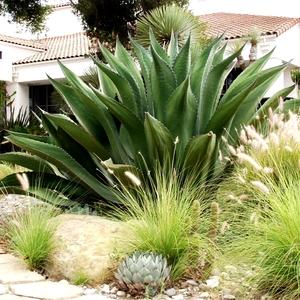
A rosette-forming succulent with thick, fleshy, bluish-green leaves edged with sharp spines. It is drought-tolerant and low-maintenance, ideal for xeriscaping and modern landscapes.
Suggested Uses
Perfect for rock gardens, patio containers, xeriscapes, and as focal points in landscape design.
Plant Details
-
 Botanical Name: Agave americana
 -
 Common Name: Century Plant
 -
 Size & Growth: Up to 6 ft tall and wide; slow-growing
 -
 Hardiness Zones: 8-11
 -
 Foliage Type: Rosette of thick, fleshy leaves
 -
 Bloom Time: Summer, every 10-30 years
 -
 Growth Rate: Slow
 -
 Light Requirements: Full sun to partial shade
 -
 Attracts Pollinators: Yes, bees and butterflies
 -
 Indoor Friendly: Limited; prefers outdoor sun
 -
 Container Friendly: Yes
 -
 Deer Resistant: Yes
 -
 Pet Warning: Toxic to pets if ingested
 -
 Fragrant: No
 -
 Cut Flower: Not suitable
 -
 Grows Well With: Cacti, succulents, desert shrubs
Care Tips
-
 Planting Instructions: Use well-draining soil, plant in full sun, space adequately
 -
 Soil Moisture: Very drought-tolerant; water sparingly
 -
 Soil Type: Sandy, gritty, well-draining
 -
 Humidity: Tolerant of dry air
 -
 Pruning Instructions: Remove dead or damaged leaves as needed
 -
 Winter Care: Protect from frost in cooler zones, insulate or bring indoors if possible
 -
 Planting Depth: Plant at soil level with roots fully covered
 -
 Fertilization: Fertilize lightly during active growing season
 -
 Special Care: Minimal watering; avoid overwatering to prevent root rot