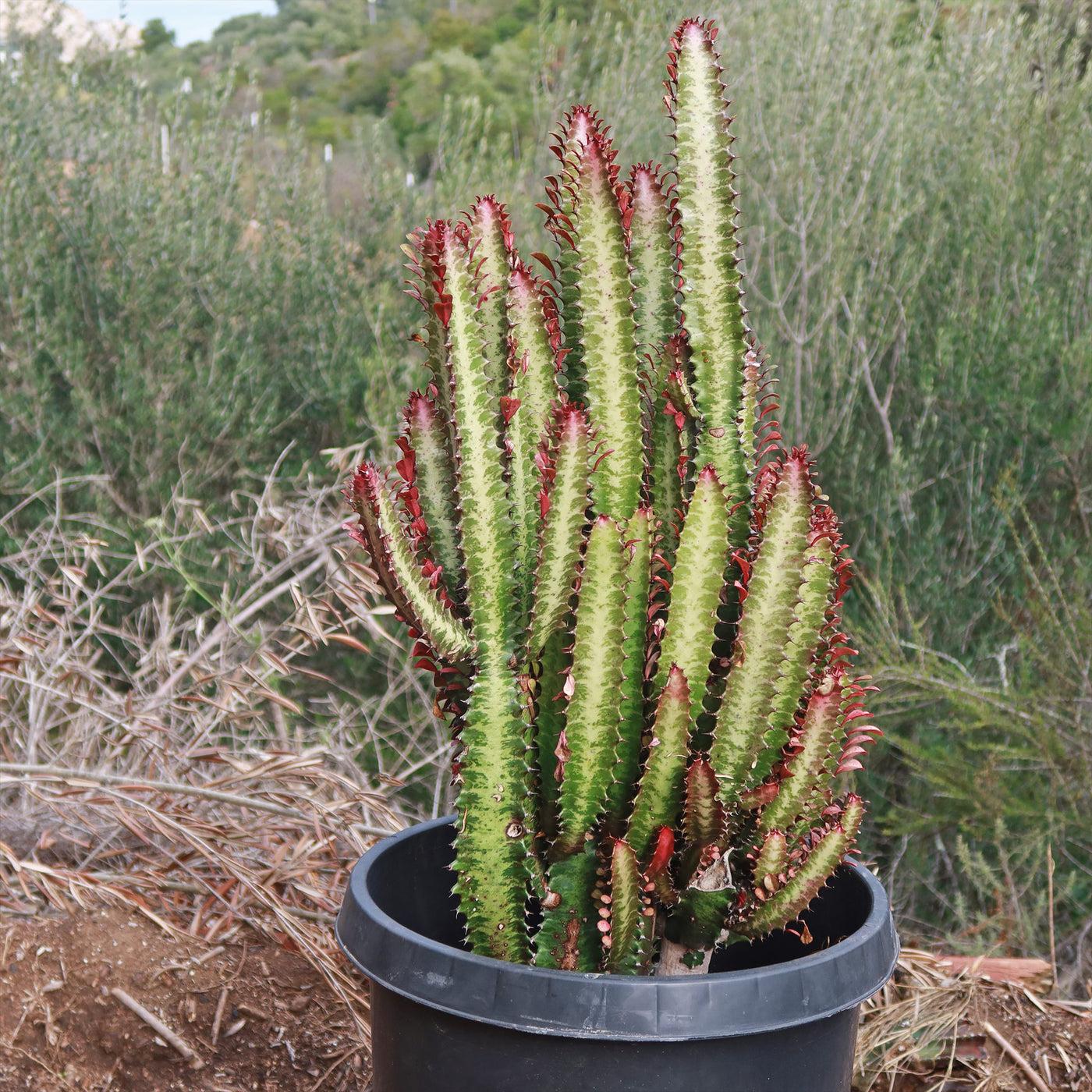


RedCrocus Euphorbia Trigona Red African Milk Tree Succulent- Drought-Tolerant Indoor/Outdoor Plant, Easy Care, Low Water, Striking Red-Tinted Stems, Perfect for Containers & Gardens 4" Pot (Pack of 2)
RedCrocus Euphorbia Trigona Red African Milk Tree Succulent- Drought-Tolerant Indoor/Outdoor Plant, Easy Care, Low Water, Striking Red-Tinted Stems, Perfect for Containers & Gardens 4" Pot (Pack of 2)
Regular price
$68.00 USD
Regular price
$88.40 USD
Sale price
$68.00 USD
Unit price
per
Shipping calculated at checkout.
SKU:ber4c78-redcrocus
Couldn't load pickup availability
Euphorbia Trigona Red African Milk Tree
Description
A compact, upright succulent with striking red-tinted stems, Euphorbia Trigona is drought-tolerant and easy to care for. Its unique appearance makes it an excellent focal plant for sunny indoor or outdoor spaces.
Suggested Uses
Ideal for rock gardens, container displays, urban landscaping, and xeriscaping due to its low water requirements and striking form.
Plant Details
-
 Botanical Name: Euphorbia Trigona Red African Milk Tree
 -
 Common Name: Euphorbia Trigona
 -
 Size & Growth: Typically grows up to 3-4 feet tall with a compact, bushy form.
 -
 Hardiness Zones: 9-11
 -
 Foliage Type: Succulent stems with minimal foliage
 -
 Bloom Time: Summer to early fall
 -
 Growth Rate: Slow to moderate
 -
 Light Requirements: Full sun to partial shade
 -
 Attracts Pollinators: Yes, especially bees and butterflies
 -
 Indoor Friendly: Yes, with plenty of light
 -
 Container Friendly: Perfect for pots and containers
 -
 Deer Resistant: Yes
 -
 Pet Warning: Contains toxic sap; keep away from pets and children
 -
 Fragrant: No
 -
 Grows Well With: Other succulents and cacti
 Cut Flower: Not typically used as cut flower
Care Tips
-
 Planting Instructions: Use well-draining cactus or succulent mix; avoid overwatering.
 -
 Soil Moisture: Allow soil to dry out completely between watering.
 -
 Soil Type: Sandy, well-draining soil mix
 -
 Humidity: Tolerant of dry air
 -
 Pruning Instructions: Remove dead or damaged stems as needed
 -
 Winter Care: Provide protection from frost; bring indoors if necessary
 -
 Planting Depth: Plant stem cuttings shallowly; roots develop easily
 -
 Fertilization: During growing season, feed with cactus or succulent fertilizer once a month
 -
 Special Care: Avoid excessive watering and protect from frost