

RedCrocus Lonicera nitida 'Purple Berries' Box Honeysuckle Live Shrub, Evergreen Hedge, Fast-Growing, Pollinator Friendly, Sun/Part Shade, Hardy Zones 6-9 2 Gallon Nursery Pot
RedCrocus Lonicera nitida 'Purple Berries' Box Honeysuckle Live Shrub, Evergreen Hedge, Fast-Growing, Pollinator Friendly, Sun/Part Shade, Hardy Zones 6-9 2 Gallon Nursery Pot
Regular price
$150.00 USD
Regular price
$195.00 USD
Sale price
$150.00 USD
Unit price
per
Shipping calculated at checkout.
SKU:ber3f98-redcrocus
Couldn't load pickup availability
Lonicera Nitida Purple Berries
Evergreen box honeysuckle with tiny glossy foliage, spring bloom, and richly colored autumn berries.
Hardy • Hedge-Ready • Pollinator FriendlyDescription
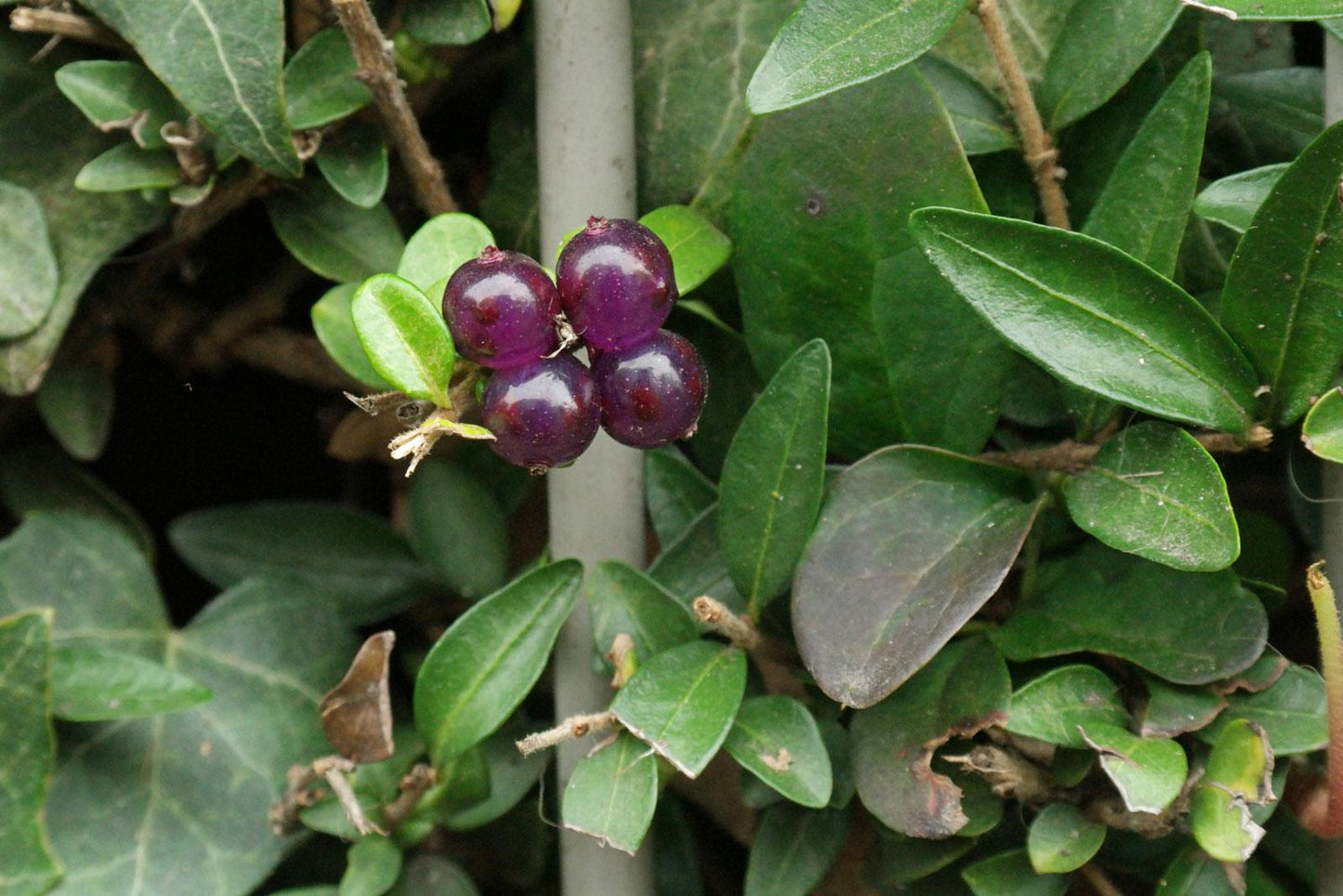
Lonicera Nitida Purple Berries is a compact, evergreen honeysuckle prized for its dense, fine-textured foliage that clips cleanly into tidy shapes. In late spring, small creamy-white flowers appear and are followed by glistening purple berries in late summer to autumn—an attractive bonus for wildlife gardens. Tough and adaptable, it makes an excellent low hedge, edging, or topiary subject, thriving in sun or partial shade and tolerating urban conditions once established.
Note: Berries are ornamental only and are not for human consumption.
Suggested Uses
Low hedging & edging
Topiary & knot gardens
Container specimens
Foundation planting
Wildlife-friendly borders
Urban & courtyard gardens
Slope/bank stabilization
Mixed evergreen structure
Plant Details
-
 Botanical NameLonicera Nitida Purple Berries (often listed as Lonicera nitida ‘Purple Berries’)
-
 Common NameBox honeysuckle (commonly sold as “Lonicera nitida”)
-
 Size & GrowthTypically 4–6 ft tall and wide (1.2–1.8 m); can reach 6–8 ft unpruned. Easily kept 2–4 ft with regular clipping.
-
 Hardiness ZonesUSDA Zones 6–9 (reliably hardy; protect from harsh winter winds in colder sites).
-
 Foliage TypeEvergreen; tiny, glossy, opposite leaves forming a dense, fine-textured canopy.
-
 Bloom TimeLate spring to early summer; small creamy-white flowers followed by purple berries in late summer–autumn.
-
 Growth RateFast; 12–24 in (30–60 cm) per year in good conditions.
-
 Light RequirementsFull sun to partial shade; tolerates bright open shade with slightly looser growth.
-
 Attracts PollinatorsFlowers visited by bees and hoverflies; birds may feed on the berries.
-
 Indoor FriendlyNot recommended as a long-term houseplant; best outdoors in containers or beds.
-
 Container FriendlyYes; thrives in large pots with regular watering and clipping; excellent for patio topiary.
-
 Deer ResistantGenerally deer-resistant; may be browsed if food is scarce.
-
 Pet WarningBerries are mildly toxic if ingested; can cause GI upset in pets and children—discourage eating the fruit.
-
 FragrantLightly scented flowers; fragrance is subtle and not the main feature.
-
 Cut FlowerNot a traditional cut flower; clipped stems provide attractive filler foliage in arrangements.
-
 Grows Well WithGrows Well With Boxwood alternatives, Euonymus fortunei, Skimmia, Hebe, heathers (Erica/Calluna), ornamental grasses, ferns, hostas.
Care Tips
-
 Planting InstructionsPlant in spring or fall. Space 24–36 in (60–90 cm) for hedges. Soak the root ball, tease circling roots, set level with soil surface, backfill with native soil, and water in thoroughly.
-
 Soil MoistureKeep evenly moist the first growing season. Once established, moderately drought-tolerant; deep water during prolonged dry spells.
-
 Soil TypeWell-drained loam, sandy, or clay soils; pH neutral to slightly alkaline. Avoid waterlogged sites; improve drainage where needed.
-
 HumidityAverage garden humidity is ideal. Ensure good air circulation to minimize mildew in dense hedges.
-
 Pruning InstructionsClip after flowering or any time mid–late summer to shape. For hedges, shear 2–4× per season. Renewal prune in late winter by thinning older stems.
-
 Winter CareMulch 2–3 in (5–7 cm) over roots; water during dry winter thaws. In windy Zone 6 exposures, provide wind protection to prevent leaf scorch.
-
 Planting DepthSet the crown/root flare level with the surrounding soil. Do not bury stems; keep mulch a few inches away from the base.
-
 FertilizationFeed lightly in early spring with a balanced, slow‑release fertilizer or compost top-dress. Avoid high nitrogen after midsummer.
-
 Special CareExtremely tolerant of clipping and topiary. Monitor for aphids and scale; avoid chronic waterlogging. Suitable for urban sites; stake young plants in windy areas.